PIPE Financing for Silver Juniors: Capital, Costs, and Consequences
August 18, 2026
Regulatory Permits for Uranium Projects: What Work Program Permits Mean
August 19, 2026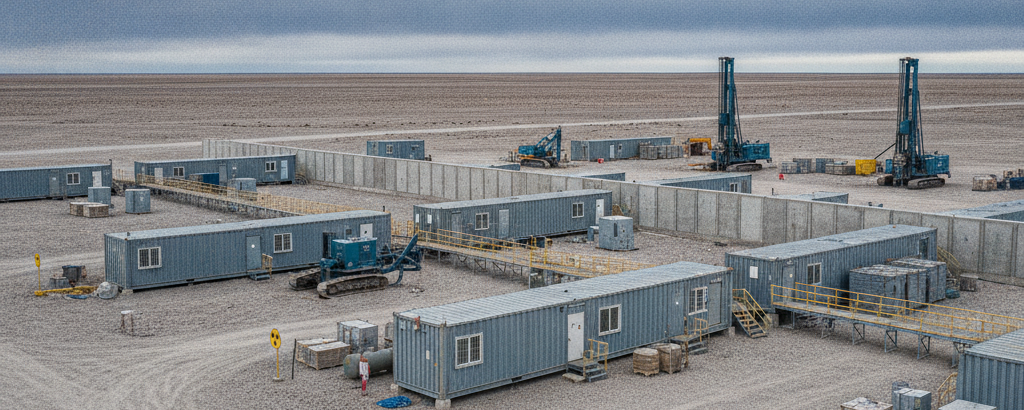
When two deliver more than one: the JV principle in uranium exploration
Commodity exploration is expensive. A single drilling program that penetrates only a few hundred meters into the ground can consume hundreds of thousands of dollars before a gram of ore is ever extracted. For junior explorers with limited cash, this creates a familiar trap: without drill results, no capital inflows; without capital, no drills. Joint ventures are an established way out, and in uranium they are especially common.
The principle is straightforward: two or more parties contribute different resources to a shared operating entity. One brings the property and technical know-how; the other brings capital, local presence, or operational experience. Costs and future revenues are split proportionally. Simple enough on paper, but in practice the arrangement changes a project’s risk profile, valuation, and governance in ways that are worth thinking through carefully.
JV, earn-in, and 100% ownership compared
Before evaluating a uranium exploration project, it pays to look closely at the ownership structure. There are essentially three basic models:
- 100% ownership: The explorer holds all rights independently. It bears the full risk but also retains all future profits. This requires either strong self-financing or frequent capital raises.
- Joint venture (JV): Two partners hold the project jointly, often through a purpose-built operating company. Costs and revenues are split by ownership share. Control rights depend on the equity stakes involved.
- Earn-in agreement: Partner B gradually acquires a stake by spending pre-defined amounts on the project. Only after the milestones are met does a full JV or fixed interest come into existence.
| Structure | Capital requirement (explorer) | Control | Upside participation |
|---|---|---|---|
| 100% sole ownership | High | Full | 100% |
| Joint venture 50/50 | Shared | Parity | 50% |
| Earn-in by partner | Low (initially) | Shrinking | Variable |
Blue Sky Uranium and its JV operating company IMSA in the Argentine province of Río Negro follow this pattern: the Canadian junior contributes the property and geological expertise, while IMSA handles operational tasks — regulatory work, logistics, security. In Argentina, as in other Latin American mining regions, this split is common because permitting depends heavily on local relationships.

Why partnerships make particular sense in uranium exploration
Uranium differs from most other commodities in one key respect: regulatory burden and geopolitical sensitivity are above average. In many countries, uranium exploration operates under its own permitting regime, and local acceptance depends strongly on whether the on-the-ground partner has the right network.
A JV addresses this on two levels: it brings capital for drilling and roots the project in the local operating environment. A purpose-built operating company can hire local employees, contract domestic service providers, and move permits along more efficiently than a remotely managed foreign entity ever could.
A rough analogy is the franchise model, though it only goes so far: an international company brings the concept, while the local partner knows the market. Both give something up and both gain something. The difference is that uranium JVs have no standard template; every contract is different.
What the JV structure means for project valuation
For investors analyzing a uranium junior, the JV structure raises questions that need answering before any assessment is formed.
What is the effective project interest? An explorer with a 60% stake in a project reporting 100 million pounds of uranium resources has economic access to 60 million pounds, not 100 million. This dilution is often clearly disclosed in company filings but gets overlooked by investors who focus on headline numbers.
Who bears costs in the event of non-performance? Many JV agreements contain dilution clauses: if a partner fails to contribute its share of costs, its interest decreases automatically. This can be either an opportunity or a risk for the lead explorer, depending on whether the partner drops out or whether the explorer’s own stake grows as a result.
How transparent is the operating company? A local JV entity that is not publicly listed may face different reporting obligations than the parent company. It is worth checking how detailed the parent company’s disclosures about JV activities actually are.
In the Argentine case, the new exploration program includes a reverse circulation drilling campaign at the target area “Cuatro” as well as near-surface reconnaissance work along a corridor several kilometers long. Under NI 43-101, the Canadian regulatory framework for technical mining reports, drill results and resource definitions must be reported by category: Inferred, Indicated, and Measured. Only when additional drilling upgrades Inferred Resources to Indicated does project confidence reach the level needed to support a preliminary economic assessment.
JV structures and the commodity cycle
The appeal of JV arrangements shifts across the commodity cycle. During downturns, when capital is scarce and the uranium price is low, a JV is often the only way to keep a project alive. During bull markets, when equity raises are easier, explorers weigh the trade-off more carefully: a 100%-owned project with strong results is easier to sell to a major producer, or to fold into a merger, than one that comes with a JV partner attached.
JV structures are not a quality signal in themselves. They are a tool, and whether using one makes sense depends on timing, the project’s stage of development, and how much cash the explorer actually has. A junior that enters a JV early to fund a first drilling program is often making a reasonable call. A company that hands a well-defined project into a JV without any financial pressure may simply be giving away value.
When a strategic partner, such as a state-owned company or an established producer, takes a JV stake, share prices often react positively on the assumption that the geology has been endorsed. Whether that reaction holds up depends on the contract terms. Sometimes a prominent partner is driven entirely by offtake interest, not by any geological judgment.
What to look for in JV announcements
JV announcements from uranium juniors do not automatically play out well. They can accelerate exploration progress, but they also raise structural questions worth examining: what ownership ratios apply and how do they shift if costs overrun? Does the partner have real operational experience in the target country, or does it primarily bring capital? How are voting rights governed? And what resource categories currently exist, and which does the new program aim to improve?
Investors who focus only on drill meters and uranium grades while ignoring the ownership structure are reading the project incompletely. How a project is owned shapes what any discovery is actually worth.
Key terms in JV exploration
- Joint Venture (JV)
- A shared enterprise between two or more partners formed to carry out a defined project. Costs, risks, and revenues are split according to ownership interest. In mining, it is often structured as a separate operating company.
- Operating Company
- An independent entity that carries out day-to-day operational work on behalf of the JV partners, including drilling, permitting, and logistics. In Argentine uranium projects, it also handles local regulatory communications.
- Dilution Clause
- A contractual provision under which a JV partner’s interest decreases if that partner fails to meet its cost contributions. It protects the active partner but can produce complex shifts in ownership stakes.
- Reverse Circulation (RC) Drilling
- A drilling method in which rock samples are blown upward through the drill string. Faster and cheaper than diamond drilling, though it provides less sample integrity. Widely used in early-stage exploration.
- Inferred Resources
- The lowest resource category under NI 43-101. Based on limited sampling and geological extrapolation. Not to be confused with reserves; Inferred Resources have not yet been economically confirmed.
- Indicated Resources
- A higher resource category than Inferred, based on tighter drill spacing. Sufficient to support preliminary economic assessments, but not yet a bankable basis for project financing.
- NI 43-101
- The Canadian regulatory standard for technical mining reports, issued by the Canadian Securities Administrators. It prescribes how resources and reserves must be classified and disclosed.
- Earn-in Agreement
- A form of partnership in which a partner gradually acquires an interest in a project by meeting pre-defined expenditure milestones. Unlike an immediate JV, the ownership interest is earned only after the obligations are fulfilled.
⚠️ Important notice: This article is for informational and educational purposes only. It does not constitute investment advice, a recommendation, or a solicitation to buy or sell any security. Investments in small-cap exploration and mining companies carry a high risk, including the potential total loss of capital. Before making any investment decision, consult a registered financial advisor and conduct your own analysis. Boersen Post Team is not responsible for decisions taken based on the content published here.