Option Structures in Uranium Juniors: What Full Exercise Signals
June 18, 2026
US Uranium Project Permitting Phases: What Investors Need to Know
June 18, 2026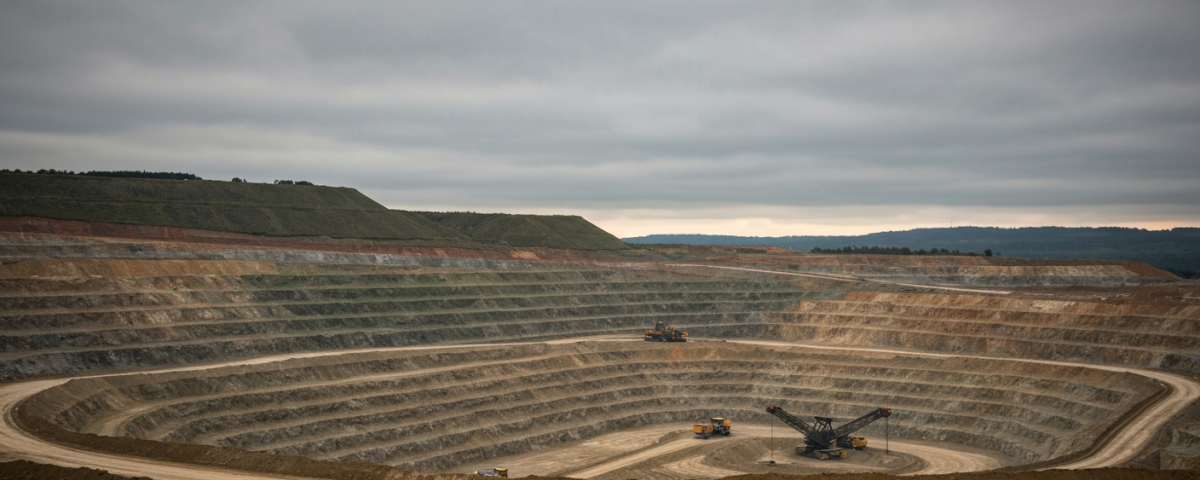
When a drill hole cuts through hundreds of meters of copper
In exploration, some drill hits make headlines, while others change how geologists think about an entire region. The difference rarely comes down to grade alone — spatial extent matters just as much. Wide intersections of several hundred meters of copper equivalent are among the strongest signals that an area hosts not merely a single occurrence, but potentially a full porphyry system.
Over the past several weeks, multiple junior explorers have published results of this kind from Idaho, Chile, and British Columbia. Each result could be read as an isolated corporate milestone. Taken together, though, they point to a commodity that, for geopolitical reasons, is climbing higher on western supply planners’ procurement lists.
Porphyry systems: geology and capital mechanics
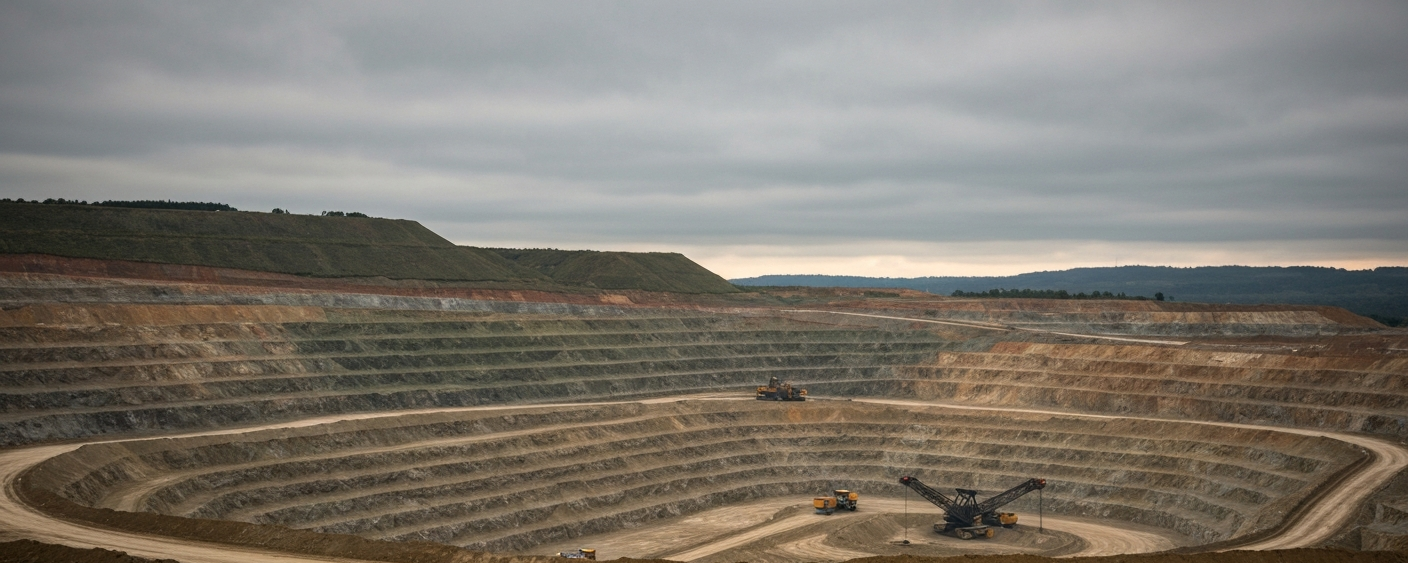
Copper porphyries are large-volume magmatic bodies in which copper — often alongside gold, molybdenum, or silver — occurs in fine dissemination across broad zones. Unlike narrow, high-grade veins, they are defined by low to moderate grades at very large volumes. The apparent drawback of low grade is offset by the bulk-mineable nature of the system: porphyries can be extracted in large-scale open pits with considerable cost efficiency.
For investors reading exploration drill data for the first time, an analogy may help. Imagine a soap bubble trapped inside rock. The larger the bubble, and the more evenly copper is spread through the bubble wall, the more attractive the system is for large-scale industrial mining. Wide intersections of 400, 500, or 800 meters show that the bubble is large — even if the metal concentration in the wall looks comparatively modest.
To put it plainly: a drill hole that cuts 788 meters at 0.54% copper equivalent contains, by simple arithmetic, an enormous quantity of potentially ore-grade material, provided the geological control parameters hold. Many high-grade silver or gold projects deliver economic zones of 5 to 20 meters. A porphyry delivers a multiple of that in thickness, but runs on a different economic logic entirely.
Defense supply chains and commodity logic: why copper has no substitute
The defense industry is among the most commodity-intensive sectors in existence, and copper sits in an exceptional position within it. A modern U.S. Navy destroyer contains several hundred tons of copper in wiring, heat exchangers, and electronic systems — a figure cited in shipbuilding trade publications, though one that varies by vessel class. Artillery shells, torpedoes, communications equipment, radar: virtually every component of a modern armed force depends on the red metal.
This demand is not cyclical. Unlike rare earths or specialized semiconductor metals, copper has no practical substitute across many of its applications. Aluminum can replace it in certain contexts, but carries significantly lower conductivity. That separates copper from materials where research or substitution offers medium-term relief.
For procurement planners in western defense industries, this creates a real structural problem: copper production is geographically concentrated, with Chile and Peru as dominant producers, followed by the Democratic Republic of Congo and China. Projects in politically stable jurisdictions with investment-friendly mining law are therefore assessed differently from a supply-chain perspective than deposits in high-risk regions.
When a project sits in a stable jurisdiction, is mineralized at depths shallow enough for open-pit mining, and delivers wide, continuous intersections, its relevance to western commodity strategies increases — regardless of whether the company itself focuses on defense. That is basic procurement logic, not a contrarian observation.
| Characteristic | High-Grade Veins | Copper Porphyry Systems |
|---|---|---|
| Typical thickness | 1–20 meters | 100–800+ meters |
| Typical grade (CuEq) | 1–5%+ | 0.3–0.8% |
| Mining method | Underground / selective | Large-scale open pit |
| CAPEX requirement | Moderate | High (but scalable) |
| Strategic suitability for bulk mining | Limited | Very high |
District-scale evidence: what multiple drill holes say together
A single wide drill hole is a clue. Multiple wide drill holes across a broader area, with consistent grades and demonstrable continuity, are a different thing. In exploration geology, this is called district-scale potential: the system may contain several economic zones, not just a single ore body.
The pattern is visible in established copper porphyry camps. In the Atacama region of Chile and the Cordilleran Belt in British Columbia, individual occurrences accumulated over decades before geologists recognized them as parts of a much larger metallogenic belt. That regional context ultimately justified the large capital investments. No single early drill hole did.
For small-cap investors, the question shifts accordingly. It is no longer simply about how much copper sits in one drill hole, but about how large the overall system could be — and what share of that expectation is already priced into the company’s current market capitalization. That is a different calculation, and a harder one.
Worth stating again: drill results without an independently certified resource estimate are technical raw data. Qualification of that data by a Qualified Person under NI 43-101 or an equivalent regulatory framework is the next necessary step before any reliable economic statements can be made.
Interpreting drill results, not just reading them
The fact that so many wide copper porphyry intersections from various jurisdictions are appearing simultaneously has a fairly plain explanation: more capital is flowing into drilling programs because strategic metals face greater demand — driven by electrification and rising defense budgets — than they did five years ago. More drilling generates more results, and more results generate more press releases.
Anyone who wants to read such announcements critically should at minimum ask a few basic questions. Where does the mineralization begin? Near-surface zones are cheaper to develop than deep-seated ones. How consistent are the grades along the length of the drill hole? A thickness of 800 meters with highly variable individual values says something different from a continuous zone. What does the infrastructure look like? Access to water, power, and roads is not a secondary detail in open-pit porphyry mining — it often drives the cost outcome more than grade does.
Wide drill results provide a first picture. Geological context, independent data validation, and a clear sense of where a project sits in the development cycle are what make that picture legible. Many press releases convey genuinely new information. Some are simply loud.
Key technical terms for beginners
- Copper Porphyry
- A large-volume magmatic ore system with finely disseminated copper (often plus gold, molybdenum). Defining characteristics: low to moderate grades over a very large spatial extent, typically suited to bulk open-pit mining.
- Copper Equivalent (CuEq)
- A combined grade value that converts all economically relevant metals in a drill hole (copper, gold, silver, molybdenum, etc.) into a single copper percentage using prevailing metal prices. It simplifies comparison between projects.
- Intersection
- The mineralized interval within a drill hole, measured in meters, over which a minimum grade has been established. Expressed as: thickness (m) x grade (%).
- District-Scale Potential
- The geological assessment that an area may host not just a single deposit, but multiple economic ore bodies within a regional metallogenic system.
- NI 43-101
- Canadian regulatory standard for public disclosure of mineral resources and reserves. Requires certification by an independent Qualified Person.
- Resource vs. Reserve
- A mineral resource is a geologically substantiated quantity estimate (Inferred / Indicated / Measured). A reserve (Proven / Probable) is the economically mineable portion, based on a feasibility study. The two terms are not interchangeable.
- Open-Pit Mining
- A mining method in which large volumes of low-grade rock are extracted in an open surface operation. Advantages: high mechanization potential and low operating cost per ton. Disadvantages: high initial capital expenditure and large surface footprint.
⚠️ Important notice: This article is for informational and educational purposes only. It does not constitute investment advice, a recommendation, or a solicitation to buy or sell any security. Investments in small-cap exploration and mining companies carry a high risk, including the potential total loss of capital. Before making any investment decision, consult a registered financial advisor and conduct your own analysis. Boersen Post Team is not responsible for decisions taken based on the content published here.