From Exploration to Project Maturity: What a PFS Means for Gold Stocks
June 23, 2026
DFS Maturity in Silver-Gold: What a Billion-Dollar NPV Triggers
June 24, 2026
Tungsten: the metal nobody talks about
When people think about semiconductors and defense technology, they reach for silicon or rare earths. Tungsten almost never comes up — even though it sits inside virtually every modern chip: as the interconnect metal between a processor’s transistor layers, and as the hard-metal base for precision tooling and kinetic weapons. The supply problem is well understood inside the industry but rarely stated plainly: more than 80 percent of global tungsten production comes from China. That dependence has pushed western governments and capital markets to look elsewhere, and a new round of exploration is now underway in politically stable jurisdictions.
A thin market with no easy substitute
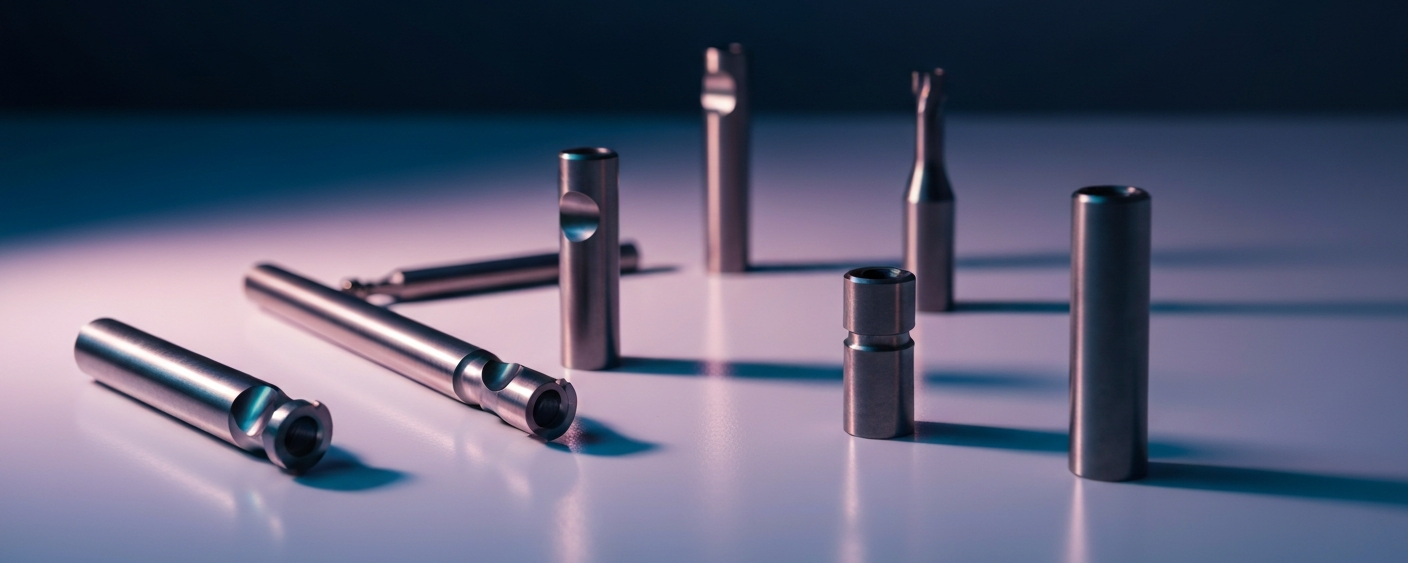
Tungsten (symbol W, atomic number 74) has the highest melting point of any metal at just under 3,420 degrees Celsius, which is why it cannot simply be swapped out. It is the material of choice for cutting tools in semiconductor manufacturing — wafer scribing, for instance — as well as for carbide drill bits and kinetic penetrator rounds.
Global output is comparatively small: under 90,000 tonnes of tungsten trioxide equivalent per year. Nothing like the diversified supply chain that exists for copper or iron ore. Vietnam, Russia, and Austria — home to the historic Mittersill mine — each contribute meaningful volumes alongside China, but North America has been effectively absent from the producer map since its mines shut down in the 1980s and 1990s.
Anyone in the western world sourcing tungsten for chip fabs or defense contracts therefore depends almost entirely on Asian supply. China has already imposed export controls on several strategic metals, and that is a concrete risk for western buyers, not a theoretical one.

How tungsten deposits form, and how explorers find them
Tungsten occurs mainly in two geological settings: skarns and quartz-vein systems known as greisens. Skarn deposits form when hot magmatic fluids intrude into limestone and alter the rock through metasomatism, a process that can concentrate wolframite or scheelite. Scheelite has a practical field advantage — it fluoresces blue-white under UV light, so geologists can spot it without lab work.
Historic mines in Nevada and British Columbia worked these skarn systems and closed when tungsten prices fell and Chinese oversupply killed the economics. Junior explorers returning to these sites today are not starting from nothing: old drill cores and production records give them a geological reference point.
Airborne VTEM surveys (Versatile Time Domain Electromagnetic) offer a complementary approach. Tungsten minerals themselves are poor conductors, but the sulfide minerals that accompany them in skarn systems respond clearly to electromagnetic pulses sent from the air. A VTEM survey can map anomalous zones before a single drill hole is planned, which helps contain the cost of early-stage programs. For small caps, where every drilled meter hits the budget directly, that matters.
| Feature | Skarn tungsten | Quartz-vein tungsten (greisen) |
|---|---|---|
| Formation | Magma–limestone contact | Granite-associated |
| Primary mineral | Scheelite, wolframite | Wolframite |
| Identification marker | UV fluorescence (scheelite) | Quartz–tourmaline association |
| Typical associated elements | Molybdenum, copper, silver | Tin, molybdenum |
| Geophysics | VTEM, IP surveys | Magnetics, radiometrics |
What the current cluster of activity in Nevada and BC actually means
When several junior explorers in different jurisdictions release similar announcements within weeks of each other, there is usually a common trigger. Rising tungsten prices or political signals around critical minerals procurement can both move capital into a sector at once. That appears to be what is happening now.
On jurisdiction: Nevada and British Columbia rank consistently near the top of the Fraser Institute Mining Index. Permitting frameworks are understood, political risk is low, and both the TSX Venture Exchange and OTC markets provide workable capital market infrastructure. That sets these projects apart from tungsten occurrences in less stable regions.
On resource classification: for Canadian projects, the NI 43-101 standard governs how geological certainty is reported. An Inferred Resource carries far less confidence than an Indicated or Measured Resource. Positive drill assays are not a resource estimate — they point to geological potential and nothing more. Treating these categories as equivalent is a mistake investors make often enough that it is worth stating directly.
On dilution: junior explorers finance drilling through private placements, and each round dilutes existing shareholders. Several rounds are typically needed before a project reaches a feasibility study. Anyone comparing share price performance to project progress should keep that in mind.
Where tungsten actually sits in the chip supply chain
The connection is more direct than most reporting suggests. In a modern logic chip, tungsten plugs — rods at nanometer scale — connect the transistor layers to each other. They are deposited via chemical vapor deposition (CVD) from tungsten hexafluoride, a process chemical that comes from primary tungsten. There is no practical substitute for this step at current chip geometries.
Tungsten carbide is also the dominant material for cutting edges in the precision mechanics of chip manufacturing equipment. Policy debates about semiconductor independence rarely get this deep into the supply chain, which may explain why tungsten tends to be underpriced in market valuations relative to its actual role. The segment is thinly traded, so when sentiment shifts, it moves sharply in both directions.
Keeping early-stage exploration in proportion
A confirmed skarn anomaly is a starting point. Between that and a bankable feasibility study, five to ten years and multiple financing rounds are typical — and many projects never reach production at all. Junior mining has a low base rate of success, and there is no particular reason to expect this cycle to be different.
What makes the current activity worth watching is that capital is moving into a supply gap that is both real and specific. Whether any individual project can fill part of that gap will come down to drill results and metallurgy. Separating a genuine geological signal from press-release optimism is unglamorous work, but it is the only kind that produces useful analysis in this sector.
Key terms for tungsten investors
- Scheelite
- Calcium tungstate (CaWO₄), the most commonly mined tungsten mineral. Recognizable by its blue UV fluorescence. Typically occurs in skarn deposits.
- Wolframite
- Iron–manganese tungstate, the second major tungsten mineral. Dark, dense, and found primarily in quartz veins and greisen deposits.
- Skarn
- Metasomatic rock formed when magmatic fluids alter limestone. A common host for tungsten, copper, and molybdenum mineralization.
- VTEM (Versatile Time Domain Electromagnetic)
- An airborne geophysical method that uses electromagnetic pulses to measure conductivity anomalies in the subsurface. Important for identifying sulfide-rich zones in skarn systems.
- NI 43-101
- The Canadian reporting standard for mineral resources and reserves. It strictly distinguishes between Inferred, Indicated, and Measured Resources, as well as Probable and Proven Reserves.
- Tungsten carbide (WC)
- A compound of tungsten and carbon. Extremely hard, and the primary material for cutting tools and drill bits in precision industries.
- CVD tungsten (chemical vapor deposition)
- A semiconductor manufacturing process in which tungsten is deposited from the gas phase onto chip surfaces, forming conductive interconnect plugs between transistor layers.
- Private placement
- A capital raise by a publicly listed company through the direct sale of new shares to institutional or accredited investors, without a public offering. The standard financing instrument for junior explorers; results in dilution of existing shareholders.
⚠️ Important notice: This article is for informational and educational purposes only. It does not constitute investment advice, a recommendation, or a solicitation to buy or sell any security. Investments in small-cap exploration and mining companies carry a high risk, including the potential total loss of capital. Before making any investment decision, consult a registered financial advisor and conduct your own analysis. Boersen Post Team is not responsible for decisions taken based on the content published here.