M&A Pipeline in the Gold Sector: Why Shovel-Ready Projects Are Scarce
July 9, 2026
Project Acquisition vs. Greenfield: HREE District Logic in Labrador
July 11, 2026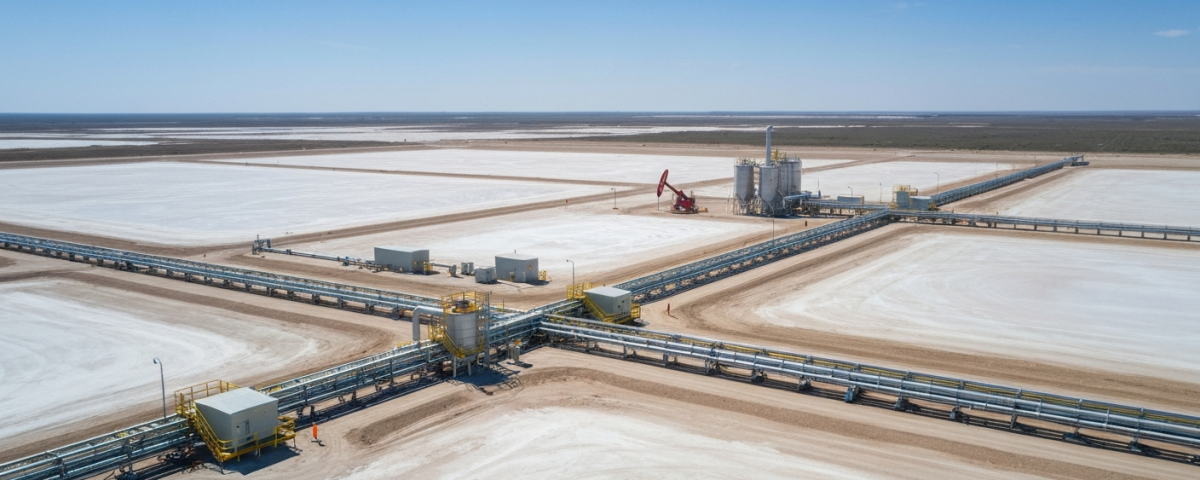
When pipelines and pumps matter more than the drill hole
In the lithium sector, investors almost automatically look first at resource estimates, drill cores, and mineral grades. That is understandable, because resource size theoretically determines a project’s potential value. In practice, though, a lithium deposit in the ground is worthless without a cost-efficient path to development. For lithium brine projects in North America especially, one factor tends to get taken seriously too late: existing infrastructure.
A Canadian junior explorer focused on lithium brine recently signed a non-binding letter of intent (LOI) securing the option to acquire key infrastructure assets for its brine project in northwestern Alberta. At first glance this sounds like a footnote. The project logic behind it is less obvious than it appears.
Brine projects: why infrastructure works differently than in hard rock
Lithium brine projects operate quite differently from conventional hard rock exploration. With hard rock lithium — spodumene pegmatites being the common example — rock is blasted and processed, and the infrastructure requirements broadly resemble traditional mining. Brine projects involve pumping lithium-bearing saltwater from underground aquifers, processing it, and converting it into lithium carbonate or lithium chloride.
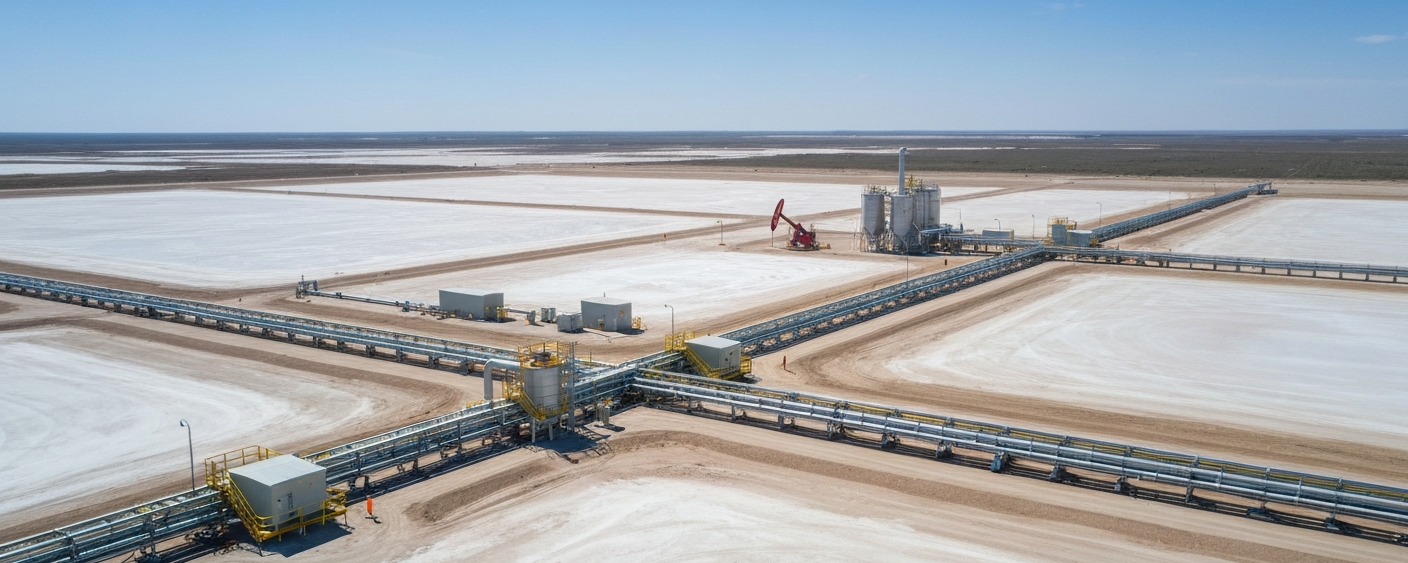
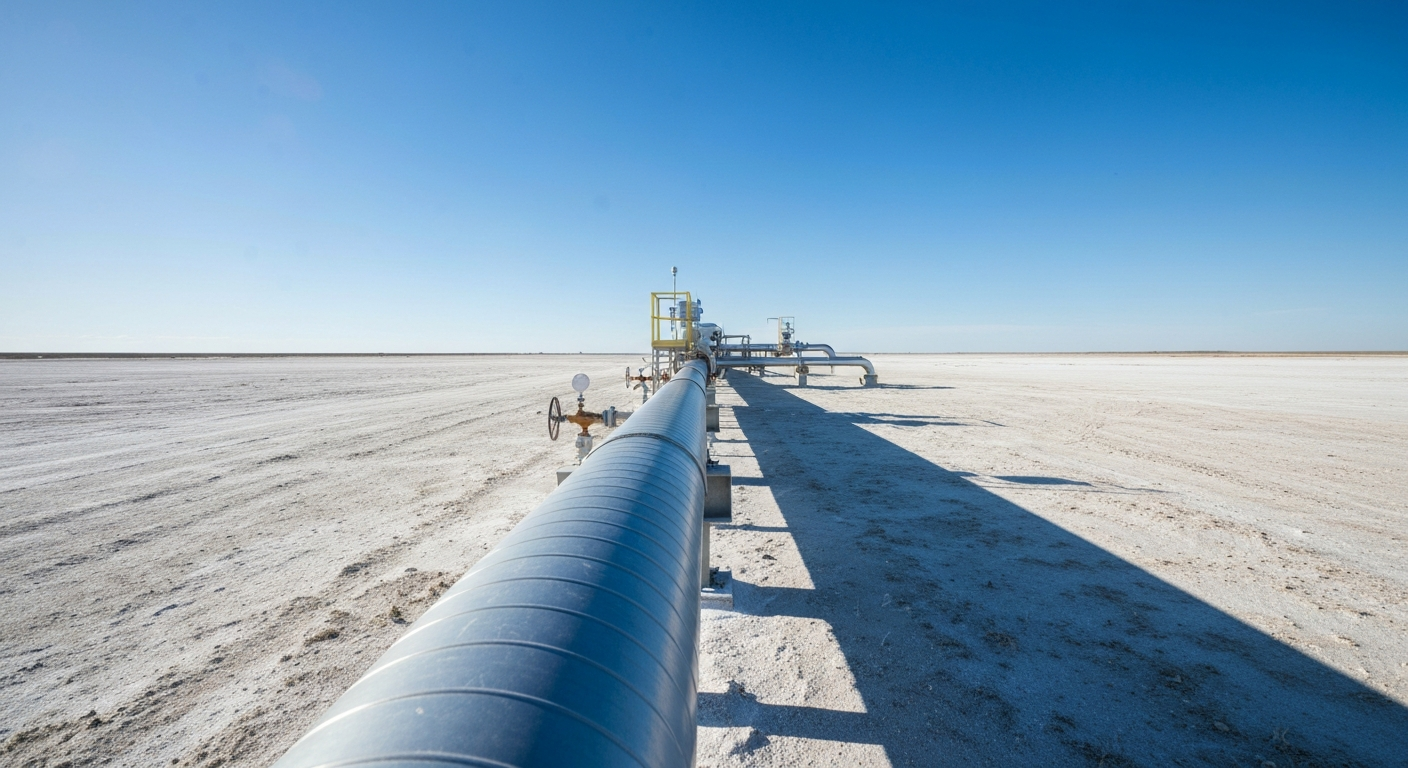
That requires pumping systems, pipelines, evaporation ponds, processing facilities, and a reliable power supply. In remote regions, all of it must be built from scratch, which is expensive and slow. Northwestern Alberta is an established energy region, and infrastructure left over from oil and gas operations often already exists: drill holes, pipelines, road access, grid connections. A company that can take over those assets avoids significant construction costs and cuts months off its timeline. For a junior miner with limited capital, that gap is not trivial.
What an LOI actually means — and what it does not
A letter of intent is a non-binding expression of interest. The parties signal a general willingness to cooperate or complete a transaction without being legally bound. LOIs are standard tools in junior mining during early-stage negotiations.
Investors should keep a clear line between an LOI and a binding agreement. An LOI can fall through if price expectations diverge, due diligence turns up problems, or market conditions shift. That said, an LOI does not appear by accident. It shows that management is actively working on project development and taking steps to reduce cost risk, rather than simply drilling and waiting.
In the case of this Alberta brine project, the LOI signals two things: the company is directly addressing an infrastructure gap, and the asset owner is in principle open to a transaction. Whether a binding agreement follows is a separate question.
| Comparison criterion | Project without existing infrastructure | Project with acquired infrastructure |
|---|---|---|
| Initial capital requirement (CapEx) | High | Significantly reduced |
| Development timeline | Longer (planning + construction) | Shorter (conversion + adaptation) |
| Permitting risk | More new permits required | Partially existing approvals usable |
| Technical project risk | Higher | Lower (proven infrastructure) |
| Capital market signal | Neutral | Positive (visible development progress) |
How the market reacts to infrastructure news
In early project stages, a wide range of risks is priced in: technical uncertainty, capital requirements, permitting hurdles. When one of these is reduced by securing access to existing infrastructure, the project can be reassessed on better terms.
That does not necessarily show up immediately in the share price. Small cap prices often lag operational news by weeks or months. Investors who model brine projects carefully will feel the difference in their project numbers once infrastructure access is confirmed, much as a building lot with existing utility connections commands a higher price than an undeveloped parcel of the same size.
The timing matters too. After the sharp drop in lithium carbonate prices in 2023 and 2024, capital providers became considerably more selective. Projects that can reach production faster and with less upfront capital have a better shot at securing financing than those that cannot.
What investors should take away
Signing an LOI to acquire infrastructure is not a project success in itself. It does indicate that a management team is thinking about the cost side and not merely accumulating drill meters. When analysing a project, ask what assets are already in place or secured. Pipeline access, existing drill holes, and grid connections are direct cost drivers, not background details. Regions with prior industrial use tend to offer better starting conditions than entirely undeveloped ground, and that is worth pricing in early.
Commodity price risk, capital market conditions, and the technical uncertainties of brine processing remain very much present for any junior explorer. Secured infrastructure removes part of the development risk. Everything else still needs scrutiny.
Key terms for brine investors
- LOI (Letter of Intent)
- A non-binding expression of intent between two parties, signalling general interest in a transaction or cooperation. It is not a legally binding contract, but it is a formal step in negotiations.
- Brine project (lithium brine)
- An exploration or production project in which lithium is extracted from underground lithium-bearing saltwater (brine), as distinct from hard rock lithium sourced from minerals such as spodumene.
- CapEx (capital expenditure)
- Investment costs for constructing or acquiring assets and infrastructure. In mining projects, CapEx covers everything from mine construction to processing facilities. Lower CapEx improves a project’s economic viability.
- Project de-risking
- Reducing project risks through measurable development steps: securing infrastructure, obtaining permits, completing feasibility studies. Each such step can positively influence a project’s valuation.
- Inferred resource / indicated resource
- Mineral resource classifications under the Canadian NI 43-101 standard. “Inferred” refers to broadly estimated resources with high uncertainty; “Indicated” is supported by more detailed evidence. Neither constitutes a reserve and neither can be treated as a confirmed production base.
- Aquifer
- An underground water-bearing rock formation. In brine projects, the aquifer contains lithium-bearing brine that is brought to the surface via pumping systems.
- Arm’s length transaction
- A transaction between independent, unrelated parties. In mining companies, the arm’s length condition matters because it excludes conflicts of interest and helps ensure that terms reflect market conditions.
⚠️ Important notice: This article is for informational and educational purposes only. It does not constitute investment advice, a recommendation, or a solicitation to buy or sell any security. Investments in small-cap exploration and mining companies carry a high risk, including the potential total loss of capital. Before making any investment decision, consult a registered financial advisor and conduct your own analysis. Boersen Post Team is not responsible for decisions taken based on the content published here.