Tin as a By-Product: How Diversification Strengthens Critical Mineral Portfolios
July 11, 2026
Capital Rotation in Gold Small Caps: What Sector-Wide Price Surges Really Mean
July 15, 2026
A window that lasts only weeks
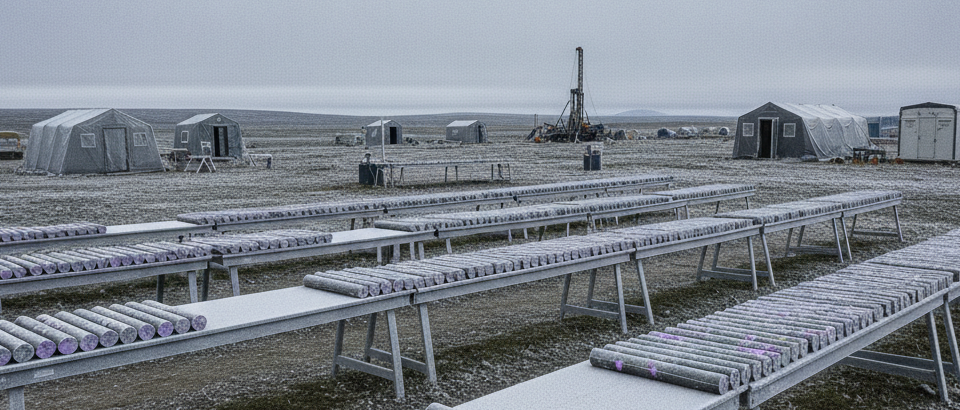
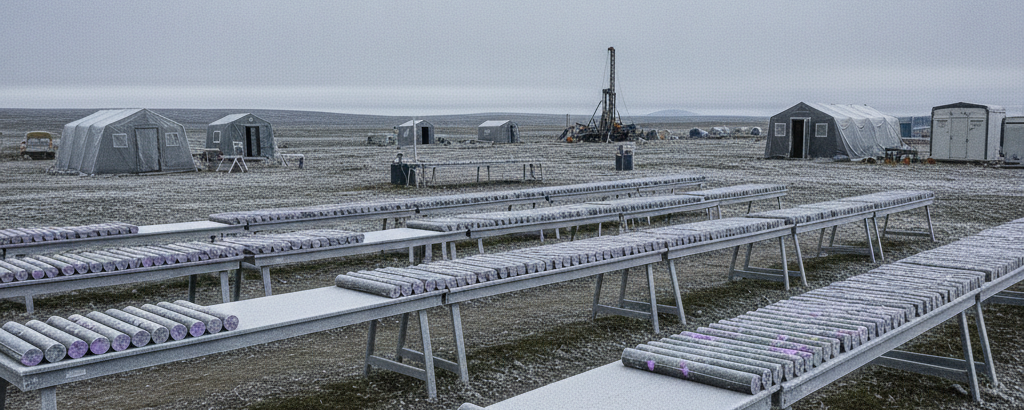
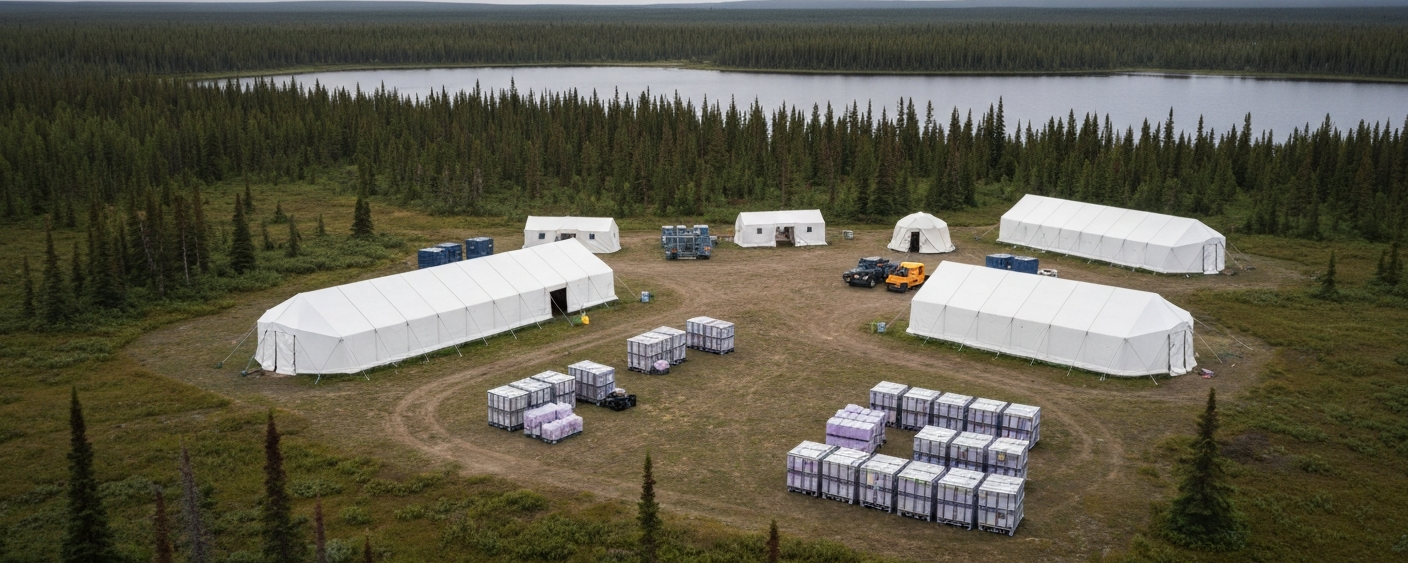
Anyone who follows exploration small caps knows the rhythm: late spring brings a flurry of announcements about planned drilling programs, and by autumn the first results start landing. In between is a period of tense waiting. The reason is simple physics. In Canada’s north, usable drilling months are scarce. Permafrost thaw cycles and remote logistics often leave only ten to fourteen weeks in which equipment can operate reliably.
The 2026 season has a distinct character: focus has shifted noticeably toward critical minerals. Rare earths and the metals needed for clean-energy technologies are central to several ongoing programs. For investors watching this sector, it is worth understanding the background to that shift rather than simply reacting to individual press releases.
Geopolitics is shaping exploration targets
China controls a substantial share of global rare earth production and processing. According to the U.S. Geological Survey, China’s share of global refining capacity sits well above fifty percent. For western supply chains in electric mobility and defense, that dependence has become a political problem. The U.S. has moved with some urgency; European governments have moved more slowly and with less coherence.
Canada is a practical place to start: its mining legislation is established, its capital markets are accessible through the TSX and TSX Venture Exchange, and many regions have barely been systematically explored. That combination has drawn both government-backed initiatives and private venture capital toward the country’s north.
Canada’s Critical Minerals Strategy and associated federal funding programs have, in recent years, made projects in remote regions more financeable. In some cases the government acts as co-financier or infrastructure provider, which changes the risk profile for institutional investors. That is a different thing from underwriting commercial success.

How the seasonal logic creates share-price catalysts
Understanding the operational mechanics behind drilling programs helps make sense of how share prices typically move. A junior explorer that begins drilling in June will generally publish initial results in August or September, assuming laboratory turnaround times and data interpretation go smoothly. That concentration of results in a short autumn window produces dense news flow and, with it, sharp volatility.
Price moves in this space tend to be one-sided. Strong drill results — high grades or unexpected extensions of a mineralized zone — can trigger sharp gains, while disappointing numbers are sometimes punished less severely, depending on what the market had already priced in. Investors who can read drill data technically hold a genuine edge over those who only react to headlines.
The timing of exploration results is predictable well in advance, which is more than most sectors offer. That does not make the outcome any easier to call — it just means investors can do their homework before the news hits.
| Project Phase | Typical Timeframe (Northern Canada) | Investor Relevance |
|---|---|---|
| Permit approval / program planning | January – April | Initial announcements, limited data basis |
| Active drilling season | May – September | Logistical updates, little hard data |
| Laboratory assay processing | August – October | Result reports accumulate |
| Resource estimate (NI 43-101) | Autumn / Winter | Potentially the most significant data points |
One factor that is easy to overlook: logistics drives costs. Remote northern sites typically require helicopter transport, temporary camps, and specialized equipment. Cost per meter drilled is substantially higher than on comparable projects in southern Canada, and that difference shows up in financing rounds. It is worth accounting for when comparing projects on paper.
What makes rare earths in the north particularly complex
Rare earth projects carry specific characteristics that raw grade figures alone do not capture. Whether the elements can actually be extracted from the host rock efficiently — the metallurgical question — often matters more than the percentage in the ore. Projects with attractive grades but difficult processing have repeatedly stalled before reaching production; the early operational history of Mountain Pass is a well-documented case.
The distribution within the rare earth suite also matters. A deposit dominated by light rare earths such as lanthanum and cerium is, by current market standards, less attractive than one with meaningful proportions of heavy elements such as dysprosium or terbium. Demand for those heavier elements, driven by permanent magnets in electric motors and wind turbines, is growing faster than supply can be developed outside China.
Geologically, Canada’s north is not uniformly prospective for rare earths either. Carbonatitic intrusive complexes and ion-adsorption clays are the preferred host rock types. Programs targeting those settings start from a more defensible position than those in less favorable geology — and the market does not always price that distinction correctly.
What autumn 2026 will actually show
Most drilling programs do not lead to economically viable resources. That was true when geopolitical tailwinds were weak, and it remains true now that they are strong. Western demand for secure supply chains is real, and so is government funding readiness. Neither changes what the drill core contains.
The autumn results will show which ongoing programs are producing numbers worth taking seriously. Investors tracking this sector should read the published technical reports carefully, particularly NI 43-101-compliant resource estimates. The distinctions between Inferred, Indicated, and Measured Resources, and between Probable and Proven Reserves, describe degrees of geological confidence and are not interchangeable terms.
- Critical minerals
- Raw materials classified as economically important and subject to supply risk. These include rare earths, lithium, cobalt, niobium, and other metals required for technology and defense applications.
- Rare earth elements (REE)
- A group of 17 chemical elements (the lanthanides plus scandium and yttrium), subdivided into light (LREE) and heavy (HREE) rare earths. Despite the name, many of these elements are not geologically scarce. Their concentrated processing outside China, however, remains very limited.
- NI 43-101
- Canadian regulatory standard for the public disclosure of mineral exploration information. It defines how resources and reserves must be reported, and draws a clear distinction between resources (Inferred / Indicated / Measured) and reserves (Probable / Proven).
- Inferred resource
- The resource category with the lowest degree of geological confidence. It is based on limited sampling data and is not suitable as the basis for a feasibility study. It must not be equated with reserves.
- Metallurgy / processability
- Describes how efficiently a mineral can be recovered from raw rock through chemical or physical processes. For rare earths, this is frequently a greater economic factor than the grade in the ore.
- HREE (heavy rare earth elements)
- Heavy rare earths such as dysprosium, terbium, and erbium. They are less abundant than light rare earths and are in particularly high demand due to their importance in high-performance magnets used in electric motors and wind turbines.
- TSX Venture Exchange (TSX-V)
- Canadian stock exchange for companies in early development stages, including most junior explorers. It is the most important global financing vehicle for commodity exploration with a small capital base.
⚠️ Important notice: This article is for informational and educational purposes only. It does not constitute investment advice, a recommendation, or a solicitation to buy or sell any security. Investments in small-cap exploration and mining companies carry a high risk, including the potential total loss of capital. Before making any investment decision, consult a registered financial advisor and conduct your own analysis. Boersen Post Team is not responsible for decisions taken based on the content published here.