Resource Updates at Copper Juniors: How Estimates Shift Valuations
August 1, 2026
Tethyan Belt: When Geology Means Jurisdiction Risk
August 1, 2026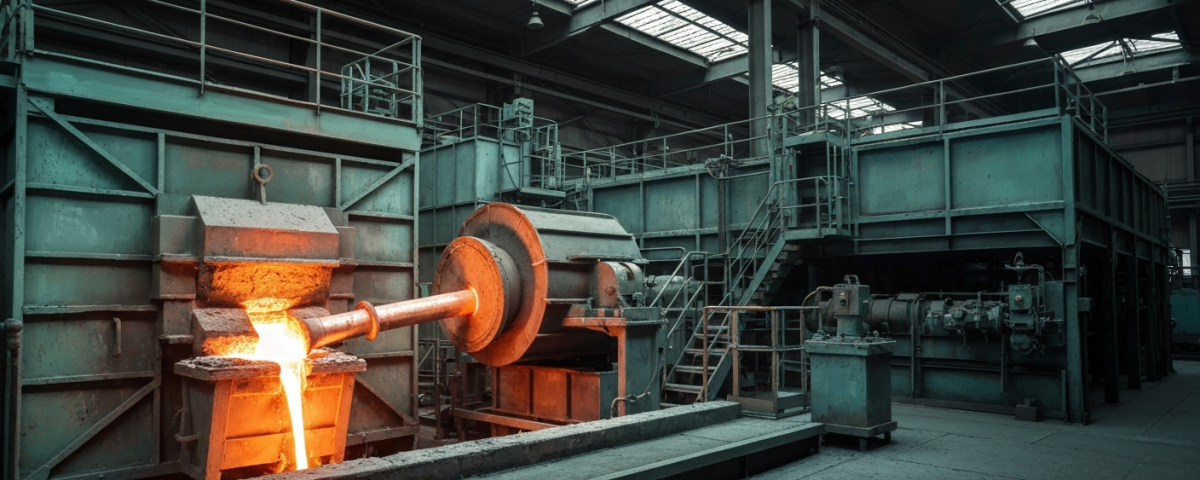

The moment ore becomes a commodity
In the world of copper juniors, one transition gets routinely underestimated: the step from a geologically proven deposit to a product that a smelter will actually buy. Geology alone is not enough. A project only becomes commercially relevant when the material it produces meets the metallurgical requirements of downstream processors, and that is what smelter trials are designed to confirm.
Smelter trials, sometimes called smelting tests or smelter assays, belong to the category of metallurgical validation work. They answer one question: can the copper concentrate produced be converted into high-grade metal under production conditions? The answer can determine whether a project gets financed at all.
From concentrate to blister copper: understanding the processing chain
After mining, ore passes through a processing facility, the concentrator, where it is refined into a copper concentrate, a powder with a significantly higher copper content than the original run-of-mine ore. This concentrate is then sold to smelters or processed directly on site.
At the smelter, the concentrate is heated and chemically transformed. The intermediate product is called blister copper, crude smelted copper with a purity of typically 98 to 99 percent. Electrolytic refining follows before the copper reaches the market as a cathode at 99.99 percent purity.
Smelter trials simulate this process under controlled conditions. A junior company that presents such tests with positive results has shown that its concentrate yields high-grade blister copper, and has removed a significant technical uncertainty from the project’s overall risk calculation.

Why metallurgical risk shapes project valuations
When analysts value copper junior projects, metallurgy tends to receive less attention than geology, permitting, or infrastructure, even though it has produced some of the costliest failures in the sector.
Projects with strong resource estimates have collapsed in later stages because the concentrate carried too much arsenic or bismuth, or because the material could not be processed economically through standard methods. Companies have then had to develop costly process modifications or rebuild the economic model for the entire operation.
Metallurgical tests follow a defined sequence. Laboratory flotation tests come first, then pilot-scale trials, and finally smelter trials using the actual concentrate. Each step eliminates a layer of technical uncertainty and brings the project closer to a feasibility study that lenders will accept.
| Test Phase | What It Shows | Significance for Investors |
|---|---|---|
| Laboratory Flotation | Basic amenability of the ore to processing | Early signal, high uncertainty |
| Pilot Flotation | Scalability, concentrate quality | Important intermediate step |
| Smelter Trial | Marketability of the concentrate | Clear risk reduction |
| Feasibility Study | Overall economic viability | Basis for project financing |
What positive smelter trial results signal in a market context
When a copper junior publishes smelter trial results confirming high-purity blister copper, the message is concrete: the concentrate meets the specifications of standard smelters. That is not automatic. Porphyry copper deposits in certain geological settings carry elevated arsenic levels that require additional processing. A clean trial result shows those hurdles either do not exist or have already been resolved.
Beyond that, the project reaches the stage where offtake negotiations with smelters become possible. Large smelting operations only enter long-term supply contracts when concentrate quality is reliably documented, and those preliminary agreements are frequently a prerequisite for project financing.
In capital markets, a confirmed metallurgical result reduces the discount investors apply to future earnings. The same resource tends to be valued more generously after a positive smelter trial than before it, which explains why these announcements often move share prices sharply.
Perspective for investors: what remains open, what has been proven
Positive smelter trial results are a real milestone, but not a final one. They establish metallurgical feasibility, not overall economic profitability. Capital expenditures, operating costs, infrastructure, and permitting remain separate risk categories that smelter trials do not address.
Investors following copper junior projects should treat metallurgical milestones as items on a checklist. Each one resolved reduces total uncertainty, but the project has to work through all of them before it can be considered production-ready. Resource estimates prepared under Canada’s NI 43-101 standard draw a clear line between Inferred, Indicated, and Measured categories. Only Measured Resources, combined with economic studies, can be upgraded to Proven or Probable Reserves, and that step requires a completed metallurgical data set.
Investors who enter copper junior projects early carry the full metallurgical risk. Those who wait until after validated smelter trials generally pay higher valuations but get a technically cleaner project in return. Which trade-off makes sense depends entirely on an individual investor’s tolerance for unresolved technical questions.
Key terms in metallurgical validation
- Smelter Trial
- A test series in which a copper concentrate is processed into blister copper under production conditions at a smelter or in a laboratory setting, to verify quality and compatibility with smelter specifications.
- Blister Copper
- Crude smelted copper with a purity of approximately 98-99%. It is produced during the smelting process and subsequently refined electrolytically into copper cathodes (99.99% purity).
- Copper Concentrate
- Processed copper ore in powder form with a significantly elevated metal content compared to run-of-mine ore. It is produced through flotation and sold to smelters.
- Penalties
- Price deductions imposed by smelters for undesirable impurities in the concentrate (e.g., arsenic, bismuth, mercury). High penalties can materially erode the economics of a project.
- Offtake Agreement
- A long-term supply contract between a mining company and a buyer (e.g., a smelter) that governs the purchase of defined quantities and qualities at agreed terms.
- Metallurgical Risk
- The risk that an ore body proves technically difficult or uneconomical to process, despite strong geological metrics. It is one of the key risk categories in the evaluation of mining projects.
- Feasibility Study
- A comprehensive technical and economic study that integrates all relevant parameters, including geology, metallurgy, capital expenditures, operating costs, and infrastructure, and forms the basis for project financing. Completed metallurgical test work is generally a prerequisite.
⚠️ Important notice: This article is for informational and educational purposes only. It does not constitute investment advice, a recommendation, or a solicitation to buy or sell any security. Investments in small-cap exploration and mining companies carry a high risk, including the potential total loss of capital. Before making any investment decision, consult a registered financial advisor and conduct your own analysis. Boersen Post Team is not responsible for decisions taken based on the content published here.