Metallurgical Tests for Copper Juniors: What Smelter Trials Prove
August 1, 2026
Mining Conferences as a Maturity Benchmark for Major Gold Projects
August 3, 2026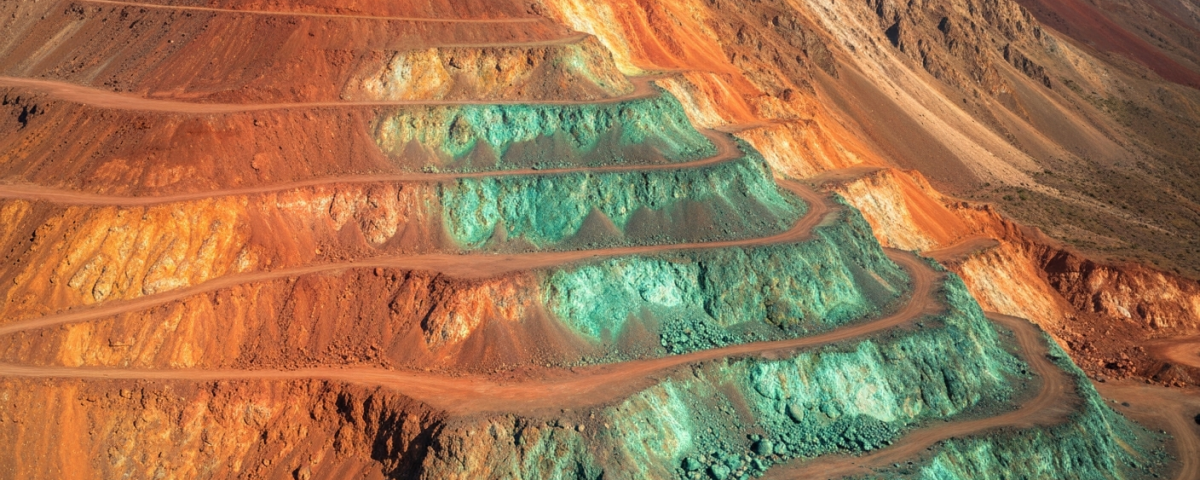
A corridor barely anyone knows
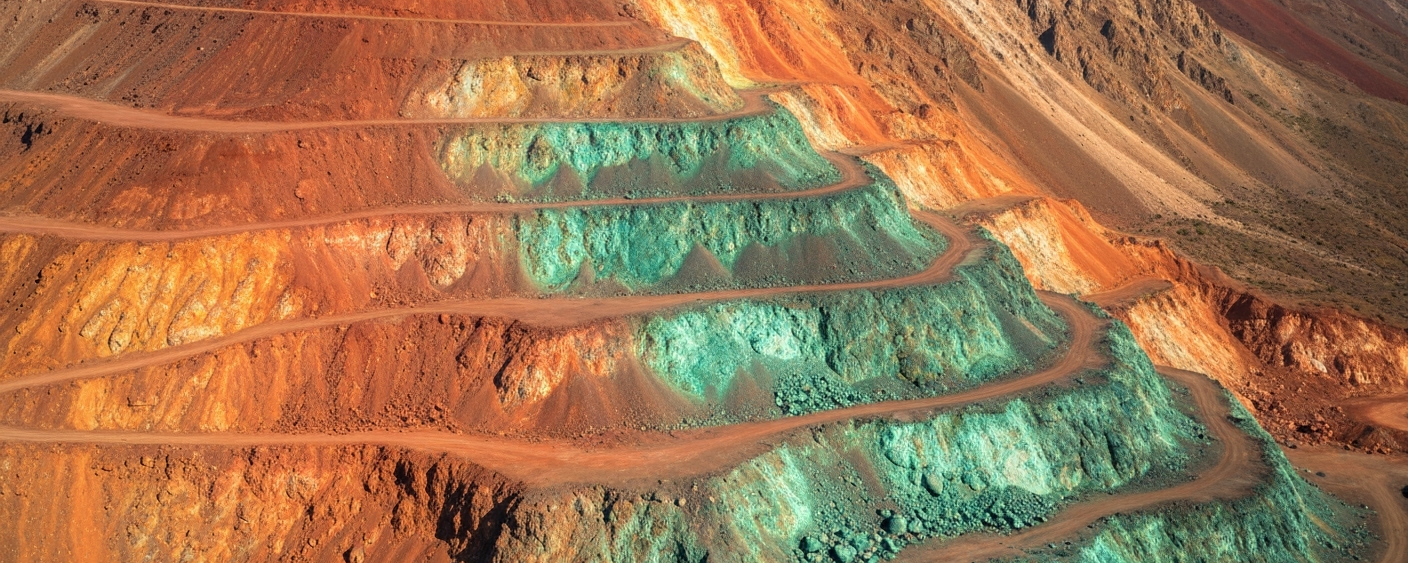
In commodity exploration, certain regions can spend decades overshadowed by established mining districts — until demand shifts and attention follows. The Tethyan Belt is one of those regions. This geological corridor runs from southeastern Europe through the Middle East and Central Asia to Southeast Asia, named after the ancient Tethys Ocean. When that ocean closed millions of years ago, the tectonic forces it generated created conditions well-suited to copper-gold porphyry systems.
Chile and Canada have long been the default answers when copper jurisdiction comes up. Much of the Tethyan Belt, by contrast, has seen only patchy exploration work. For junior explorers, that gap is the opportunity — and for investors, it takes some working through.
Why juniors end up in unfamiliar places
Copper demand is rising and shows no sign of reversing. Electric vehicles and grid expansion consume the metal in volume, and the deposits that are both accessible and politically straightforward are mostly spoken for. In Chile, the major producers control the productive ground. In the southwestern United States, permitting can delay a new project by years. In Canada, established companies already hold large parts of the most prospective districts.
For a junior with limited capital, the practical response is to look elsewhere — not because the alternative carries less risk, but because first-mover positions still exist. The Tethyan Belt has geologically documented porphyry systems at relatively low exploration density.
ASX-listed junior explorers have a long tradition here. The Australian exchange has historically been receptive to exploration small caps, and many of these companies operate far outside Australia, in Africa, Latin America, and Central Asia.
The geological logic behind Tethyan porphyry systems
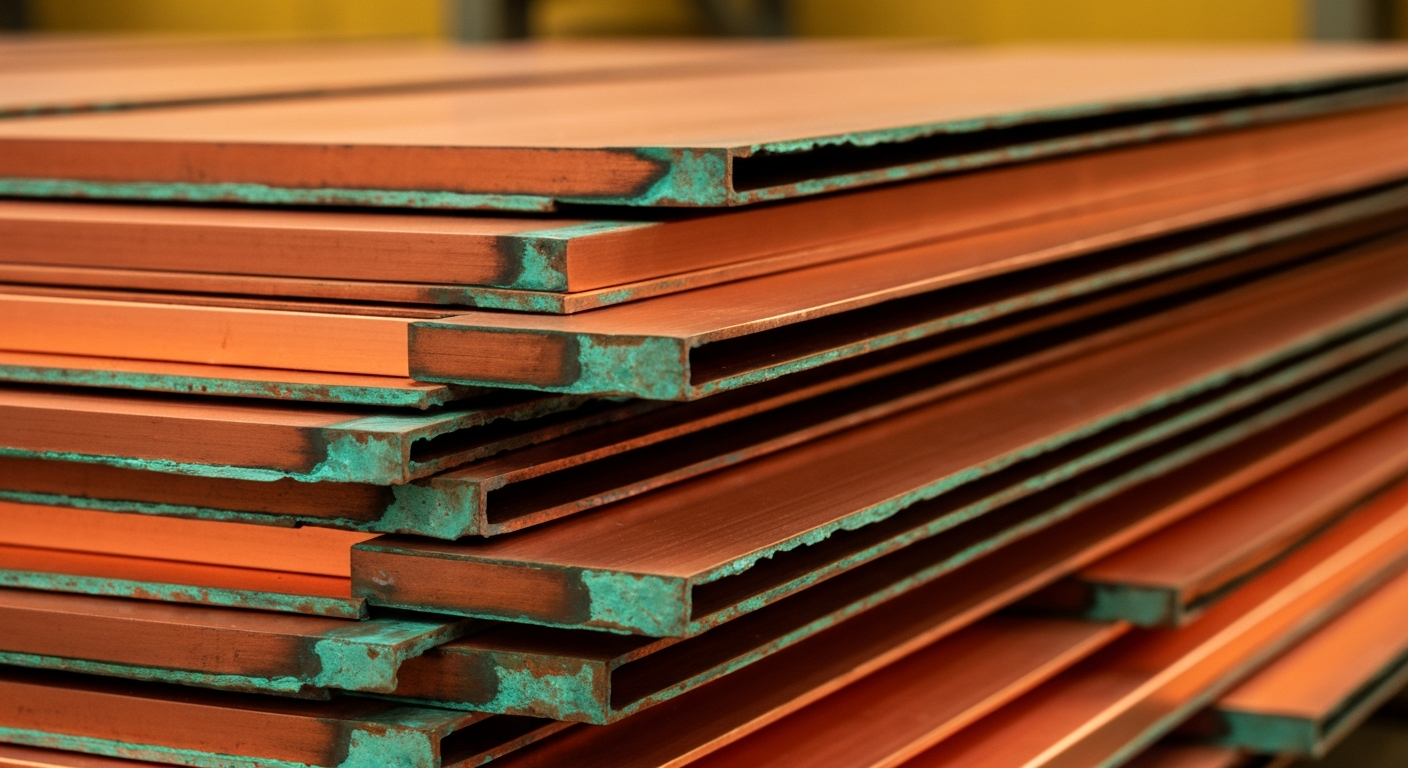
Copper porphyry deposits form when magmatic material intrudes into the crust, carrying metal-rich fluids. As those fluids cool, they deposit finely disseminated ore minerals across large, low-grade bodies — primarily copper, often with gold or molybdenum.
The Tethyan Belt is a zone where such magmatic events recurred across geological epochs. Known copper-gold porphyry systems in Serbia, Iran, and Pakistan all sit along it. Large sections remain only superficially explored, held back by political conditions, infrastructure gaps, or a simple absence of capital willing to take on the early work.
| Region in the Tethyan Belt | Known deposit types | Typical jurisdiction risk |
|---|---|---|
| Southeastern Europe (Balkans) | Copper-gold porphyry | Medium (EU accession progress varies) |
| Turkey / Caucasus | Porphyry, VMS | Medium to elevated |
| Central Asia | Porphyry, sediment-hosted | Elevated to high |
| Southeast Asia (e.g., Pakistan, Myanmar) | Porphyry, epithermal | High |
What jurisdiction risk actually means
Jurisdiction risk is not an abstraction. A change of government, a nationalisation push, or a rewritten mining law can void a licence or freeze a project outright. Within the Tethyan Belt, conditions vary sharply: Serbia as an EU accession candidate is a very different operating environment than a Central Asian single-party state.
Infrastructure matters too, and it is often what kills a project the geology never would have. Many parts of the belt lack roads or grid power, and building that out can turn an otherwise economic deposit into one that simply cannot be mined at a profit. Opaque permitting structures and uncertain property rights compound the problem, pushing timelines and costs well beyond initial projections.
Community acceptance is the factor that tends to get ignored until it becomes a crisis. Religious or ethnic tensions and environmental concerns can stall or kill a project even when all formal permits are in hand. In established mining countries, there are processes for managing this. In newer regions, companies often discover the problem only after it has become serious.
The difference between a junior working in the Tethyan Belt and one working in Québec is less about the geology than about the institutional environment. Québec has clear mining law, functioning courts, and political continuity. Many parts of the Tethyan Belt do not, which raises both the potential upside and the floor on how badly things can go wrong.
Structural pressure or speculative trend?
Several ASX junior explorers are reporting Tethyan Belt progress in the same reporting cycle, and the reasons are not hard to see. Copper demand is growing, available projects in stable jurisdictions are scarcer, and capital is moving toward the next exploration address. That creates pressure toward less developed regions.
For investors, what matters more is how far along a project actually is. Early field reconnaissance, geochemical sampling, and a drilling campaign sit at very different points on the risk and capital curve — they are not interchangeable. It also matters whether a resource estimate rests on historical figures or a modern, JORC-compliant calculation, and what share of a company’s market value is genuinely tied to this jurisdiction. Those are the questions worth spending time on before taking a position.
Terms worth knowing
- Tethyan Belt
- A geological corridor from Southern Europe through the Middle East and Central Asia to Southeast Asia. Formed by the closure of the Tethys Ocean; hosts numerous copper-gold porphyry systems.
- Copper porphyry deposit
- A deposit type characterised by large but low-grade copper, gold, and molybdenum mineralisation created through magmatic processes. Economically significant above a certain tonnage threshold.
- Jurisdiction risk
- Risk arising from the political, legal, and social environment of a region: unstable laws, nationalisation risk, corruption, inadequate infrastructure, or weak property rights.
- JORC Code
- The Australian and New Zealand standard for classifying and reporting on mineral projects, comparable to Canada’s NI 43-101. Distinguishes between resources (Inferred, Indicated, Measured) and reserves (Proven, Probable).
- Resource vs. reserve
- Resources are geologically defined quantities of a mineral with no guarantee of economic extractability. Reserves are the portion of resources determined to be mineable after technical and economic assessment. The two terms are not interchangeable.
- Early mover
- A company that enters a region or sector before competitors do. Licence entry costs may be lower, but exploration risk is correspondingly higher.
- Social licence to operate
- The acceptance of a mining project by local communities. Without it, projects can be blocked or delayed even when all formal permits are in place.
⚠️ Important notice: This article is for informational and educational purposes only. It does not constitute investment advice, a recommendation, or a solicitation to buy or sell any security. Investments in small-cap exploration and mining companies carry a high risk, including the potential total loss of capital. Before making any investment decision, consult a registered financial advisor and conduct your own analysis. Boersen Post Team is not responsible for decisions taken based on the content published here.