Tailings Revaluation: Why Waste Piles Hold Critical Metals
June 8, 2026
Benchmark Stock Effect: What ASX All-Time Highs Mean for Lithium Juniors
June 8, 2026

Three Metals, One Rock — Why LCT Pegmatites Change the Rules
In the world of commodities exploration, some discoveries advance a project incrementally. Others open up possibilities that were invisible before. The latter category includes finds where surface samples simultaneously show elevated grades of lithium, caesium, and tantalum. This is no coincidence: it reflects a geological pattern known as LCT pegmatites, which has attracted serious commercial interest in the critical minerals space.
For newcomers to commodities investing, this pattern is worth understanding. It connects geology, geopolitics, and capital markets in ways that become especially visible when multi-element deposits turn up during early-stage exploration.
What Makes Pegmatites Special — and Why LCT Is a Chapter of Its Own
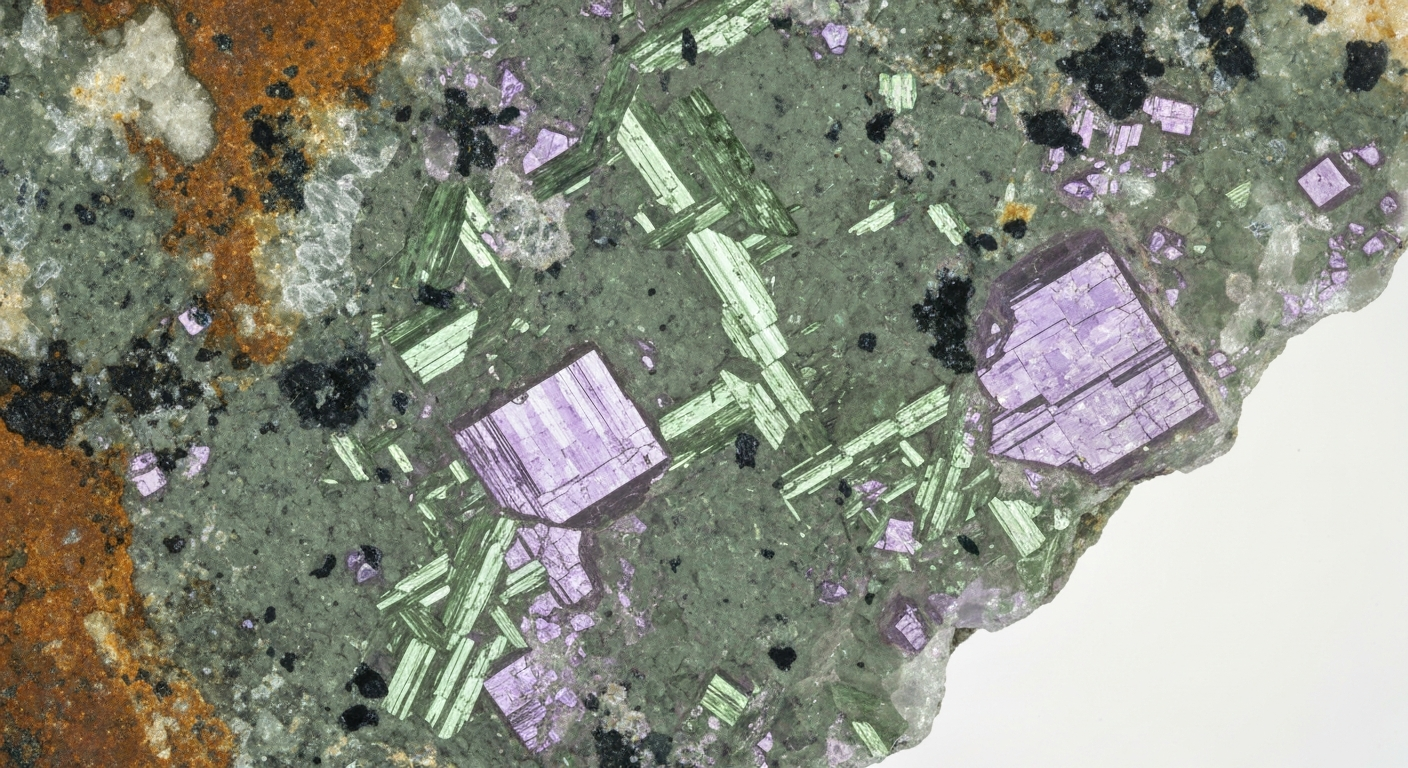
Pegmatites are intrusive igneous rocks characterized by unusually large crystals. They form in the final stages of magma cooling, when the remaining melt is rich in volatile elements and rare ions. This mineral-rich residual magma can be forced into fractures and cavities, where it solidifies into something unlike ordinary granite.
Within the pegmatite family, LCT pegmatites hold particular economic interest. The acronym stands for lithium, caesium, and tantalum — three elements that become concentrated together in certain pegmatite systems. The Greenbushes formation in Western Australia and the Tanco pegmatite in Canada are established examples of LCT systems that have produced commercial quantities of all three metals.
The key point: the co-occurrence of all three elements is not simply additive. It is diagnostic. Finding caesium and tantalum alongside lithium in surface samples signals a chemically differentiated pegmatite system that is usually deeper and more laterally continuous than simple lithium-spodumene deposits.
Three Supply Chains Under One Roof
What makes an LCT system interesting from an investment perspective? The answer lies in the fact that the three commodity markets operate independently of one another.
Lithium is the most familiar. It is a core material for battery cells in electric vehicles and stationary storage systems. The market is large, cyclical, and concentrated among a small number of major producers.
Caesium occupies a different niche altogether. It is used primarily as caesium formate, a dense fluid for drilling deep oil and gas wells. It also appears in atomic clock technology and pharmaceutical applications. The global market is small and the supplier base is extremely limited. Only a few significant primary producers exist worldwide, which gives caesium structural pricing advantages.
Tantalum is essential for electrolytic capacitors in smartphones, tablets, and defense electronics. The sector consumes roughly 60% of all tantalum produced. Supply is geopolitically fragile, with large production volumes coming from politically unstable regions. For Western electronics manufacturers, new tantalum sources with reliable governance are strategically valuable.
For a junior explorer, this arrangement has a practical implication: an LCT project can address multiple independent buyer groups rather than depend on a single commodity price cycle. A pure lithium project rides the lithium price. An LCT project does not.
| Element | Primary Application | Market Structure |
|---|---|---|
| Lithium | Battery cells, energy storage | Large, cyclical, multiple producers |
| Caesium | Drilling fluids, atomic clocks, pharma | Small, few sources |
| Tantalum | Capacitors, defense electronics | Mid-sized, geopolitically sensitive |
How Multi-Commodity Discoveries Shift Valuation Logic
In early-stage exploration, before drilling begins, junior explorers are valued on their land package, geological data, and team. A multi-element discovery in surface samples changes this calculation.
First, the addressable market expands. A pure lithium project competes with dozens of similar ventures. An LCT project additionally appeals to a buyer group with very few alternatives. This matters for securing project financing.
Second, offtake options diversify. An offtake agreement is a preliminary arrangement for future commodity purchase and a central project financing tool. When an explorer can offer three independent metals, opportunities to approach multiple offtakers increase, reducing reliance on a single buyer.
Third, institutional partners see different value. Refinery operators, chemical companies, and battery manufacturers increasingly seek projects that provide access to multiple critical materials simultaneously as a hedge against supply chain disruption. An LCT system attracts this kind of interest more readily than a single-commodity project.
The practical effect is similar to what happens when a manufacturing facility turns out to produce multiple product lines instead of one. The facility itself has not changed, but its economic potential and the range of prospective customers have both grown.
What LCT Discoveries Mean for the Next Phase — and What Investors Can Watch For
Surface samples with an LCT signature are a promising start, not a finish line. The path from a surface find to an economically viable mineral project is long and expensive. Typical next steps include geophysical surveys to understand depth and extent, followed by initial drilling to define the pegmatite body.
Only once drill cores are collected and analyzed can geologists determine whether the surface enrichment points to a deep, continuous system or represents shallow, laterally limited material. This distinction is fundamental to resource classification.
Investors can watch for several indicators: Do the results come from an experienced geology team? Is geophysical data already available to constrain the exploration target? And how does the company communicate — does it clearly distinguish between exploration target, resource, and reserve?
The last point matters. In the junior commodities market, early-stage finds are often over-interpreted or communicated without adequate disclosure of their limitations. Investors familiar with technical terminology are better equipped to separate genuine geological progress from hype.
The LCT pegmatite phenomenon demonstrates a broader principle in mineral exploration: what appears complex can be a risk, or it can be a competitive advantage that elevates a small company into a position of strategic importance.
Key Terms Around LCT Pegmatites
- LCT Pegmatite
- Acronym for Lithium-Caesium-Tantalum pegmatite. A chemically differentiated class of pegmatites defined by the co-occurrence of these three elements. Considered an indicator of a genetically mature magmatic system.
- Surface Sample
- A rock or soil sample collected directly at the earth’s surface. Provides initial clues about the geochemical signature of an area but does not yet allow conclusions about depth, continuity, or quantity of a deposit.
- Inferred Resource
- The lowest confidence category for mineral resources under NI 43-101 or JORC. Based on limited data and carries the highest degree of geological uncertainty. Must not be confused with a reserve.
- Offtake Agreement
- A pre-contractual arrangement between a commodity producer and a buyer for future delivery of a defined raw material under agreed terms. An important project financing tool, as it partially secures future revenue.
- Metallurgy / Processing
- The science of separating and processing minerals from raw ore. In multi-element projects, metallurgy determines whether and how economically the individual metals can be recovered separately.
- Geophysical Survey
- Measurement of physical properties of the subsurface (magnetism, electrical conductivity, etc.) from the air or on the ground. Helps map geological structures before committing to costly drilling programs.
- Resource vs. Reserve
- Technically distinct terms. A resource (Inferred, Indicated, or Measured) describes a geologically identified mineralization. A reserve (Probable or Proven) is the economically mineable portion after accounting for mining method, costs, and permits. Only reserves are considered a bankable basis for project financing.
⚠️ Important notice: This article is for informational and educational purposes only. It does not constitute investment advice, a recommendation, or a solicitation to buy or sell any security. Investments in small-cap exploration and mining companies carry a high risk, including the potential total loss of capital. Before making any investment decision, consult a registered financial advisor and conduct your own analysis. Boersen Post Team is not responsible for decisions taken based on the content published here.