Brine vs. Hard Rock: What Makes Brine Projects Truly Different
June 13, 2026
Government Support Frameworks: How Juniors Develop Critical Minerals
June 13, 2026
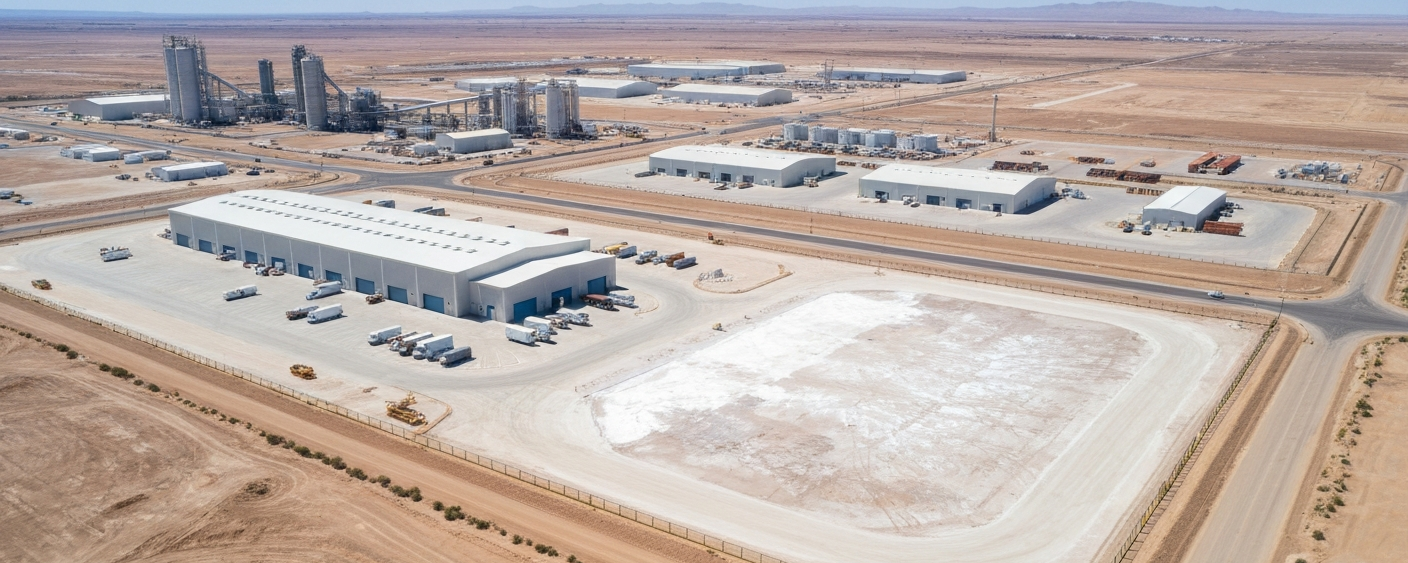
More than four walls: what location decisions reveal
The exploration business appears to revolve entirely around drill cores, assay results, and resource estimates. But anyone who focuses exclusively on geology misses a dimension that matters more as a project matures: institutional infrastructure. When a lithium junior opens multiple office locations at once, spread across Canada and the United States, capital markets and potential partners notice. The company is preparing for the next phase of development — or at least wants to look like it is.
For those new to small-cap mining investments, the pattern is worth understanding. Where a junior maintains a physical presence follows an industry logic with direct implications for project progress, financing capacity, and stock market valuation.
North American battery supply chains as a geopolitical framework
North America is in the middle of a politically driven restructuring of its commodity and battery supply chains. The U.S. Inflation Reduction Act (IRA) and comparable Canadian incentive programs create large incentives to extract and process critical minerals such as lithium within the North American economic area. For lithium juniors, this has a concrete consequence: those who want to access these funding streams need to be institutionally visible and reachable.
Government agencies that issue permits, award grants, or negotiate offtake agreements generally prefer to work with counterparts who have a local office and dedicated points of contact. An explorer that operates exclusively from a major city while its project sits in a different province or state is at a structural disadvantage in such processes.

What an office delivers strategically for a junior company
Why does office location matter beyond the operational? Several functions affect a company’s prospects in ways that never show up in a quarterly figure.
Regulatory relationships and permitting processes: Mining projects go through lengthy, complex permitting procedures. In Canada, provincial environmental agencies and Indigenous communities are key stakeholders requiring in-person consultations and regular on-site communication. A local office reduces friction in those relationships considerably. Whether a permitting process runs on schedule or drags on for years often comes down to exactly these structural details.
Offtake negotiations with battery producers: Lithium is not an exchange-traded commodity like copper or gold. The lithium market runs largely on bilateral long-term contracts between producers and buyers such as battery manufacturers or automotive companies. These negotiations depend on trust and personal contact. An office near a battery cluster — within the broader U.S. “Battery Belt” region, for example — gives a company a practical advantage over competitors operating entirely remotely.
Investor relations and capital market access: Institutional investors and project financiers expect professional points of contact. An office in a financial hub such as Toronto or New York makes regular in-person meetings possible and can determine whether a junior makes the shortlist for a financing round.
| Office function | Primary benefit for the junior | Relevant phase |
|---|---|---|
| Regulatory / Community Liaison | Faster permitting, social license | Exploration through construction |
| Offtake Development | Access to offtakers, contract negotiations | PFS through production |
| Investor Relations (IR) | Capital market access, institutional visibility | All phases |
When overhead becomes capital risk
Critical investors will rightly ask: does expanding office locations not simply increase the ongoing costs of an already capital-intensive junior? The concern is valid.
A junior that opens new offices without secured capital for the next 18 to 24 months risks burning through cash faster and being pushed into dilutive financing sooner than planned. In that case, the expansion is a warning sign, not a milestone. The same move at a company that has recently closed a financing round and is preparing for a feasibility study or project financing reads differently — it suggests the company is building out ahead of a concrete next step rather than performing activity for its own sake.
Investors should examine such announcements carefully: What is the company’s current cash position? How long does its capital last — the so-called cash runway? And does the expansion connect to anything specific in the project timeline?
Regional presence and development stage
The transition from pure explorer to development-stage company in North American commodity projects is usually accompanied by institutional build-out: management hires, technical studies, geographic expansion. These rarely happen all at once, and the sequence varies, but the general direction is consistent enough that investors can use it as a rough orientation.
The opening of office locations is therefore not just noise in the news flow. It is one data point about where a company sits in its development, to be read alongside resource estimates, study results, and capital structure — not instead of them.
Locations near battery cluster regions, where automakers, battery cell producers, and recycling companies have concentrated, are worth noting in particular. They suggest a company is positioning itself within the supply chain rather than simply sitting on a deposit and waiting.
Key terms for getting started
- Offtake Agreement
- A long-term supply contract between a commodity producer and a buyer (e.g., a battery manufacturer). It secures the producer an offtake at defined terms and is often a prerequisite for project financing.
- Social License to Operate
- The informal, societal acceptance of a project by local communities and Indigenous groups. Not a legal document, but in practice often decisive for permitting progress.
- Inflation Reduction Act (IRA)
- A U.S. law enacted in 2022 that provides substantial tax credits and subsidies for the production of critical minerals and batteries within North America. It has significantly altered the investment dynamics in the lithium sector.
- Cash Runway
- The length of time a company can continue operating with its current liquid assets at a given spending level without needing to raise new capital. A key risk indicator for junior companies.
- Battery Belt
- An informal term for a group of U.S. states (including Ohio, Michigan, Tennessee, and Georgia) where battery factories and suppliers have concentrated as a result of IRA incentives.
- Investor Relations (IR)
- The function within a company responsible for communication with shareholders, analysts, and institutional investors. Often critical for capital access at junior companies.
- Project Financing
- A financing structure in which loan repayments are made primarily from the future cash flows of the project itself, rather than from the company’s general balance sheet. Typically requires advanced technical studies and often an offtake agreement.
⚠️ Important notice: This article is for informational and educational purposes only. It does not constitute investment advice, a recommendation, or a solicitation to buy or sell any security. Investments in small-cap exploration and mining companies carry a high risk, including the potential total loss of capital. Before making any investment decision, consult a registered financial advisor and conduct your own analysis. Boersen Post Team is not responsible for decisions taken based on the content published here.