Social Licence Through Ownership: Canada’s New Exploration Model
June 14, 2026
Downstream Stages: What Refinery Concepts Mean for Lithium Juniors
June 15, 2026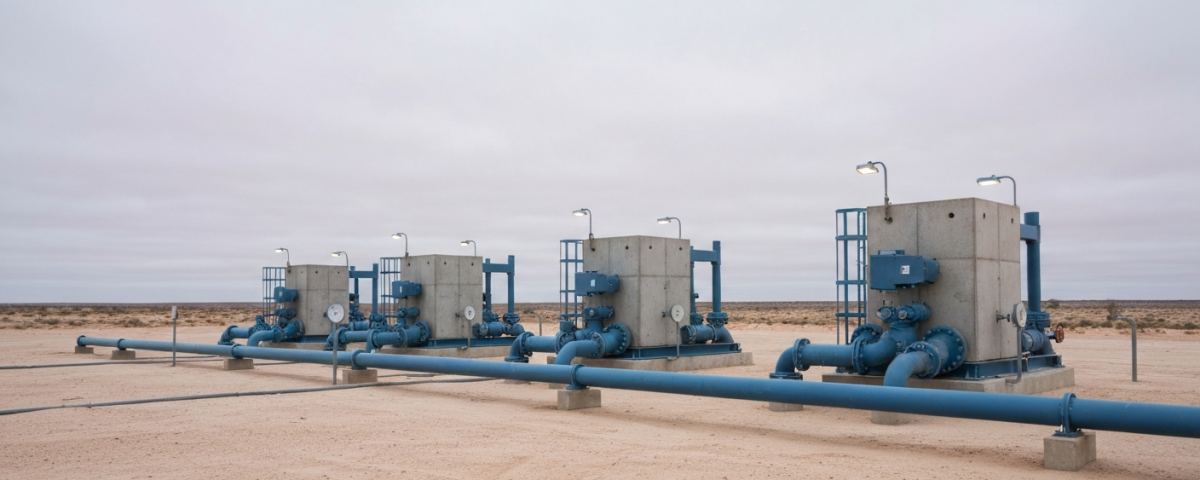
When the extraction method defines the strategy
In the uranium sector, one rule of thumb holds firm: not every deposit is worth the same, even when the ore grade is identical. What often matters most is how the uranium will be extracted. The gap between conventional underground mining and in-situ recovery (ISR) is large, both in capital intensity and in how junior companies can even begin financing conversations.
South Australia is attracting more attention in this context. The region has an established mining regulatory framework, known uranium occurrences, and geological structures that can, in principle, suit ISR applications. For anyone trying to understand how early-stage exploration positions are valued, it offers a concrete reference point that goes beyond individual company announcements.
ISR uranium: technology, costs, and geological requirements
In-situ recovery is not a new invention. Kazakhstan, which today supplies more than 40% of global uranium production, relies almost entirely on this technique. The principle is simple: instead of physically breaking rock and transporting it to the surface, an acidic or alkaline solution is pumped through porous, uranium-bearing sandstone layers. The uranium dissolves, the laden solution is pumped to the surface, and processed there into yellowcake.
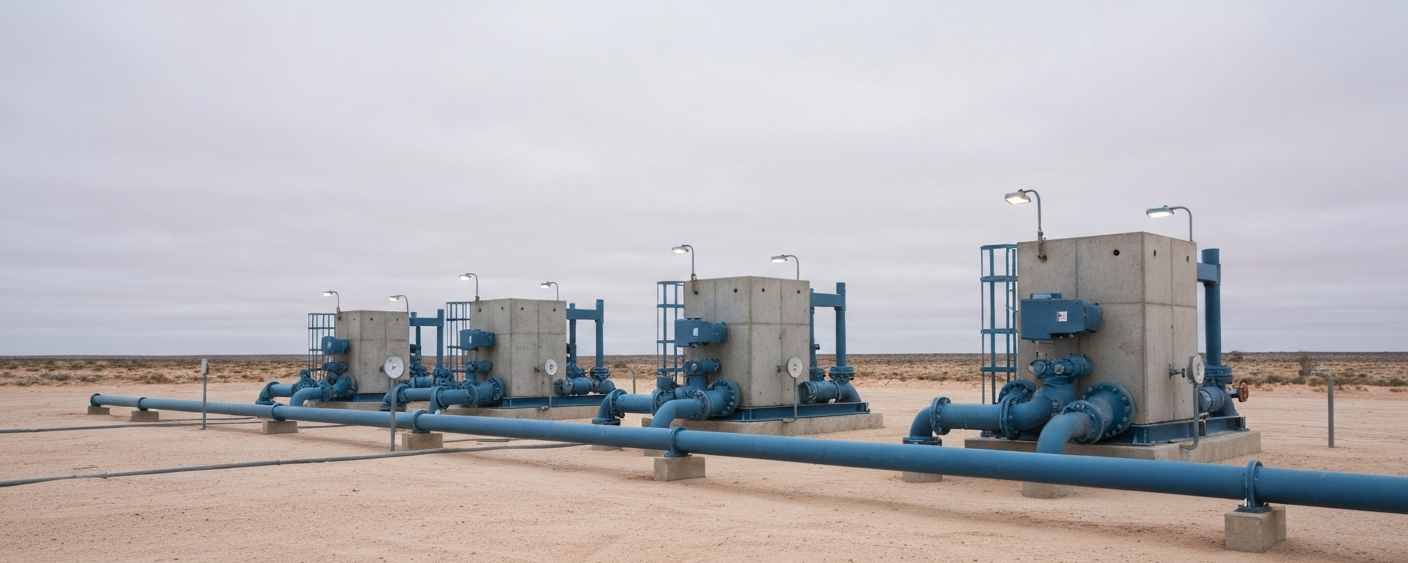
The core economic difference lies in capital expenditure (CAPEX). An ISR operation requires a network of wellbores, pumps, and a comparatively compact processing plant. An underground project needs shafts, extensive infrastructure, and costly ventilation systems. For projects financed in a high-interest-rate environment, this difference matters: lower debt requirements mean lower financing risk.
Land scale as a strategic variable
When the mining industry talks about “district positioning,” it means securing land packages large enough to explore multiple targets and allow for expansion. There is a plain negotiating logic behind this.
A junior explorer holding 20 square kilometres in a promising region sits at a very different table in a joint venture or offtake discussion than one holding 200 square kilometres of the same sedimentary basin. The larger package allows terms to be negotiated that reflect the overall position, not just a single drill target.
For ISR projects this matters particularly, because the technique depends on contiguous, well-permeable rock layers. An explorer that secures an entire sedimentary basin or a geologically coherent corridor early on has more room in resource development and in future corporate transactions.
| Feature | Conventional underground mining | ISR method |
|---|---|---|
| Capital Expenditure (CAPEX) | Very high | Significantly lower |
| Geological Requirements | Flexible (many deposit types) | Specific (sandstone, porosity, permeability) |
| Surface Disturbance | Large (shafts, waste dumps) | Small (wellfield grid, compact plant) |
| Permitting Complexity | High | Medium to high (groundwater protection critical) |
| Leading Region Globally | Canada (Athabasca), Australia | Kazakhstan, USA (Wyoming), Australia |
What early positioning means for small-cap dynamics
For small-cap investors, timing is a central factor and simultaneously the most frequently misunderstood one. Getting in early during the exploration phase does not automatically mean higher returns. It means higher risk first: geological models are incomplete, resource estimates do not yet exist, and permits are often years away.
What a large early land position offers is room to manoeuvre. An explorer covering an entire basin can shift priorities based on results, sell partial packages, or enter joint venture discussions without being locked into a single drill intersection.
Investors should also note: in Australia, resource estimates are governed by the JORC Code (Joint Ore Reserves Committee), the Australian equivalent of Canada’s NI 43-101. The distinction between resources (Inferred, Indicated, Measured) and reserves (Probable, Proven) must be strictly observed. Without a published JORC-compliant resource estimate, a project remains in the exploration stage, with all the associated risks.
Capital costs in a higher-rate environment
The cost advantage of ISR projects is sharpest when debt is expensive. Projects with long lead times and high CAPEX requirements become less attractive relative to alternatives that can reach production more quickly. ISR projects can, provided the geology cooperates, be brought online at a fraction of the capital outlay a conventional mine requires.
This goes some way toward explaining why ISR uranium has been getting more attention. Exploration companies with ISR-capable deposits in stable jurisdictions such as Australia can make a cleaner case for their financing needs to institutional investors, at least on paper.
That said, ISR projects are no sure thing. Groundwater protection, environmental regulations, and community acceptance are real obstacles in Australia, just as they are in other developed mining jurisdictions. A strong ISR story is no substitute for a completed pre-feasibility study.
What the ISR debate means for investors
The extraction method is part of project valuation, not a technical footnote. Early land positions create room to manoeuvre, not certainty. ISR projects cost less to build than conventional underground mines, but geology and permitting still decide outcomes. Investors who understand these relationships are better placed to assess company announcements and separate genuine progress from storytelling.
Key terms in ISR uranium
- In-Situ Recovery (ISR)
- An extraction method in which a solution is pumped through uranium-bearing rock layers to dissolve the uranium without physically mining the rock. Also known as in-situ leaching (ISL).
- CAPEX (Capital Expenditure)
- Investment spending required to build a mining operation. For ISR projects, this is typically significantly lower than for underground operations.
- JORC Code
- The Australian standard for the classification and public reporting of mineral resources and reserves, functionally comparable to Canada’s NI 43-101.
- Resource vs. Reserve
- Resource: a geologically documented quantity of mineralization (Inferred / Indicated / Measured) without a full economic assessment. Reserve: the economically extractable portion of a resource (Probable / Proven), established after a comprehensive feasibility study.
- District positioning
- A junior explorer’s strategy of building negotiating leverage and exploration options by securing large, geologically coherent land packages at an early stage.
- Optionality
- In commodities investing: the value of being able to benefit from multiple future scenarios without being committed to a single outcome.
- Offtake agreement
- A contract that secures a buyer’s right to purchase a specified quantity of a commodity at agreed terms, often used to underpin project financing.
- Social license
- The informal societal acceptance of a mining project by local communities and authorities; increasingly a factor in the permitting process in developed jurisdictions.
⚠️ Important notice: This article is for informational and educational purposes only. It does not constitute investment advice, a recommendation, or a solicitation to buy or sell any security. Investments in small-cap exploration and mining companies carry a high risk, including the potential total loss of capital. Before making any investment decision, consult a registered financial advisor and conduct your own analysis. Boersen Post Team is not responsible for decisions taken based on the content published here.