VMS Deposits: How Massive Sulphide Hits Close the Metal Supply Gap
June 19, 2026
Hub-and-Spoke in Mining: How Central Mills Connect Projects
June 19, 2026
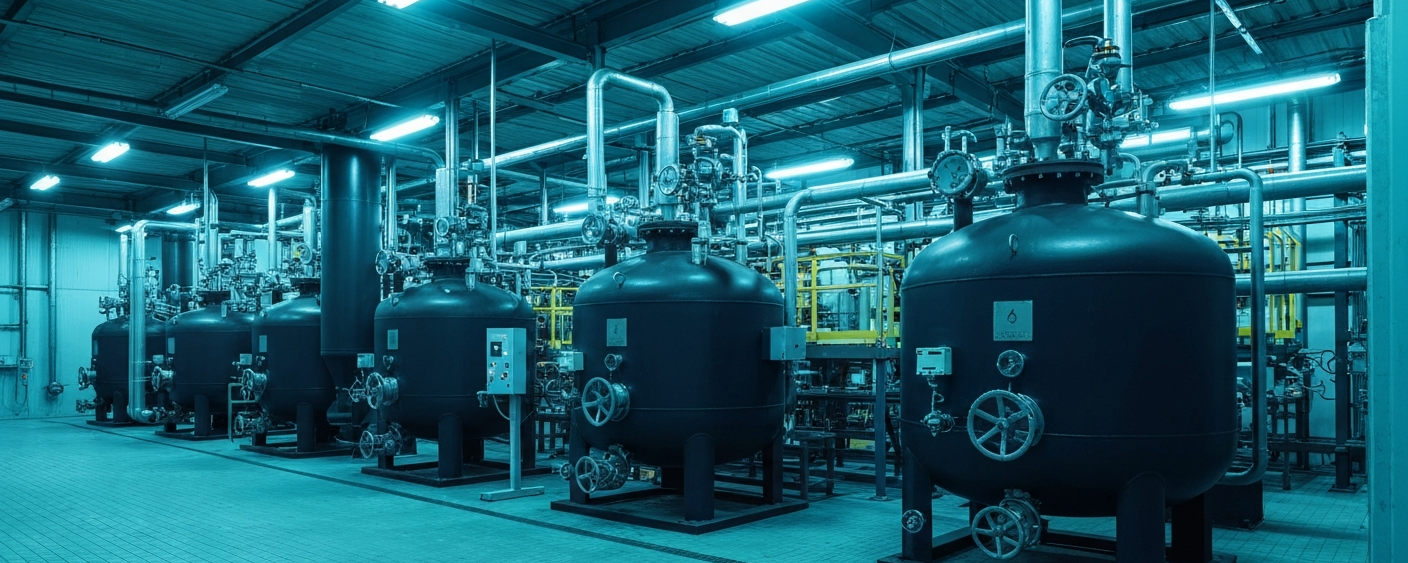
The quiet commodity behind the chip factory
Lithium, copper, and rare earths dominate the headlines. Yet anyone manufacturing a semiconductor also needs chemicals that barely register on most investors’ radar. Fluorspar — chemically calcium fluoride (CaF₂) — is one of them. Without it, you cannot produce high-purity hydrofluoric acid (HF), and HF is what chip fabs use for precise etching. Every modern processor, every NAND flash cell, and every EUV optic depends on fluorine chemistry at some point in its production.
There is a reason fluorspar juniors on the ASX recently ranked among the strongest weekly gainers, alongside copper and lithium stocks. Investors are beginning to price niche commodities as part of the semiconductor supply chain rather than treating them as background industrial chemicals. For anyone new to small-cap mining, the mechanism is worth understanding properly.
Critical minerals: when governments shape demand
The term “critical mineral” sounds bureaucratic, but it carries real market consequences. The EU, the United States, Australia, and Canada each maintain lists of raw materials considered strategically sensitive. Fluorspar appears on all of them, because roughly 60% of global production comes from China, with the remainder spread across Mexico, Mongolia, and a handful of smaller producers. Western domestic output is marginal.
Once a commodity lands on one of these lists, subsidy programs, preferential loans, and strategic procurement contracts tend to follow. That changes how exploration projects in politically stable countries get valued. A fluorspar project in Australia or Canada now carries a premium that simply did not exist five years ago, even if nothing in the geology has changed.
Cobalt after 2016 is instructive: once it appeared on similar lists and gained recognition as a battery material, cobalt explorers went through a revaluation phase that delivered multi-fold share price gains within a few quarters, then corrected sharply once supply from the DRC outpaced demand expectations. Fluorspar is earlier in that story. Attention is growing, but large capital flows have not yet arrived.

How HF etching and chip cycles shape demand
In the production of modern processors, silicon wafers pass through hydrofluoric acid across dozens of process steps. HF selectively dissolves silicon dioxide layers without attacking the underlying silicon — a process repeated millions of times under strict purity requirements. Only acid grades derived from high-purity fluorspar (acid spar quality, minimum 97% CaF₂) meet those specifications.
The demand chain runs like this: greater chip demand means higher wafer throughput in fabs, which means greater HF consumption and thus more demand for acid-spar-grade fluorspar. Meanwhile, the share of advanced process nodes below 5 nm keeps growing, and those nodes require more lithography and etching steps per chip than older designs. So even without new fab construction, the amount of fluorspar consumed per chip produced is rising.
| Fluorspar grade | CaF₂ purity | Primary application |
|---|---|---|
| Metallurgical spar (metspar) | ~60–85% | Steel and aluminum production |
| Ceramic spar | ~85–96% | Glass industry, ceramics |
| Acid spar | ≥97% | Fluorine chemistry, HF for semiconductors, refrigerants |
This grade split has direct consequences when evaluating fluorspar explorers. A project that can only deliver metspar is competing in a largely saturated market at lower price points. Technical reports filed under NI 43-101 in Canada or the JORC Code in Australia should explicitly address achievable concentrate quality. If they do not, that gap in disclosure is itself worth noting.
What the ASX movement reveals about the small-cap cycle
Weekly moves on commodity-focused exchanges are short-term signals, not valuation verdicts. When fluorspar juniors gain alongside copper and lithium stocks, it points to capital moving into niches that could benefit from the supply chain debate around semiconductors and critical minerals policy.
These moves rarely unfold evenly. The first names to move are typically the already-known players — listed fluorspar explorers with resource estimates or active drilling programs. The move then spreads to smaller, less liquid names. A genuine revaluation step usually only comes after something concrete: a government procurement contract, or an offtake agreement with a chemical producer.
Graphite explorers followed a similar pattern in the early 2020s. Largely ignored for years, they were sharply re-rated within months once battery manufacturers began seeking Western supply sources. The starting point there was also a production concentration in China and growing political pressure to diversify.
Early price moves in sectors like this can precede a real demand story, but they also precede heightened volatility. Projects without a resource estimate — without an Inferred or Indicated resource under JORC or NI 43-101 — carry the highest risk, because the step from geological hypothesis to quantifiable asset is still open.
Evaluating niche commodities: what the fluorspar case shows
Interest in fluorspar is part of a broader move away from a simple two-tier system of bulk materials and precious metals. Any link in the semiconductor supply chain that is geographically concentrated and politically sensitive will eventually attract valuation attention — though the timing and scale of that attention are impossible to predict in advance.
Assessing a fluorspar junior means working through several questions: Can the deposit produce acid spar or only metspar? How far along is the project? What is the jurisdiction’s position on subsidies, and is there any offtake interest yet? No single answer settles it, but together they give you a clearer picture of where the risk actually sits.
The ASX weekly figures are an early signal. Whether anything more develops depends on whether drilling programs produce defined resources, whether refining capacity emerges outside China, and whether chip companies actually follow through on procurement diversification.
Key terms: fluorspar and critical minerals
- Fluorspar (fluorite)
- Calcium fluoride (CaF₂), the primary mineral source of fluorine for the chemical industry. Classified as metspar, ceramic spar, or acid spar depending on purity.
- Acid spar
- High-purity fluorspar with a minimum of 97% CaF₂. Processed into hydrofluoric acid (HF) for use in semiconductor etching.
- HF etching (hydrofluoric acid etching)
- A chip manufacturing process in which hydrofluoric acid selectively removes silicon dioxide layers from wafers. Requires very high chemical purity.
- Critical mineral
- A raw material classified by a government as economically significant and vulnerable to supply disruption. The classification can trigger government support and strategic procurement programs.
- JORC Code
- The Australian reporting standard for mineral resources and ore reserves (Joint Ore Reserves Committee). Similar to Canada’s NI 43-101, it prescribes how resource and reserve estimates must be prepared and disclosed by a Competent Person.
- Inferred resource
- The lowest confidence category of a mineral resource. The estimate rests on limited sample data; geological continuity is assumed rather than verified. Cannot be classified as a reserve.
- Offtake agreement
- A forward contract between a producer and a buyer for future delivery of a commodity. Signals market interest and helps with project financing, but does not guarantee production.
- Sectoral rotation
- A market movement in which capital leaves one sector and moves into thematically related niches, often triggered by policy or regulatory developments.
⚠️ Important notice: This article is for informational and educational purposes only. It does not constitute investment advice, a recommendation, or a solicitation to buy or sell any security. Investments in small-cap exploration and mining companies carry a high risk, including the potential total loss of capital. Before making any investment decision, consult a registered financial advisor and conduct your own analysis. Boersen Post Team is not responsible for decisions taken based on the content published here.