Letters of Intent: How Government Pledges Make Lithium Projects Financeable
June 20, 2026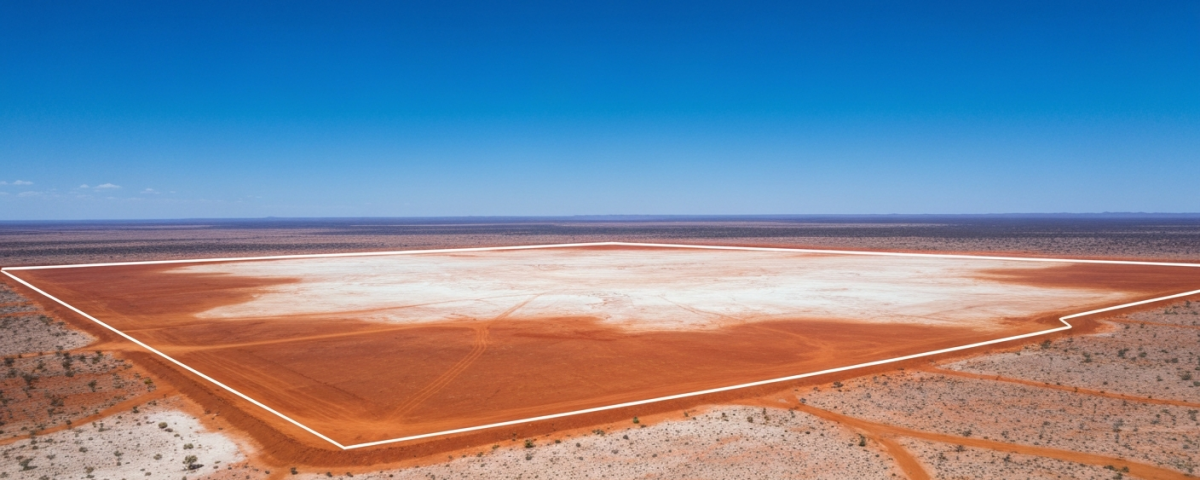
Ground first: why land matters in lithium mining
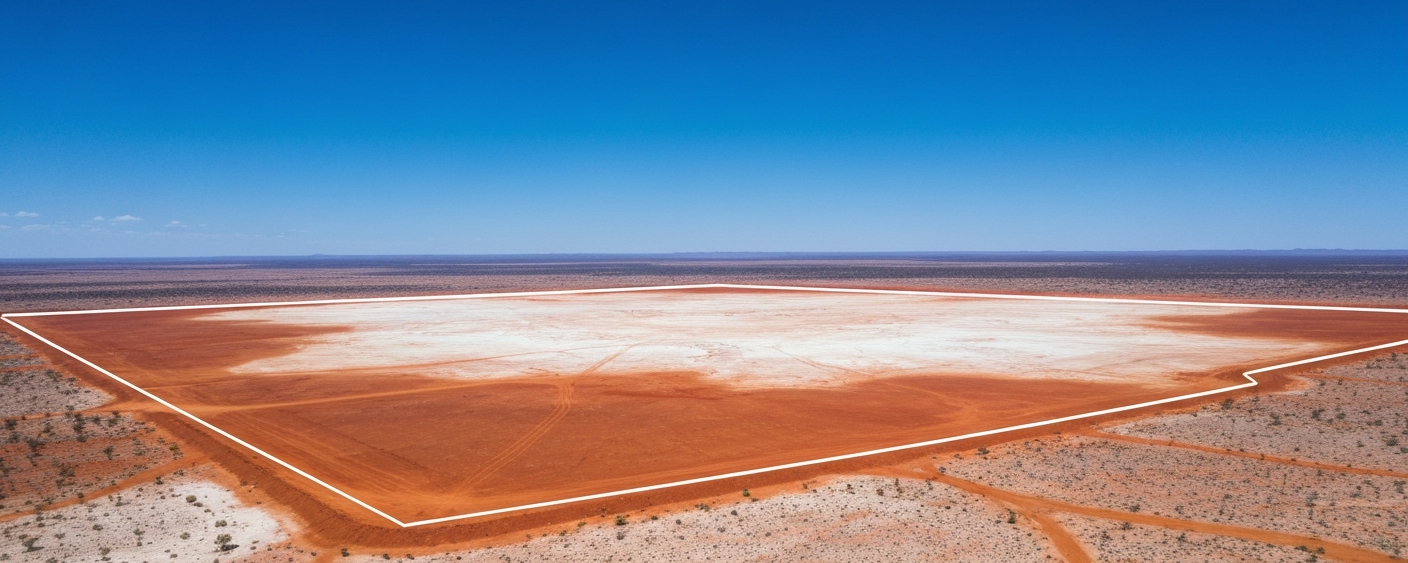
In commodity exploration, one principle holds before anything else: the ground must be secured before drilling begins. So-called tenements — mining licenses common in Australia that grant exploration or extraction rights over a defined area — are the starting point of every exploration project. Without a secured land package, neither a resource estimate nor financing will follow.
An Australian lithium junior acquiring new tenements in the Northern Territory next to its existing project may sound routine. In the current environment, where many companies are cutting spending, a land expansion like this means the company still has capital and is willing to spend it. That is not a given for juniors riding out a downturn.
For investors newer to capital markets, the logic of tenement acquisitions is worth understanding — it differs fundamentally from drilling programs or resource estimates.
The market context: lithium between downturn and structural demand
Lithium’s long-term outlook rests on demand growth from electric vehicles and stationary energy storage, both of which rely on lithium-based batteries. The lithium price, however, is highly volatile. After peaking in 2022, it corrected sharply, putting many junior explorers under real financial pressure.
Downturns like this open a window that recurs across commodity cycles: land costs fall, less well-capitalised competitors walk away, and those who still have cash can pick up ground that was out of reach during the previous boom. This is not unique to lithium — it is a pattern across mining broadly. It proves nothing on its own, but the timing argument has a sound basis.
The Northern Territory plays a particular role here. Its mining law is broadly stable, existing infrastructure is in place, and regulatory risk is more predictable than in less developed regions, where legal uncertainty can upend project economics entirely.

What a tenement acquisition actually triggers
When a junior adds new tenements to an existing project, several concrete follow-on effects arise that are relevant to valuation.
Expanding the exploration corridor: Geological structures such as pegmatite systems — which host lithium-bearing minerals like spodumene — do not stop at license boundaries. Securing adjacent ground allows such structures to be traced over a longer strike length, potentially opening additional resource categories that could feed into a future technical report update.
Consolidation and negotiating leverage: Projects with large, joined-up tenement packages attract potential acquirers or partners more readily than fragmented individual parcels. A developer that secures several adjacent lots in an active region can assemble an overall project whose value exceeds the sum of its parts — the same logic applies in mining as elsewhere.
Pathway to an updated economic study: In Australia, resource estimates are based on defined license areas. New tenements must be sampled and evaluated before they can feed into a resource calculation. From acquisition to an updated study, the typical timeline runs 12 to 36 months, depending on available data and the scope of the exploration program.
| Phase after tenement acquisition | Typical time horizon | Capital market relevance |
|---|---|---|
| Initial geological assessment & sampling | 3–6 months | Low (internal) |
| First drilling program on new ground | 6–18 months | Medium (newsflow) |
| Inclusion in technical report / resource | 18–36 months | High (valuation impact) |
| Updated economic study (PEA/PFS) | 24–48 months | Very high (investor base) |
Signal to the capital market: An acquisition during a bear market shows that management still has resources and is planning beyond the immediate quarter. It does not show whether that plan will succeed. Both points deserve attention.
What investors should keep in mind with land expansions
Tenement acquisitions are not proof of future resources. They are a necessary but not sufficient step toward project development. For investors tracking small-cap lithium stocks, specific questions matter more than general assessments.
How is the new ground geologically connected to the core project? Adjacent tenements with similar geology improve the odds that an exploration program will deliver results. But the connection must be technically justified, not just inferred from proximity on a map.
How is the acquisition being financed? Cash transactions reduce liquidity; share-based consideration dilutes existing shareholders. Either way, the capital structure changes, and that belongs in any evaluation.
What timeline does management communicate? A company that acquires new tenements without a concrete exploration plan gives investors little to work with. Clear milestones — even if later revised — are more useful than vague statements of intent.
Land strategy as a long game in the lithium cycle
Buying ground in a bear market is a bet that prices recover and that the company is still standing — with money left to explore — when they do. That requires financial discipline and staying power. Junior miners can rarely take either for granted.
An explorer’s value is not found solely in what has been proven today. Licenses and geological data are quiet assets that rarely make headlines, yet they determine what can even be explored two or three years out. Whether any of that holds for a specific company is something investors usually learn long after they have already had to decide.
Key terms in land securing at a glance
- Tenement
- An Australian term for a government-issued mining license granting exploration or extraction rights over a defined area. Rights and obligations vary by license type.
- Exploration Licence (EL)
- A license type that permits geological reconnaissance only — sampling, mapping, and drilling. It does not allow commercial extraction.
- Mining Lease
- An advanced license that, following a successful permitting phase, allows the actual extraction of raw materials. It generally requires a completed feasibility study and regulatory environmental approvals.
- Resource vs. Reserve
- A resource (Inferred, Indicated, or Measured) is the geologically estimated quantity of a mineral, without confirmed economic extractability. A reserve (Probable or Proven) is the subset of a resource that can be mined under realistic economic conditions. The two terms are not interchangeable.
- Pegmatite
- A coarse-grained igneous rock that frequently contains economically significant concentrations of lithium minerals such as spodumene. Many major hard-rock lithium deposits are of pegmatitic origin.
- PEA (Preliminary Economic Assessment)
- The first formal economic study for a mining project, modelling rough cost and revenue scenarios based on resource estimates. It is an early directional indicator, not a basis for financing.
⚠️ Important notice: This article is for informational and educational purposes only. It does not constitute investment advice, a recommendation, or a solicitation to buy or sell any security. Investments in small-cap exploration and mining companies carry a high risk, including the potential total loss of capital. Before making any investment decision, consult a registered financial advisor and conduct your own analysis. Boersen Post Team is not responsible for decisions taken based on the content published here.