Geodata Intelligence: How AI Is Reshaping Exploration Decisions
June 25, 2026
Ilmenite and Titanium Dioxide: How Western Supply Chains Are Being Built
June 26, 2026
When the Athabasca is no longer the only benchmark
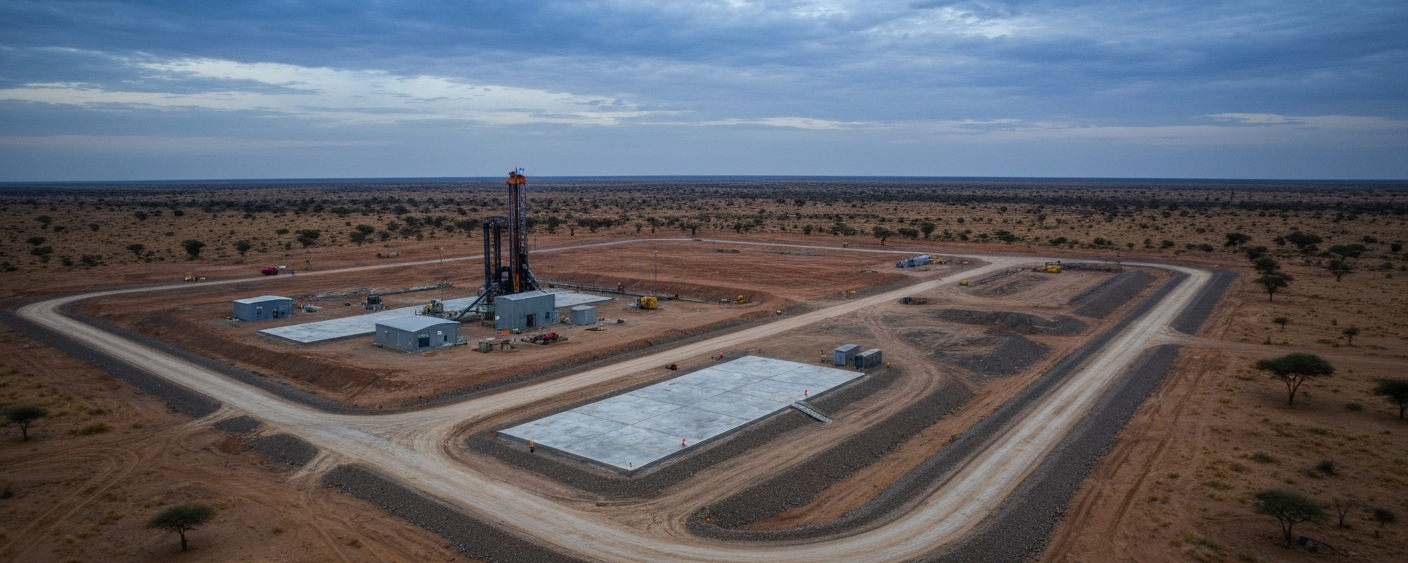
Canada’s Athabasca Basin and Australia’s outback deposits have long dominated uranium exploration. Both regions have decades of mining history, deep geological knowledge, and working infrastructure. Rising uranium demand — new reactor builds, life extensions on existing plants — has nonetheless pushed exploration geologists and junior investors to look harder at regions that have so far attracted little capital.
Botswana is one of them. A Canadian-listed junior explorer has published initial assay results from its project there. The data point matters because it shows that exploration activity has spread well beyond the handful of districts that dominate the headlines. Investors considering the small-cap space should understand what sets African exploration jurisdictions apart from the alternatives.
Political stability: an underrated exploration factor
Not every African jurisdiction is alike. Expropriation risks, opaque permitting processes, and political instability deter exploration capital and weigh on junior project valuations. Botswana is an exception: the country ranks among the most stable in sub-Saharan Africa, with a mining code built on decades of diamond extraction that has long attracted major international players.
That translates to functioning regulatory structures for mining licenses, clear rules on government profit-sharing, and established experience in dealing with foreign investors. The so-called permitting risk — the danger that permits are delayed, denied, or revoked — is lower there than in much of the continent.
Canada and Australia are the well-known heavyweights of the uranium market, thoroughly analyzed and priced accordingly. Botswana has received far less scrutiny, but its regulatory foundation gives explorers at least a clearer picture of the non-geological risks they are taking on.
Assay results and their impact on the market
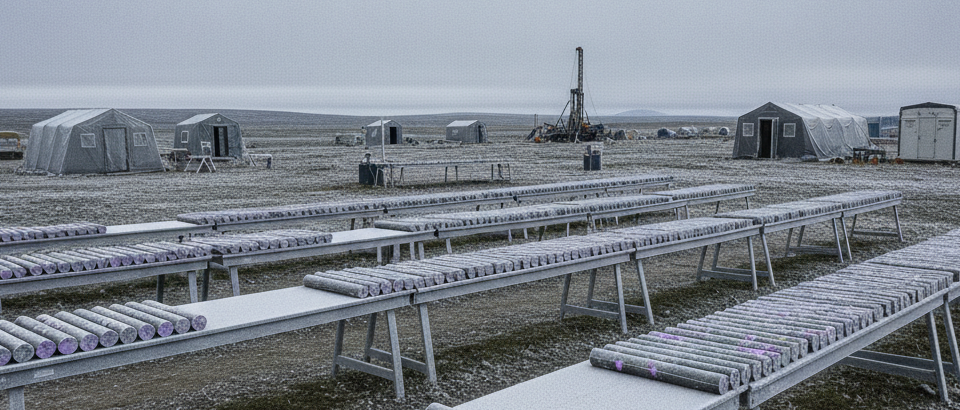
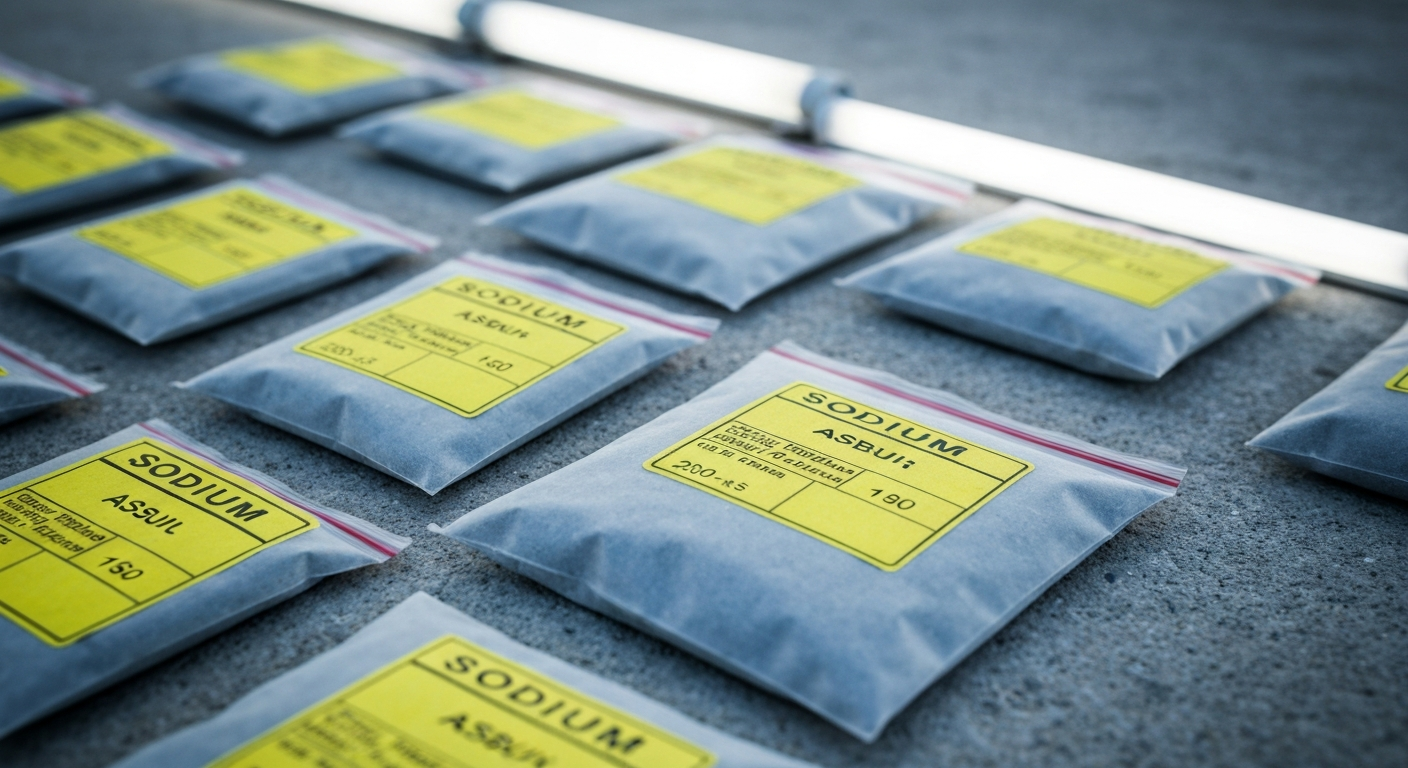
When a junior explorer publishes initial laboratory analyses from a new drill hole, markets can react sharply. This happens less because a few meters of drill core settles anything and more because at the early exploration stage, each new data point narrows the range of unknowns.
Assay data show the concentration at which a mineral — in this case uranium, measured in parts per million or weight percent U₃O₈ — occurs in a rock formation. These values alone do not define a resource in the technical sense. Under the Canadian standard NI 43-101, a formal resource category (Inferred, Indicated, or Measured) requires consistent sampling across multiple drill holes, sign-off by a qualified person, and statistical analysis. Assay results from a single hole are therefore an initial indication, not a resource estimate.
In less-explored regions like Botswana, the market’s understanding of local geology is still thin, so an unexpectedly high grade gets more attention than the same number would in the Athabasca.
| Exploration Stage | Data Basis | Degree of Uncertainty |
|---|---|---|
| Geophysics / Sampling | Surface anomalies | Very high |
| Initial assay results | Individual drill holes | High |
| Inferred Resource (NI 43-101) | Multiple drill fences | Medium |
| Indicated / Measured Resource | Dense drilling program | Lower |
| Feasibility Study (FS) | Complete technical study | Low |
Why explorers are looking to Africa
Botswana is not an isolated case. Activity has picked up in Namibia and Zambia as well. The reasoning is simple: the classic high-grade districts are largely controlled by established players, so junior explorers are looking for ground with less competition and lower entry costs.
There is a geological argument too. Africa has extensive Proterozoic crustal formations that are well suited to hosting uranium, comparable in character to mineralized belts in Canada and Australia. Low exploration density there partly reflects untested potential, not absence of it.
For small-cap investors, projects in these areas are harder to assess because comparable data is scarce. Early positive results can therefore move valuations more than they would in a district the market already knows well. That gap between thin data and revaluation potential is the basic trade-off in early-stage exploration, wherever it takes place.
What Botswana drilling data could mean for the uranium sector
Initial assay results from a new area are a starting point. Whether they develop into a formal NI 43-101 resource depends on the consistency of follow-up drilling, metallurgy, and financing.
What the Botswana results do show is that uranium exploration capital is no longer concentrating in a handful of core districts. Supply pressure is pushing programs into less familiar ground. For anyone following the sector, a country’s regulatory stability and historical mining experience are worth weighing alongside the drill results themselves. Botswana compares well to much of the African continent on that measure. The geology is a question the next drill program will have to answer.
Key terms for beginners
- Assay results
- Laboratory analyses of rock samples that report the grade of a mineral, for example uranium as U₃O₈, in parts per million (ppm) or weight percent. They indicate the presence of mineralization but do not yet constitute a formal resource.
- NI 43-101
- Canadian regulatory standard for technical reporting on mineral projects. It prescribes how resources and reserves must be defined, calculated, and disclosed, with a clear distinction between resources and reserves.
- Inferred Resource
- The lowest resource category under NI 43-101 and comparable standards. It is based on limited data and carries a high degree of uncertainty, meaning it cannot directly feed into a feasibility study.
- Permitting risk
- The risk that permits for exploration or mining are delayed, restricted, or denied. In stable jurisdictions, this risk tends to be lower than in politically fragile countries.
- Drill fence
- A series of drill holes sunk along a line or in a defined pattern to investigate the three-dimensional extent of a mineralized zone.
- Jurisdiction quality
- An evaluation criterion for exploration projects that covers a country’s political stability, legal certainty, infrastructure, and historical mining experience. It is a risk measure used alongside geological factors.
- U₃O₈
- Triuranium octoxide, the commercially traded form of yellowcake uranium, in which uranium grades in deposits and on the spot market are quoted. Unit: pounds U₃O₈ or weight percent %U₃O₈.
⚠️ Important notice: This article is for informational and educational purposes only. It does not constitute investment advice, a recommendation, or a solicitation to buy or sell any security. Investments in small-cap exploration and mining companies carry a high risk, including the potential total loss of capital. Before making any investment decision, consult a registered financial advisor and conduct your own analysis. Boersen Post Team is not responsible for decisions taken based on the content published here.