Warrant Extensions at Lithium Juniors: What the Signal Means
June 27, 2026
Mining Conferences as Gatekeepers: Africa’s Role in Critical Metals
June 27, 2026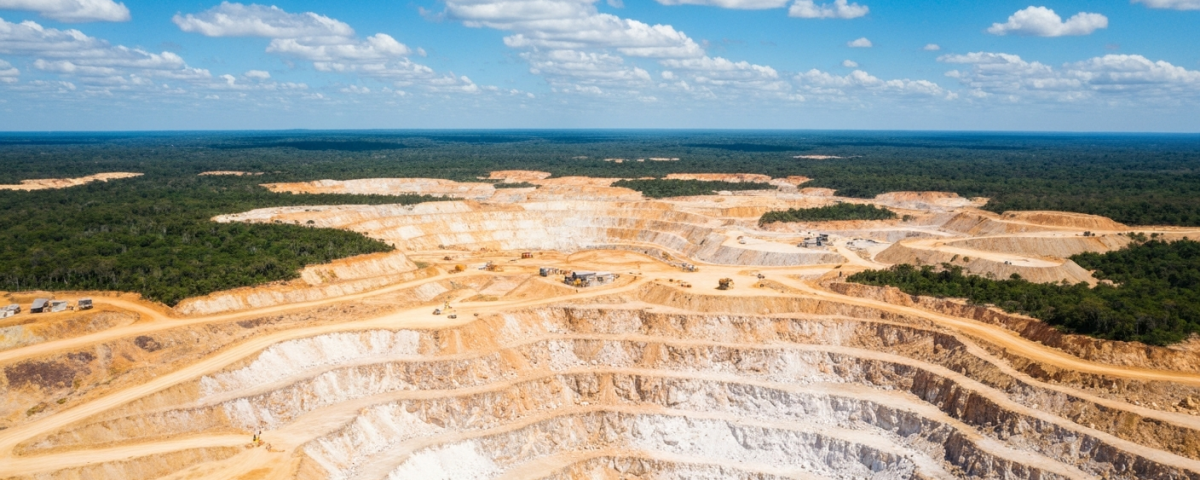
When geology alone doesn’t decide — the jurisdiction comparison
Anyone investing in junior explorers asks about geology first: How high is the lithium grade, how large could the deposit be? But the ground beneath a project matters almost as much as what lies within it. The country, its mining law, its administration — these determine whether a promising geology ever becomes a producing operation.
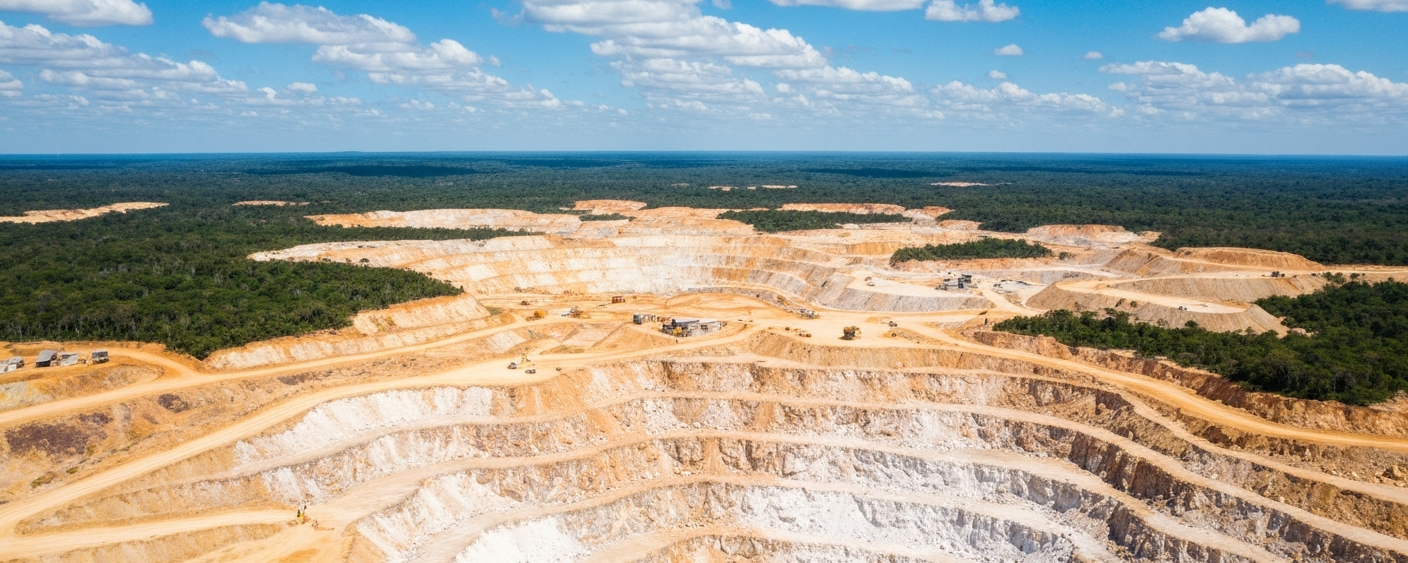
Brazil is drawing more scrutiny on that front. Minas Gerais has been a recognized mining center for decades, and in recent years a lithium corridor has taken shape there, which the local industry has taken to calling a “Lithium Valley.” Several projects sit at very different stages of development simultaneously — from initial exploration through to construction readiness — which gives an unusually clear view of how the jurisdiction works in practice, not just how it reads on paper.
Brazil’s geological starting point in global comparison
Lithium occurs worldwide in two primary geological settings: as brine in arid salar systems (mainly Chile, Argentina, Bolivia) and as hard rock in pegmatites (Australia, Canada, Portugal, Brazil). Minas Gerais is classic pegmatite territory, the same rock formation in which Australia’s leading spodumene projects are rooted.
Hard rock has one practical advantage over brine: resource estimates tend to be more precise, because drilling campaigns deliver direct physical samples. Assay results can be incorporated into standardized technical reports such as the Canadian NI 43-101, an important prerequisite for capital market financing via the Toronto or Vancouver stock exchanges.
Initial exploration drilling that encounters lithium indicator minerals — so-called “pathfinder” elements such as cesium, rubidium, or certain mica types — is only the beginning. It suggests that a pegmatite system may be present, and nothing more. The path from first NI 43-101 results to a classified resource under Inferred, Indicated, and Measured categories requires additional drilling phases, metallurgical testing, and independent expert reports.

Regulation, permitting, and investment climate in Brazil
For junior explorers, a country’s mining law is not a bureaucratic detail — it is a fundamental risk factor. Brazil has an established mining regulatory authority in the Agência Nacional de Mineração (ANM). The basic structure of Brazilian mining law — concession allocation, exploration permits, environmental requirements — has evolved over decades and is, in principle, workable for international investors.
Compared to other South American countries, Brazil offers reasonable legal certainty. Bolivia, with its heavily nationalized mining sector, and Argentina, with its currency volatility, carry higher political risk, even though their geological lithium resources in salar brines are considerably larger in volume. Australia and Canada sit at the very top of the Fraser Institute Annual Survey, where political stability and clear property rights have functioned reliably for decades.
Brazil occupies the upper-middle tier of that ranking. The practical consequence for valuation: projects there have traded at a discount to comparable Australian projects. For small exploration companies, that gap can allow entry at an early stage before larger players take notice.
| Criterion | Brazil (Minas Gerais) | Australia (Pilbara/WA) | Canada (Quebec/Ontario) |
|---|---|---|---|
| Primary Geology | Pegmatite (hard rock) | Pegmatite (hard rock) | Pegmatite / Brine (mixed) |
| Regulatory Framework | ANM, established, moderately complex | DMIRS, highly transparent | Province-based, highly transparent |
| Capital Market Access | TSX / TSXV-listed companies | ASX-listed companies | TSX / TSXV-listed companies |
| Infrastructure | Well-developed in Minas Gerais | Well-developed in established districts | Variable by region |
| Fraser Ranking (trend) | Upper-middle tier | Top-tier | Top-tier |
Early-stage versus construction-ready — what the gap actually means
Two projects in the same jurisdiction can carry very different risk profiles depending on where they sit on the development path. The difference is often glossed over in press releases, so it is worth being direct about it.
Projects that have just released their first NI 43-101-compliant results — so-called “first-pass” findings — are testing whether geological anomalies exist that would justify systematic exploration. Lithium pathfinder minerals are indicators, not guarantees. A project at this stage typically has no classified resource at all.
A construction-ready project has cleared an entirely different set of hurdles. A Definitive Feasibility Study (DFS) or its preliminary equivalent is complete, and questions about water rights, power supply, access roads, and equipment procurement must be answered in concrete terms. In Minas Gerais, securing construction water rights is a regulatorily specific step — even a mature project can stall there before the first shovel breaks ground.
An early-stage exploration project carries more geological and permitting uncertainty but offers greater share price upside if the geology delivers. A construction-ready project has worked through much of that uncertainty and is priced accordingly. Neither profile is inherently better; what matters is whether the investor’s risk appetite matches the project’s actual position.
What jurisdiction comparisons can offer small-cap investors
Minas Gerais combines geological advantages with well-developed infrastructure and a long mining tradition. That separates it from true frontier jurisdictions, where the first challenge is often road construction rather than drilling.
That said, no jurisdiction is without risk. Exchange rate volatility of the Brazilian real, local permitting timelines, and the distance to Asian processing capacity are real factors in any valuation. Geographic location may gain in importance as European and North American offtakers broaden their battery materials supply chains. The EU Critical Raw Materials Act and the U.S. Inflation Reduction Act are creating new incentives to do exactly that — though how those policy frameworks translate into actual offtake agreements remains to be seen for most early-stage projects.
Geology gets the headlines. The legal environment, development stage, infrastructure, and regulatory track record appear far less often in press releases, which is precisely why they tend to catch investors off guard.
- Jurisdiction Risk
- Risk arising from the political, legal, and regulatory environment of a country. Covers property rights, permitting processes, tax stability, and political reliability. Quantified in mining rankings such as the Fraser Institute Survey.
- Pegmatite
- Coarse-grained rock of magmatic origin that frequently contains lithium-bearing minerals such as spodumene. The geological basis for hard rock lithium projects in Australia, Canada, and Brazil.
- Pathfinder Minerals
- Geochemical indicators that can signal the presence of economically interesting mineralization without being the target commodity themselves. In lithium pegmatites, these include elevated cesium, rubidium, or tantalum values.
- NI 43-101
- Canadian standard for the public disclosure of information about mineral projects. Requires that technical reports be prepared and published by qualified persons. Mandatory for companies listed on the TSX and TSXV.
- Inferred Resource
- The lowest resource category under NI 43-101. Based on limited data and carries the highest degree of geological uncertainty. Cannot be used for reserve estimates.
- Construction Readiness
- The development phase of a mining project in which all material permits, feasibility studies, financing commitments, and procurement contracts have been completed or are well advanced. The immediate precursor to the start of construction.
- Fraser Institute Survey
- An annual survey of mining executives and investors assessing the attractiveness of mining jurisdictions worldwide. Evaluates regulatory quality, political stability, and geological potential as separate dimensions.
- Critical Raw Materials Act (EU)
- EU regulation aimed at securing strategically important raw materials such as lithium, rare earths, and cobalt. Targets supply chain diversification and reduction of dependencies. Can increase the valuation relevance of projects in politically stable, non-Chinese jurisdictions.
⚠️ Important notice: This article is for informational and educational purposes only. It does not constitute investment advice, a recommendation, or a solicitation to buy or sell any security. Investments in small-cap exploration and mining companies carry a high risk, including the potential total loss of capital. Before making any investment decision, consult a registered financial advisor and conduct your own analysis. Boersen Post Team is not responsible for decisions taken based on the content published here.