License Revocation in Greenland: When Politics Stops Exploration Projects
June 30, 2026
Germanium & Gallium: Why By-Product Metals Have Strategic Weight
June 30, 2026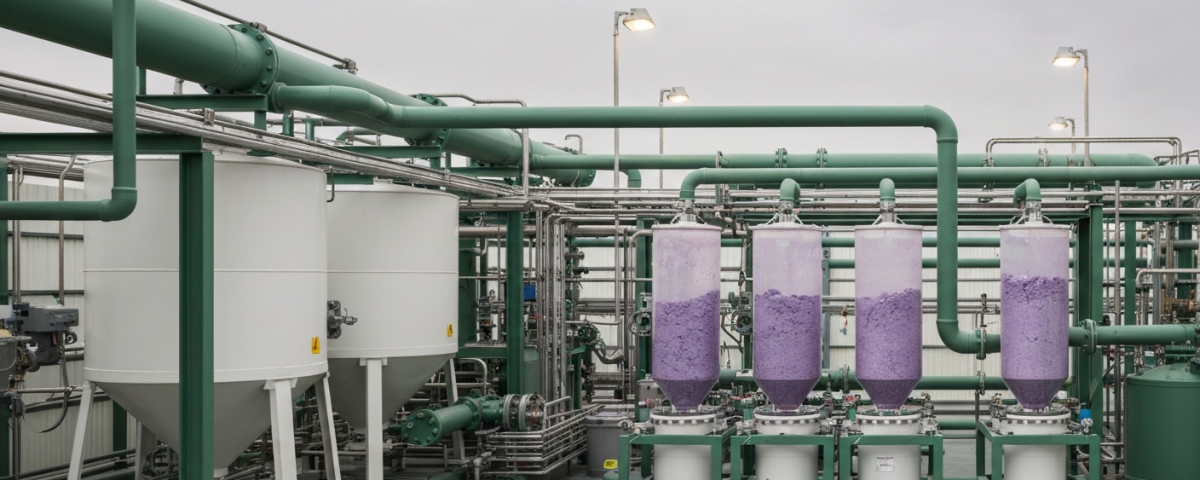
The point at which a project becomes an investment decision
At some stage in the life cycle of a mining project, a geological idea has to become a set of numbers that external investors can actually stress-test. That transition is formalized in a Bankable Feasibility Study, or BFS. Earlier study formats — the Preliminary Economic Assessment (PEA) and the Pre-Feasibility Study (PFS) — still rely on broad assumptions. The BFS is built to be robust enough that banks and project financiers can base a lending decision on it.
A recently published BFS for the Ema rare earths project in Brazil puts some hard figures on the table: an after-tax net present value (NPV) of USD 1.47 billion, an internal rate of return (IRR) of 105%, initial capital expenditure (Stage-1 Capex) of USD 74 million, and a payback period of six months. For anyone new to mining finance, the relevant questions are what those figures actually measure and why markets tend to react sharply when they appear.
From resource to bankable study: the development ladder
Everything starts with geological exploration and resource estimates filed under international standards — Canada’s NI 43-101 or Australia’s JORC Code. Resources fall into three categories: Inferred, Indicated, and Measured, each representing a tighter level of geological confidence. Only once enough data exists can a portion of those resources be declared Reserves (Proven or Probable), and reserves are what a BFS is built on.
A PEA carries typical accuracy of ±35%. A PFS tightens that to ±25%. A BFS targets ±15% and requires detailed engineering studies, actual supplier cost quotes, environmental assessments, and usually some permitting steps already in motion. That gap in rigor is why capital markets treat a filed BFS differently from earlier studies: the project is no longer speculative in the same sense, because it has a documented basis for a construction decision.

ISR as a differentiating factor: lower capex, smaller surface footprint
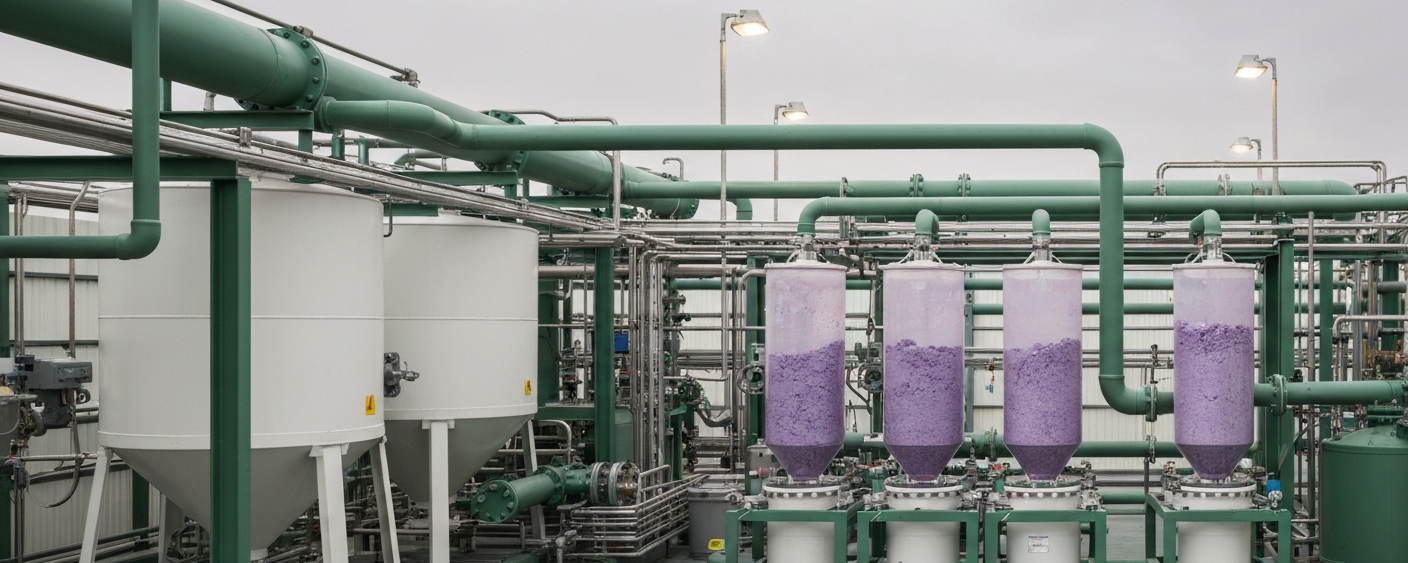
One distinctive feature of the Ema project is its extraction method: In-Situ Recovery (ISR), also called in-situ leaching. Rather than mining ore conventionally and hauling it to the surface, ISR pumps solutions through the deposit rock to dissolve target minerals and bring them up as an enriched fluid.
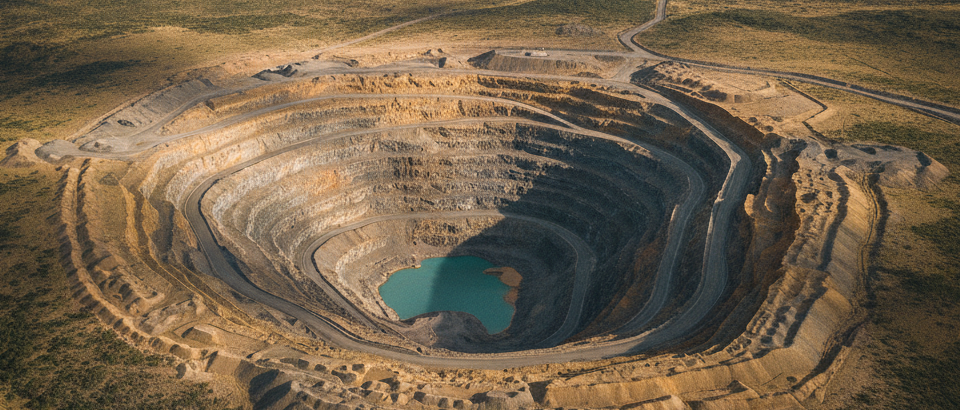
Open-pit operations require large equipment fleets, extensive stockpile areas, and substantial processing infrastructure — capital costs that can quickly run into the hundreds of millions. An ISR facility primarily needs drilling capacity, pumps, and liquid-phase processing equipment, which explains the comparatively low capex of USD 74 million here.
Because ISR generates no large-scale waste rock dumps, its surface footprint is smaller than open-pit mining, which tends to simplify permitting in environmentally sensitive areas. The tradeoff is that the method requires careful hydrogeological planning to prevent groundwater contamination, and regulators examine this closely. ISR is well established in uranium mining — Kazakhstan being the most prominent example — and is increasingly applied to ionically adsorbed rare earth deposits in parts of Brazil and Southeast Asia.
| Metric | Significance for investors |
|---|---|
| NPV (Net Present Value) | Present value of all future cash flows minus capital costs; measures the absolute value of a project |
| IRR (Internal Rate of Return) | The discount rate at which the project breaks even; indicates whether the return justifies the capital compared to alternatives |
| Capex (Capital Expenditure) | Total upfront investment; lower capex reduces financing risk and lowers the entry barrier |
| Payback Period | Time to recover the initial investment; a shorter payback reduces exposure to commodity price risk |
| Opex (Operating Expenditure) | Ongoing operating costs per tonne or unit; critical for margins when commodity prices fluctuate |
What these numbers mean for rare earths and small-cap investors
Rare earths have become a politically charged commodity class. Demand for neodymium, praseodymium, and dysprosium keeps growing because electric motors and wind turbines depend on them, while production remains heavily concentrated in China. The U.S., the EU, and Japan have each responded with critical minerals strategies aimed at building supply chains elsewhere — the EU’s Critical Raw Materials Act of 2023, for instance, set explicit target quotas for domestic extraction and processing.
Brazil fits into that picture. The country has substantial geological resources and a functioning legal framework, and buyers in Europe and Japan have been actively exploring Brazilian supply as a partial alternative to Chinese material. For a junior company, a completed BFS means conversations about project financing or offtake agreements can rest on a documented set of figures rather than projections from an early-stage study.
Low capex paired with a short payback period makes a project easier to finance because the deployed capital returns quickly, reducing lender exposure. For small-cap investors, that matters because it raises the probability that a project actually reaches production. The distance between filing a BFS and the first day of output is still long, though, and permitting and construction risks during that period are real. Those risks should show up in how a stock is priced, though they do not always.
A roadmap, not a guarantee
A Bankable Feasibility Study is the most detailed instrument available before a construction decision is made. The Ema numbers illustrate how ISR can reshape the economics of a rare earths project: lower capital intensity, faster payback. Whether those figures hold in practice depends primarily on the commodity prices baked into the model and on permits that have not yet been granted.
Anyone analyzing junior mining stocks should spend less time on headline NPV figures and more time on the assumptions buried in the study itself. What price does the BFS use for each product? How far does the NPV fall if that price drops 20%? Which regulatory approvals are still outstanding? Every credible BFS discloses this, usually toward the back, in the sensitivity analysis and permitting sections.
Key technical terms
- Bankable Feasibility Study (BFS)
- A detailed feasibility study with cost accuracy of ±15%, used as the basis for external project financing. It is the highest study format produced before a formal construction decision.
- NPV (Net Present Value)
- All future project cash flows discounted to today’s value, minus the initial investment. A positive NPV means the project creates value under the assumptions used.
- IRR (Internal Rate of Return)
- The discount rate at which a project’s NPV equals zero. The wider the gap between IRR and the cost of capital, the more attractive the project looks on paper.
- Capex (Capital Expenditure)
- One-time costs to build and commission a mining facility. Lower capex reduces the financing hurdle and limits exposure to price swings before production begins.
- In-Situ Recovery (ISR)
- An extraction method in which mineral-bearing solutions are pumped through deposit rock to recover target minerals without conventional mining. It generally produces lower capex and a smaller surface disturbance than open-pit methods.
- Payback Period
- How long it takes to recover the initial investment from operating cash flow. A shorter payback period means less time exposed to commodity price movements.
- Resources vs. Reserves
- Resources (Inferred / Indicated / Measured) are geologically estimated quantities at varying confidence levels. Reserves (Proven / Probable) are the portion deemed extractable under economically and technically viable conditions. The two terms are not interchangeable.
- Opex (Operating Expenditure)
- The ongoing cost of running a mining operation, usually expressed per unit of production. Together with the commodity price, opex sets the operating margin.
⚠️ Important notice: This article is for informational and educational purposes only. It does not constitute investment advice, a recommendation, or a solicitation to buy or sell any security. Investments in small-cap exploration and mining companies carry a high risk, including the potential total loss of capital. Before making any investment decision, consult a registered financial advisor and conduct your own analysis. Boersen Post Team is not responsible for decisions taken based on the content published here.