Heavy Rare Earths: Why HREE Discoveries in Canada Are So Uniquely Valuable
July 4, 2026
Drone Magnetometry: How Geophysics Is Reshaping Gold Exploration
July 5, 2026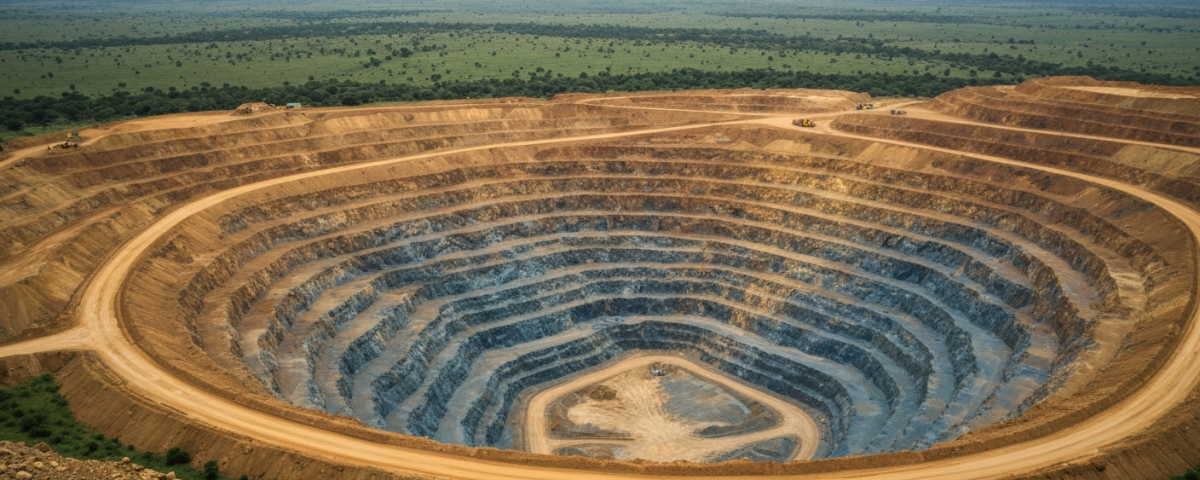
When one number makes all the difference: the maiden resource estimate
For most institutional investors, a gold project without an official mineral resource estimate is simply intangible. It exists as a geological hope, as drill data on maps and tables, but not as a verifiable asset. Publishing an NI 43-101-compliant maiden resource changes that in a direct, practical way.
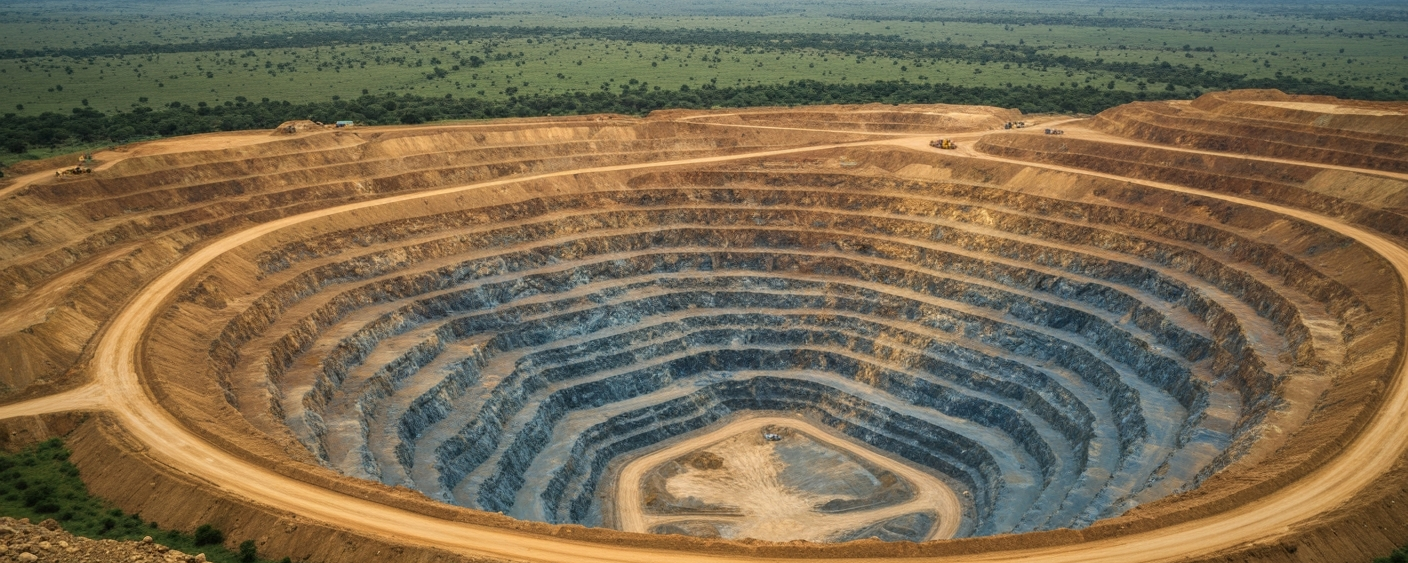
A recent announcement from Côte d’Ivoire illustrates what such a step looks like on the ground. Sarama Resources reported a combined open-pit and underground resource of more than 1.7 million ounces of gold equivalent in the Inferred category for its gold project. Beyond gold, the estimate includes copper, converted into gold equivalent terms. Anyone reading such an announcement for the first time is right to ask what it actually means, and why markets react to it at all.
NI 43-101 as a global anchor of trust for commodity projects
The Canadian standard NI 43-101 (National Instrument 43-101) is not a marketing label. It is a binding regulatory requirement of the Canadian securities regulator, prescribing how a project’s mineral resources and reserves must be determined, documented, and disclosed by independent experts known as “Qualified Persons.”
A strict hierarchy applies that investors should understand:
- Inferred Resources: Estimated on the basis of limited data; uncertainty is highest. They serve as an initial reference point but are not yet a reliable basis for planning.
- Indicated Resources: Tighter sampling grids, higher confidence. Can form the basis for economic studies.
- Measured Resources: Highest data density, lowest uncertainty. Can be converted into reserves.
- Reserves: Proven or Probable. This category requires demonstrated economic viability and is the basis for project financing and mine planning.
The NI 43-101 standard is recognized internationally, including by the TSX Venture Exchange, the ASX, and many European institutions. Only once a report under this standard is in place can a project be seriously considered for bank loans, project bonds, or institutional equity participation.

West Africa’s gold belt: opportunity and valuation discounts
Côte d’Ivoire sits within the West African Birimian Greenstone Belt, a geological formation that has produced large gold mines across Ghana, Burkina Faso, and Mali as well. That concentration explains why junior explorers have worked this corridor for decades.
Geographic attractiveness only goes so far, though. Jurisdiction risk matters just as much: political stability, mining legislation, license security, infrastructure, and the reliability of state institutions vary considerably from country to country. For small-cap investors, this has a direct consequence. Two projects with identical resource sizes and identical grades can receive very different market valuations simply because one sits in Canada and the other in a more politically volatile region.
This is the “country risk discount.” A gold project in West Africa is typically valued at a lower enterprise value per ounce than a comparable project in Nevada or Ontario. That does not automatically make West African projects poor investments, but the risk must be reflected in the price.
| Factor | Impact on project valuation |
|---|---|
| Resource category (Inferred vs. Indicated) | Higher category → higher value per ounce |
| Metal grade (g/t AuEq.) | Higher grade → better economics |
| Mining method (open pit vs. underground) | Open pit generally cheaper; underground often yields higher grades |
| Jurisdiction | Political risk → country risk discount |
| By-product metals (e.g., copper) | Can increase total grade expressed as AuEq. |
Open pit and underground combined, and what gold equivalent means
The Côte d’Ivoire example has an interesting structural feature: the resource is composed of two distinct mining scenarios. The largest deposit contributes the bulk of the total tonnage from combined open-pit and underground sources, while a smaller, higher-grade ore body shows much lower tonnage but substantially better grades.
Mixed profiles like this are common in practice. Near-surface, lower-grade ore bodies suit cost-efficient bulk mining via open pit, while deeper, higher-grade zones can be selectively extracted underground. The combination can improve a project’s overall economic outlook, provided the logistics and capital can support both approaches.
The term “gold equivalent” (AuEq.) also needs some explanation. When a project contains other valuable metals alongside gold — copper in this case — those metals are converted into a notional gold value, allowing the total resource to be expressed as a single figure. That figure depends directly on the metal prices and conversion rates applied. Investors should always check which price assumptions underpin an AuEq. number, because it will shift when metal prices move.
What a maiden resource means for small-cap investors
A maiden NI 43-101 resource is not a finish line. It creates the foundation on which economic studies are built. The sequence runs from a Preliminary Economic Assessment (PEA) to a Pre-Feasibility Study (PFS) and eventually a Bankable Feasibility Study (BFS), with each step producing a clearer picture of whether a mine can actually be operated and on what terms.
For small-cap investors, a familiar pattern tends to follow: an explorer’s market value can jump sharply on a positive maiden resource, because the project suddenly becomes visible and verifiable to a broader investor base. The risk stays high regardless. Between an Inferred Resource and a producing mine typically lie years of additional drilling, permitting work, and capital expenditure running into the hundreds of millions.
As a rough guide, the value per ounce the market assigns to an Inferred Resource is well below that of an Indicated or Measured Resource, and further still below the value of a Proven Reserve. That discount reflects the real uncertainties attached to each category, not arbitrary conservatism.
The West African example shows how many variables need to be assessed at once: the geological quality of the Birimian Greenstone Belt, the political situation in Côte d’Ivoire, the mixed profile of open-pit and underground potential, and the position of copper as a by-product at a time when energy transition demand is keeping copper prices elevated. Anyone trying to evaluate a resource project has to work through these questions, regardless of which country the project is in.
Key terms for getting started with resource valuation
NI 43-101 is a Canadian regulatory standard for reporting on mineral resources and reserves. It requires independent Qualified Persons and is recognized internationally.
An Inferred Resource is the resource category with the greatest uncertainty. It rests on limited data and cannot serve as a direct basis for economic studies or bank financing.
Gold equivalent (AuEq.) refers to the conversion of other metals such as copper or silver into a unified gold value based on prevailing market prices. This allows comparison across multi-metal projects, but the figure depends on the price assumptions applied.
The country risk discount is the lower valuation the market applies to projects in politically or regulatorily uncertain regions, independent of geological quality.
The Birimian Greenstone Belt is a geological formation in West Africa with some of the highest gold concentrations on Earth, extending across Ghana, Mali, Burkina Faso, and Côte d’Ivoire.
Open-pit mining is the near-surface extraction of low-to-medium-grade ore bodies. Operating costs are lower than underground mining, but the method depends on how deep the ore sits.
Underground mining applies to extraction at greater depths, typically where grades are high enough to justify the additional cost.
A Qualified Person (QP) is an independent expert with a recognized professional qualification who reviews and signs off on technical reports under NI 43-101. Without a QP signature, a resource disclosure does not meet stock exchange requirements.
⚠️ Important notice: This article is for informational and educational purposes only. It does not constitute investment advice, a recommendation, or a solicitation to buy or sell any security. Investments in small-cap exploration and mining companies carry a high risk, including the potential total loss of capital. Before making any investment decision, consult a registered financial advisor and conduct your own analysis. Boersen Post Team is not responsible for decisions taken based on the content published here.