Strategic Anchor Investment: What C$140M Does to a Copper Junior
July 6, 2026
Soil Geochemistry: How Junior Explorers Build Targets Before the First Drill Hole
July 6, 2026
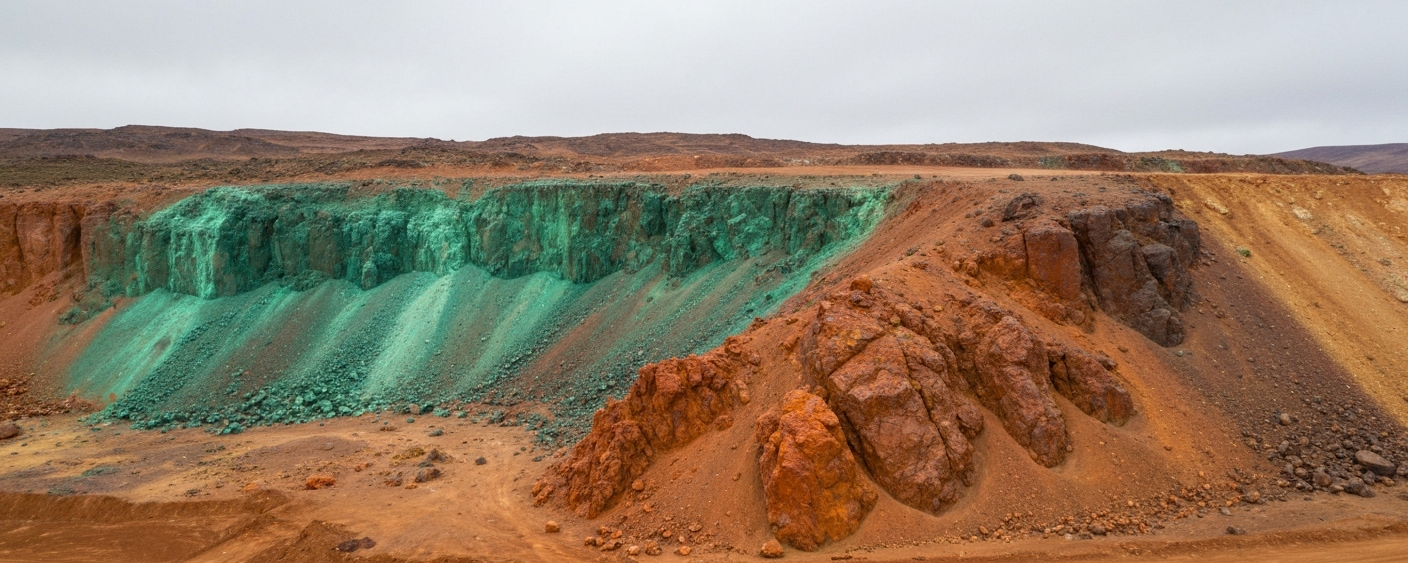
When speculation becomes a drilling program
Investors in junior explorers tend to focus on drill hits, resource estimates, and metal prices. What often slips out of view: before a single drill core reaches the surface, a company must work through a permitting process that can stretch across years. Only once environmental or exploration permits have been granted does a project move from geological concept to operational reality.
Two copper juniors made that transition within weeks of each other recently. One, active in Peru, received official environmental certification for an extensive drilling program in the southern Andes. The other, a Canadian company in Ontario, received an exploration permit for its copper deposit for the first time in more than four decades — the property has been described as the largest primary copper resource in the province. Both cases show that permits are not administrative formalities as far as small-cap valuations are concerned; they are concrete risk events with a direct impact on project value.
Permitting in mining: more than a rubber stamp
The permitting process varies considerably by jurisdiction. In Peru, the Declaración de Impacto Ambiental (DIA) requires a detailed environmental impact assessment for smaller to mid-sized exploration programs. The responsible ministry reviews water usage, surface disturbance, social compatibility, and potential effects on local communities. Only after approval may physical drilling begin.
In Ontario, an exploration project must work through the permitting framework of the Mining Act alongside supplementary environmental and consultation processes that must include indigenous communities. As the northern Ontario copper project shows, even at historically drilled properties with well-understood geology, it can take more than 40 years before drilling rights are granted again.
The practical takeaway for investors: permitting risk is not an abstract regulatory detail. A company without a granted permit cannot deploy its capital productively, and investors who enter early carry that risk alongside the company.

Why permits move the market value of junior miners
Among small-cap explorers, every milestone that removes an uncertainty can increase a project’s perceived value, often before a single assay result is available. Permits follow the same logic.
An exploration project is essentially a sequence of hurdles. The geology must be plausible, permits must be in place, drilling must deliver results. Each hurdle cleared attracts capital betting on the next step.
For copper juniors, this matters particularly now. Power grid buildout and the shift to electric vehicles are generating copper demand that looks durable well into the next decade, and early-stage exploration has attracted more institutional attention as a result, even for projects not yet fully permitted, provided the geology is credible and the permitting timeline is realistic.
An unpermitted exploration project is a bit like a building plot where zoning approval hasn’t come through yet: the underlying asset may be valuable, but until the right to develop exists, that value stays theoretical. The permit changes the picture for potential capital providers.
Country context matters here too. Ontario has established mining infrastructure and a predictable regulatory framework. Peru is one of the world’s major copper producers but also carries recurring social tensions and political uncertainty. Getting a DIA approved there is not a foregone conclusion. When a company does receive one, it means genuine local requirements have been met, not just paperwork filed.
| Permit type | Jurisdiction | Function | Relevance for investors |
|---|---|---|---|
| Declaración de Impacto Ambiental (DIA) | Peru | Environmental certification for exploration programs | Prerequisite for physical drilling operations |
| Exploration Permit | Ontario, Canada | Authorization for large-scale drilling campaigns | Enables systematic resource testing |
Reading permit status as an investor
For those newer to small-cap investing, a project’s permit status offers concrete orientation even without specialist geological knowledge.
A reasonable starting point is the jurisdiction. Companies operating in established mining nations with predictable regulatory frameworks carry less regulatory risk than those in politically unstable regions, even if the latter sometimes offer more spectacular geology.
It is also worth checking the typical gap between application and approval in a given jurisdiction. Permitting delays are a frequent cause of additional capital requirements and share dilution, and that is worth tracking from the outset.
Somewhat less visible in financial metrics, but genuinely consequential, is local social acceptance. In Peru especially, but increasingly in Canada too, consultation processes with local communities form a substantial part of the permitting procedure. A company that handles these processes well is removing a project risk that rarely shows up in a balance sheet: the so-called Social Licence to Operate.
Copper demand is heading in one direction, and two juniors now have permits in hand where they didn’t before. For investors in either project, that is something tangible to price in.
Key terms around exploration rights and permits
- Declaración de Impacto Ambiental (DIA)
- Peru’s environmental certification for exploration projects with limited surface disturbance. A prerequisite for drilling operations; reviewed and issued by the responsible ministry.
- Exploration Permit
- A regulatory authorization that allows a company to conduct physical exploration (e.g., drilling) on a defined land package. Scope and requirements vary by jurisdiction.
- Permitting risk
- The risk that a project fails to obtain the required regulatory permits, does not receive them in time, or receives them only subject to costly conditions. It forms part of the regulatory risk profile of any explorer.
- Social Licence to Operate
- The informal social acceptance of a mining project by local communities. A lack of social acceptance can block even formally permitted projects.
- De-risking milestone
- Any step in project development that removes an uncertainty, such as a permit grant, initial drill results, or a resource estimate, and can thereby increase the perceived project value.
- Inferred / Indicated / Measured Resource
- Categories under NI 43-101 (Canada) that indicate the degree of geological confidence in a mineral resource. Resources are not reserves — they do not yet represent economically extractable quantities.
- Primary copper resource
- A copper deposit in which copper is the economically dominant mineral, as opposed to copper occurring as a by-product (e.g., in gold or molybdenum projects).
⚠️ Important notice: This article is for informational and educational purposes only. It does not constitute investment advice, a recommendation, or a solicitation to buy or sell any security. Investments in small-cap exploration and mining companies carry a high risk, including the potential total loss of capital. Before making any investment decision, consult a registered financial advisor and conduct your own analysis. Boersen Post Team is not responsible for decisions taken based on the content published here.