Uranium Exploration in Latin America: What Investors Need to Know
July 16, 2026
Brine Concentration & Hydrogeology: What Defines Brine Lithium Projects
July 16, 2026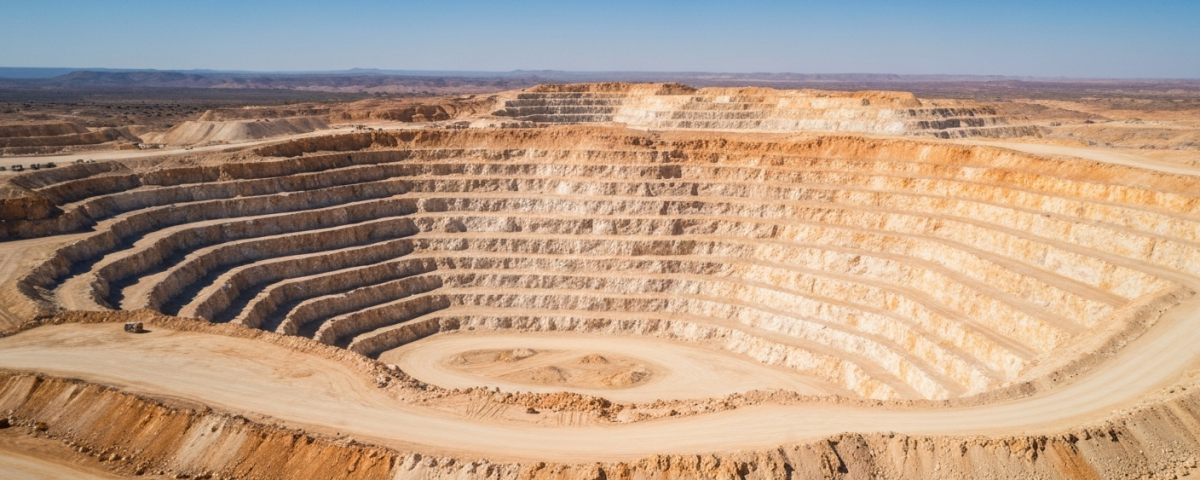
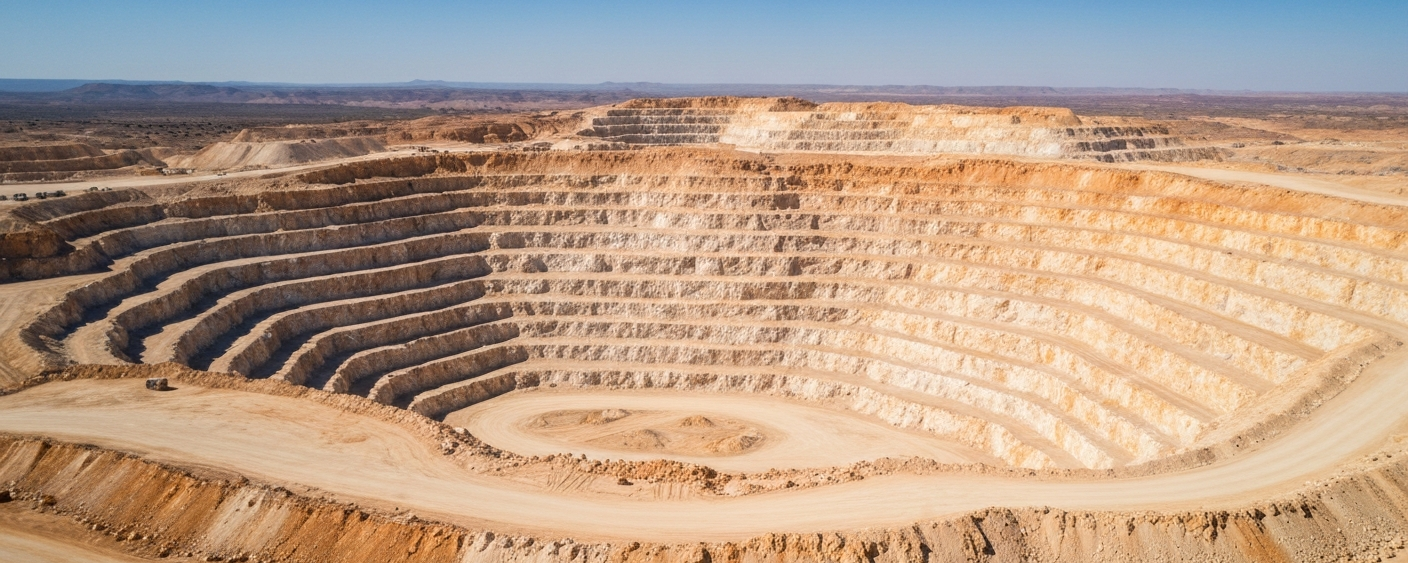
When resources grow: a signal that needs context
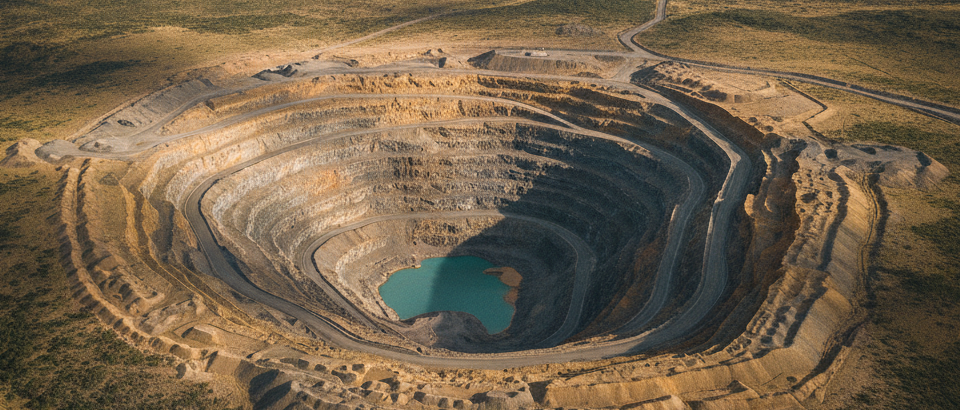
Few announcements in the lithium sector move share prices as reliably as an updated resource estimate. An Australian junior explorer recently published a revised technical report for its pegmatite project in the Northern Territory: the resource increased to 5.22 million tonnes at 1.50% Li₂O, roughly 34% more than the prior-year estimate. For many investors, that number reads as straightforwardly good news. Whether it actually is depends on details the headline figure doesn’t tell you.
Pegmatites, spodumene, and the geology behind lithium deposits
Lithium in hard rock occurs primarily in pegmatites: coarse-grained intrusive rocks that form as magma cools slowly, concentrating rare elements including lithium in the mineral spodumene. These deposits differ fundamentally from brine projects, where lithium-bearing water is pumped from underground basins.
One practical advantage of pegmatite projects is that the resource body can be modeled with reasonable precision through drilling. Each campaign delivers new data on the thickness and grade of the mineralisation. When a junior reports resource growth, it usually means more drilling has been completed, the geology is better understood, and the modelled ore body has been extended or filled in within existing zones.

Inferred, Indicated, Measured: the hierarchy of confidence
The most important concept when reading resource announcements is confidence classification. Under Canada’s NI 43-101 standard and its Australian equivalent, JORC, mineral resources are divided into three categories:
| Category | Drill Spacing | Planning Relevance |
|---|---|---|
| Inferred | Wide-spaced | Initial orientation only; low reliability |
| Indicated | Closer, systematic | Basis for preliminary studies and PEA |
| Measured | Dense, detailed | Foundation for feasibility studies and bank financing |
The distinction matters in practice. A resource reported predominantly as Inferred has not been sampled densely enough to serve as a reliable planning basis. Only once enough drilling upgrades material into the Indicated or Measured category can it be converted into reserves — the economically mineable quantities that lenders will actually finance.
So when a junior reports resource growth, the technical report is worth reading carefully: how is the tonnage split across the categories? A 34% increase means something different if it falls mostly in Indicated material than if it sits entirely in the Inferred zone.
Why resource size changes a project’s standing
Mining carries high fixed costs. The more tonnes available, the more years a processing plant can run, spreading those capital costs across a longer production period. A plant operating for twenty years instead of ten doesn’t cost twice as much to build; it just needs more ore to fill it.
Offtake discussions with battery or automotive manufacturers often stall precisely because the resource base is too thin. A buyer committing to a ten-year supply agreement needs to know the material is actually there, in a confidence category that holds up to scrutiny. As tonnage grows into Indicated territory, that conversation becomes possible.
There is also a procedural reason resource growth matters. A project cannot reach a feasibility study without an adequate resource base. The Preliminary Economic Assessment comes first and requires enough material in the right confidence categories to carry weight. Resource growth is a step in that sequence, not a destination.
What investors can read into resource announcements
Resource announcements are prepared by qualified persons and follow regulated standards, which makes them among the more reliable documents junior explorers publish. They still require interpretation.
Tonnage and grade should move together. Resource growth bought at the price of a sharp drop in Li₂O grade is a mixed result. The confidence category split matters just as much as the headline tonnage figure.
A project in an established mining region with a stable grade and a growing Indicated share is a different situation from one posting similar headline growth in a remote jurisdiction where most of the material is still Inferred. Both press releases can sound almost identical. The underlying risk profiles are not.
Key terms in lithium resource reporting
- Pegmatite
- A coarse-grained intrusive rock that forms through the slow cooling of magma. Pegmatites can concentrate rare elements such as lithium and form the geological foundation of many hard-rock lithium projects.
- Li₂O grade
- The standard measure of lithium content in hard-rock projects, expressed as a percentage of lithium oxide. Economically viable projects typically fall between 1.0% and 2.0% Li₂O.
- Mineral resource
- A geologically documented concentration of a mineral that is potentially economically extractable. Resources are divided into Inferred, Indicated, and Measured categories. They are not yet reserves.
- Mineral reserve
- The portion of a resource confirmed as economically mineable after technical and economic assessment. Reserves require higher confidence classifications and are what lenders base financing decisions on. Reserves and resources are not interchangeable terms.
- Inferred resource
- The lowest confidence category, based on wide-spaced drilling. Not suitable as a planning basis for feasibility studies or lending decisions.
- Indicated resource
- A moderate-confidence category, suitable for preliminary studies including a PEA. Drilling is closer-spaced and more systematic than for Inferred material.
- Preliminary Economic Assessment (PEA)
- An initial economic scoping study that can draw on both Indicated and Inferred resources. It gives a first look at project economics but lacks the detail of a full feasibility study.
- Spodumene
- A lithium-bearing mineral (LiAlSi₂O₆) found in pegmatites and the primary raw material for hard-rock lithium production. Spodumene concentrate is processed into lithium chemicals for battery use.
⚠️ Important notice: This article is for informational and educational purposes only. It does not constitute investment advice, a recommendation, or a solicitation to buy or sell any security. Investments in small-cap exploration and mining companies carry a high risk, including the potential total loss of capital. Before making any investment decision, consult a registered financial advisor and conduct your own analysis. Boersen Post Team is not responsible for decisions taken based on the content published here.