Exchange Listing After a Merger: What a NYSE Listing Means for Gold Small Caps
July 19, 2026
Merger Strategy in Precious Metal Juniors: Opportunities and Risks
July 21, 2026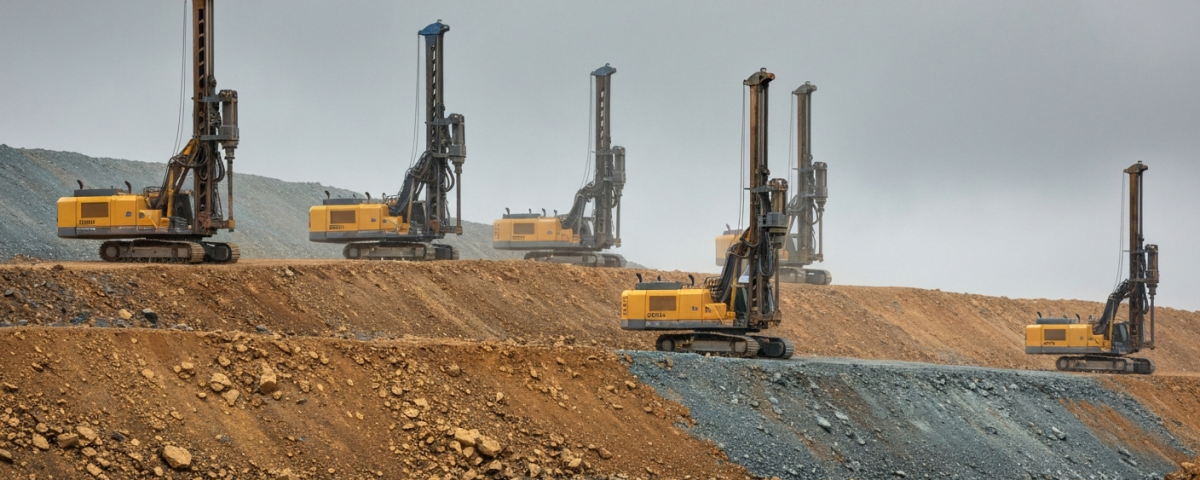
When drill rigs multiply — and the market reacts
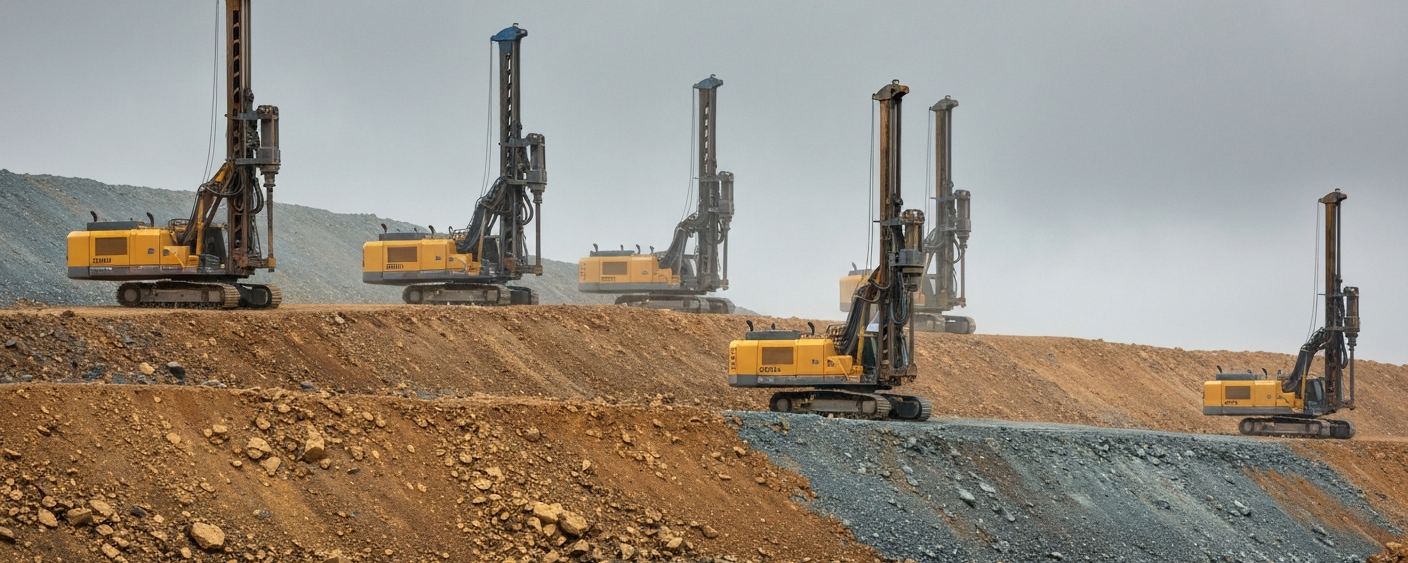
In gold exploration, there is an often-overlooked factor that can sharply shift a junior company’s valuation within just a few weeks: how many drill rigs are running simultaneously on a single project. One rig delivers results on a cycle of months. A fleet of four, five or six rigs generates a nearly continuous stream of data.
At first glance this sounds like a purely operational detail. For investors, especially beginners, understanding this dynamic matters. More drill rigs do not automatically mean more success. What they do mean, above all, is more data points in less time — and that changes how the market prices risk and opportunity.
From single rig to fleet: the context of established deposits
Intensive drilling campaigns with several rigs running in parallel are not a greenfield phenomenon. They typically take place at already-known deposits, where historical data provides an initial geological picture and the risk of total failure is lower than on a blank-slate project.
At such projects, an explorer operating multiple rigs usually pursues two goals at once: resource expansion (extending known mineralization at depth or along strike) and resource definition (tighter drill-hole spacing to upgrade categories from “Inferred” to “Indicated” or “Measured”). This distinction under the NI 43-101 standard has real consequences. An “Inferred” resource is the least well-supported category; “Indicated” requires closer sample spacing and stronger geological continuity; “Measured” is the most reliable. Moving from one category to the next can make a resource estimate considerably more attractive to investors and potential acquirers.
The practical impact of this can be traced in West African gold exploration during the 1990s. When large gold camps were systematically drilled with parallel fleets, valuation cycles compressed from years to months. Projects that had been regarded for years as interesting but geologically unclear became acquisition targets within just a few quarters once dense data packages produced a clear picture of mineralization. AngloGold and Ashanti Goldfields both noted these dynamics in their annual reports from that period, though neither company published granular campaign-level breakdowns.
The information rhythm as a market factor: why timing matters
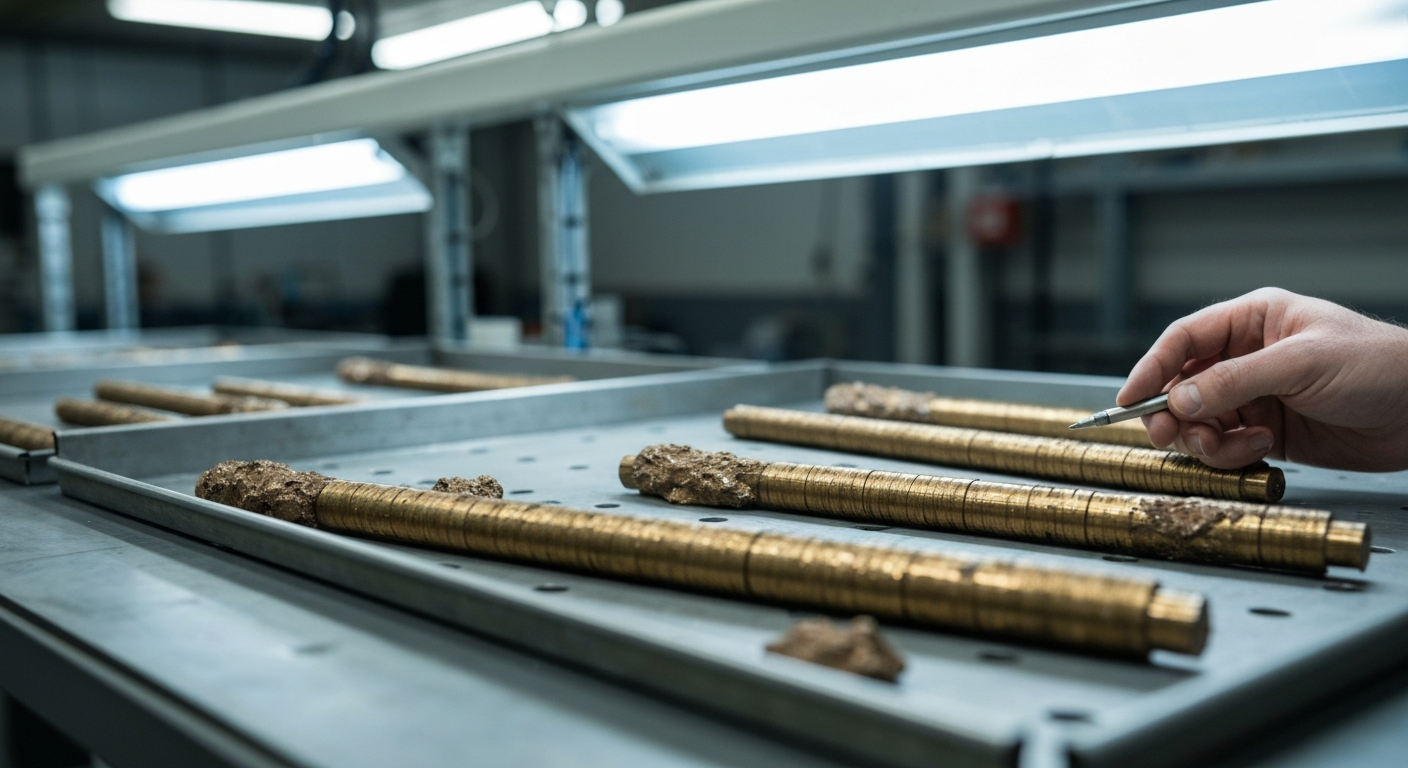
What distinguishes a six-rig campaign most is its assay rhythm. Assays — laboratory analyses of drill cores for metal content — are sent to external labs in batches. With a single rig, those batches return at long intervals. With six rigs running in parallel, the results arrive week after week without a real break.
This creates a pattern in share price behavior that beginners often misread. Within a matter of weeks, three or four separate press releases with drill results can appear. Each one moves the share price, up on strong results, down on disappointments. The movement can look random and directionless, even when the overall picture of the deposit is developing gradually and logically underneath the noise.
| Number of drill rigs | Typical results rhythm | Share price effect |
|---|---|---|
| 1 rig | Results every 2–4 months | Few but significant events |
| 2–3 rigs | Results every 4–6 weeks | More frequent, moderate reactions |
| 4–6 rigs | Results nearly continuously | High volatility, dense news flow |
Opportunities and risks of an intensive drilling campaign
For small-cap gold explorers, an intensive drilling campaign is a double-edged proposition. A large volume of data produced quickly can justify a revaluation of the project. A clearly defined, well-documented resource profile reduces uncertainty and raises visibility among larger mining companies, which frequently leads to an acquisition or a joint venture.
The price for that speed is volatility. When multiple results appear in quick succession and some fall short of expectations — statistically almost inevitable — share price declines can be swift and sharp. There is also the so-called news fatigue phenomenon: when the market is flooded with data, attention paid to any individual release drops. Even strong results may barely move the share price in the short term.
What beginners also frequently miss is the logistical burden. Operating six drill rigs simultaneously requires substantially more core storage, greater laboratory capacity and higher operating costs. For junior explorers without ongoing production and therefore without their own revenue, the question of adequate capitalization is always present. Who is financing this campaign, and on what terms? Capital raises during this phase can dilute existing shareholders.
Key exploration terms explained
- Assay
- A laboratory analysis of a drill core or rock sample to determine metal content, expressed in grams per tonne (g/t) for gold or as a percentage for other metals.
- Inferred resource
- The least well-supported resource category under NI 43-101. It is based on limited samples; geological continuity is assumed but not sufficiently verified.
- Indicated resource
- The intermediate resource category, supported by closer drill-hole spacing and a more reliable estimate; sufficient as a basis for scoping studies.
- Measured resource
- The highest resource category; high geological confidence, based on dense sample patterns and detailed analysis.
- Reserve (Proven / Probable)
- The economically mineable portion of a resource, confirmed as technically and economically viable by a feasibility study. Not synonymous with “Resource.”
- Strike length
- The horizontal extent of a mineralization zone along its long axis; a measure of the potential volume of a deposit.
- Dilution
- A reduction in existing shareholders’ ownership percentage through the issuance of new shares, for example to finance a drilling campaign. Common with pre-revenue junior companies.
- News flow density
- The frequency of press releases reporting drill results; particularly high during parallel drilling campaigns and therefore an independent driver of share price volatility.
⚠️ Important notice: This article is for informational and educational purposes only. It does not constitute investment advice, a recommendation, or a solicitation to buy or sell any security. Investments in small-cap exploration and mining companies carry a high risk, including the potential total loss of capital. Before making any investment decision, consult a registered financial advisor and conduct your own analysis. Boersen Post Team is not responsible for decisions taken based on the content published here.