ETF Inclusion for Uranium Juniors: How Passive Funds Direct Capital
August 6, 2026
Government Grant Programs: How Governments Strengthen Lithium Junior Miners
August 7, 2026
When legacy liabilities become resources
Most commodity companies follow the same sequence: secure a property, drill for a resource, then permit and produce. What is far less common is a business model that starts precisely where others see only cleanup costs.
That is the premise behind a new entrant in U.S. uranium: a company combining the only Nuclear Regulatory Commission (NRC) permit in the United States for recovering uranium from decommissioned mine waste with a conventional resource base in Utah. If the project reaches production, it would be the first new uranium processing facility built in the U.S. in more than forty years. The company has disclosed $105 million in committed institutional financing.
For anyone working through small-cap analysis, this case is worth attention. A permit that would take years to replicate from scratch, a corporate restructuring, and sustained geopolitical pressure on U.S. energy supply have together brought an entirely new market participant into existence.
Why the U.S. is urgently seeking domestic uranium supply
The United States operates roughly 90 commercial nuclear reactors, more than any other country. Yet for years it has covered the bulk of its uranium demand through imports, primarily from Kazakhstan and Russia. The legally enacted ban on Russian uranium imports, in effect since 2024, has significantly increased pressure on the domestic supply chain.
At the same time, U.S. uranium production sits at historically low levels. Decades of cheap import prices made domestic projects uneconomical and allowed infrastructure to stagnate: barely any active mills, a limited skilled workforce, and a permitting system that has changed little in years.
In that environment, domestic production is gaining strategic importance, even when it comes from unconventional sources.

How waste becomes a mine
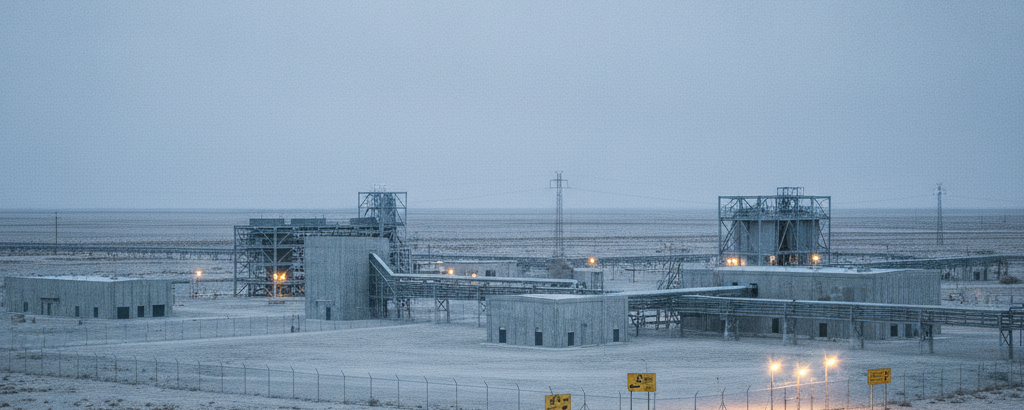
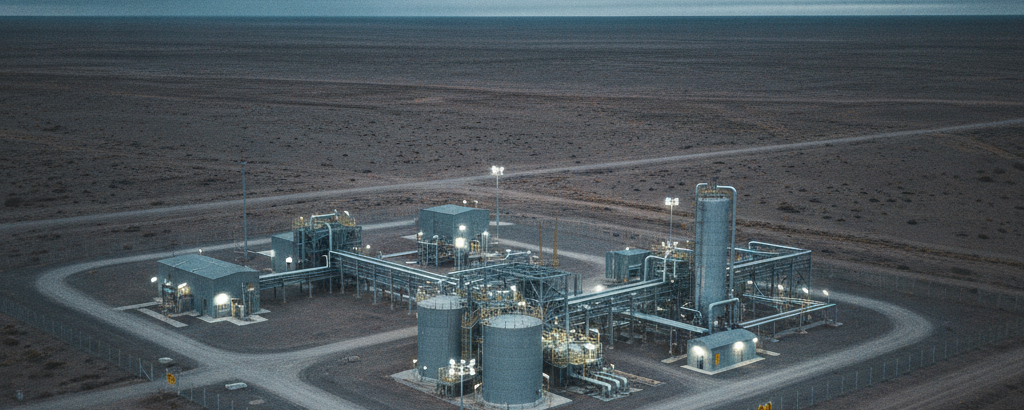
Many U.S. uranium mines were operated before modern environmental regulations existed. During extraction and processing, large quantities of waste rock were left behind that still contain measurable uranium concentrations. These tailings piles are classified as environmental liabilities today because they are potential sources of radioactive dust and seeping leachate.
Any entity holding a government-recognized permit to remediate this waste can, under certain conditions, commercially market the uranium recovered in the process. The responsible authority is the Nuclear Regulatory Commission (NRC), whose licensing process is long and expensive. An existing license therefore takes years to replicate, which is what gives it real balance sheet value.
There is also a practical cost advantage. Existing tailings piles are often geographically concentrated, which can reduce logistics costs relative to a greenfield mining project. The most capital-intensive phase of mining, initial site development, is largely bypassed.
Corporate restructuring as a capital strategy
The second notable aspect is the structure of the newly formed company. IsoEnergy Ltd. (NYSE American: ISOU), an already publicly listed operator, contributed conventional resources in Utah into a joint venture. Technology partner DISA Technologies brought in the NRC license and operational expertise. The result is a new, independent entity: DISA Uranium Corporation.
This type of arrangement, sometimes called a spin-out or venture formation, is common enough in the small-cap world. It allows specific assets to be consolidated into a new vehicle with a defined focus. For IsoEnergy, that means value is separated out without dismantling the parent company’s core structure. DISA Uranium Corporation launches with defined assets and $105 million in committed capital, per company filings.
These structures deserve close scrutiny. Which assets were contributed, and at what valuation? How is ownership split between the founding partners? What dilution do investors face from the financing round?
| Feature | Conventional uranium project | Remediation-based model |
|---|---|---|
| Primary permit | Mine permit + NRC license | NRC remediation license (existing) |
| Exploration risk | High (unknown resource) | Lower (known tailings piles) |
| Initial capital outlay | Very high (development) | Lower (existing infrastructure) |
| Regulatory barrier | Medium to high | Very high (license difficult to replicate) |
| Public acceptance | Often contested | Remediation angle viewed positively |
What to watch from here
This is not a one-off concept. Stricter environmental regulations, constrained domestic supply, and a shift in U.S. energy policy are creating business models that would not have been viable a few years ago.
A hard-to-replicate permit can be a real competitive advantage, but a license alone generates no cash flow. What matters is whether the company is technically and financially capable of putting it to use. Restructurings in the small-cap space can unlock asset value, but they also produce complexity. And U.S. policy pressure toward domestic uranium supply is not a short-term condition — it is the structural backdrop against which this entire project was conceived.
Early-stage projects carry real execution risk, and $105 million in committed financing is not proof of profitability. The clearest indicators of whether this model holds up in practice will come from technical report releases, permitting milestones, and initial production data.
Key terms for this market segment
- NRC (Nuclear Regulatory Commission)
- The U.S. federal agency that regulates all civilian nuclear facilities and materials. Its licenses are a prerequisite for any commercial uranium processing in the United States and take years to obtain.
- Remediation license
- A permit that allows a company to clean up contaminated legacy sites, such as tailings piles from uranium mining. In some cases, it also permits the commercial marketing of material recovered during that process.
- Tailings / mine waste
- Residues from ore processing that remain after the target metal has been extracted. In uranium mining, tailings can still contain significant residual grades while also constituting an environmental liability.
- Spin-out / venture formation
- A structuring arrangement in which one or more partners contribute specific assets into a newly formed, independent entity to develop those assets under a focused strategy.
- Private placement
- A capital raise conducted outside public markets, in which shares or other securities are issued directly to selected institutional or strategic investors without a public offering.
- Regulatory moat
- A competitive advantage arising from permits that are difficult to replicate. In the mining and nuclear sectors, such permits often require years-long processes to obtain, making existing licenses particularly valuable.
- Yellowcake (UO₃ / U₃O₈)
- A semi-finished product of uranium processing, a yellow-orange powder traded as a commodity on the uranium market and used as feedstock for further enrichment.
⚠️ Important notice: This article is for informational and educational purposes only. It does not constitute investment advice, a recommendation, or a solicitation to buy or sell any security. Investments in small-cap exploration and mining companies carry a high risk, including the potential total loss of capital. Before making any investment decision, consult a registered financial advisor and conduct your own analysis. Boersen Post Team is not responsible for decisions taken based on the content published here.