WKN, ISIN & Ticker: Differences Simply Explained
August 13, 2026
Permit Risk in Junior Miners: When Capital Runs Out
August 14, 2026

When one study moves markets more than a drill campaign
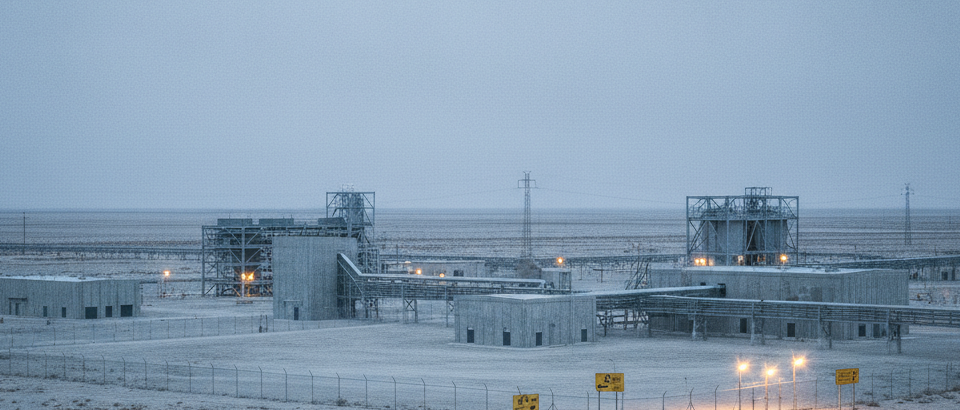
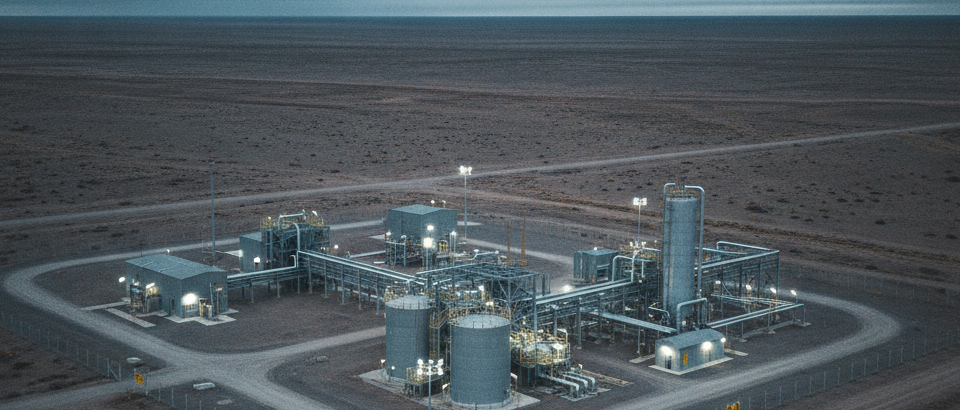
Occasionally a single publication does more for a project’s perceived value than years of drilling — not because new ore was found, but because the economics were recalculated. For a niobium project in Nebraska, an updated feasibility study raised the net present value (NPV) by 46 percent to $3.4 billion. The explanation is straightforward: the same ore body is now planned to yield more than twice as many saleable products.
For anyone new to small-cap mining, the obvious question is how a study can move the needle that far, and what that tells us about how these projects get priced in the first place.
Niobium, critical metals, and the case for multiple products
Niobium is not a common industrial metal. It is used mainly for hardening steel — small additions make structural steel meaningfully stronger and lighter without adding much weight. Around 90 percent of global supply comes from Brazil, which puts importing nations in an uncomfortable position. Both the EU and the United States have placed niobium on their respective critical raw materials lists as a result.
The Nebraska deposit also contains scandium and titanium. Scandium has uses in aerospace alloys and solid oxide fuel cells; titanium is well established in high-performance applications. That all three come from one mine is what drove the valuation jump.

What NPV actually measures, and where it misleads
The net present value is the standard tool for evaluating mining projects. It calculates how much all future revenues from a mine are worth today, after deducting costs and applying a discount rate. A positive NPV means the project is economically viable under the assumed conditions — those last four words deserve more attention than they usually get.
The main inputs are metal prices, production volumes, and costs. Raise the price assumption and the NPV goes up; increase tonnage and revenues follow; cut costs and margins improve. The discount rate also matters: the lower the rate applied, the higher the NPV comes out.
In Nebraska’s case, expanding the product range more than doubled projected revenue potential, which accounts for most of the 46 percent increase. But the figure is still a model. If metal prices fall or construction runs over budget, the NPV shrinks accordingly — and sensitivity tables in the study itself will show by how much.
| Key Factor | Effect on NPV |
|---|---|
| More marketable metals | Increases (higher revenues) |
| Higher metal prices (assumed) | Increases |
| Lower discount rate | Increases |
| Higher CAPEX / OPEX | Decreases |
| Permitting delays | Decreases (time-value effect) |
The gap between NPV and market price
Small-cap projects like this Nebraska venture typically trade at a steep discount to their calculated NPV. The reasons are mundane: the mine is not yet producing, permits have not been issued, financing is not in place, and a junior company carries far more execution risk than an established producer.
A rough real estate parallel: a site appraised at $10 million on paper, but without a building permit, a first-time developer and no bank commitment, will not sell at full appraisal value. Junior miners face the same logic against producing majors.
When a feasibility study shows the project is more economically sound than previously modeled, that gap can close fast. Stock prices often react sharply to study releases precisely because the market is repricing the probability of production, not just the NPV figure itself.
It is also worth knowing where a feasibility study sits in the development hierarchy. It is the most advanced form of technical assessment before a financing decision, sitting well above a scoping study or preliminary economic assessment. It requires detailed engineering data, metallurgical test results, and defensible cost estimates. Reaching this stage already represents a substantial filtering process.
What the model captures — and where it stops
A deposit yielding three critical metals has a different revenue structure than one producing a single commodity, and NPV calculations are sensitive to changes in input assumptions in both directions. A critical raw materials designation can open access to government support programs or offtake agreements that shorten the path to production — but none of that is automatic, and designation alone does not build a mine.
An NPV increase does not guarantee the project gets built, nor that equity markets will immediately price in the new figure. Anyone reading feasibility studies should go straight to the sensitivity tables: the ones showing how the NPV changes if metal prices drop 10 or 20 percent. Those numbers show whether the economics are robust or whether the model only works in a narrow price band.
Key terms around feasibility studies and project valuation
- Net Present Value (NPV)
- The present-day value of all future cash flows from a project, discounted to today. A positive NPV signals calculated economic viability under the chosen assumptions.
- Feasibility Study (FS / DFS — Definitive Feasibility Study)
- The highest level of technical assessment before a financing decision. It contains detailed engineering data, cost estimates, and metallurgical test results, and forms the basis for investment decisions.
- CAPEX (Capital Expenditure)
- The upfront investment costs for building and equipping a mine, including infrastructure, plant, and equipment. High CAPEX increases financing risk.
- OPEX (Operating Expenditure)
- The ongoing costs of running a mine — energy, labor, chemicals, and so on. Low OPEX improves profit margins and raises the NPV.
- Discount Rate
- The interest rate used to discount future revenues to present value. Higher rates reflect greater risk and reduce the calculated NPV.
- Polymetallic project
- A mining project that extracts multiple economically recoverable metals from a single ore body. Each co-product can increase total revenues and improve the NPV, assuming the metallurgy works and markets exist.
- Critical Raw Materials
- Metals and minerals classified by governments as economically and strategically essential, with identified supply risks. The designation can open access to public funding and government offtake programs.
- Valuation gap
- The difference between a project’s calculated NPV and the company’s actual market capitalization. It reflects risks such as missing permits, financing uncertainty, and stage of development.
⚠️ Important notice: This article is for informational and educational purposes only. It does not constitute investment advice, a recommendation, or a solicitation to buy or sell any security. Investments in small-cap exploration and mining companies carry a high risk, including the potential total loss of capital. Before making any investment decision, consult a registered financial advisor and conduct your own analysis. Boersen Post Team is not responsible for decisions taken based on the content published here.