Earn-In Model: When Industry Giants Finance Exploration Projects
August 15, 2026
Hybrid Project Generators: How Copper-Gold Explorers Spread Risk
August 16, 2026
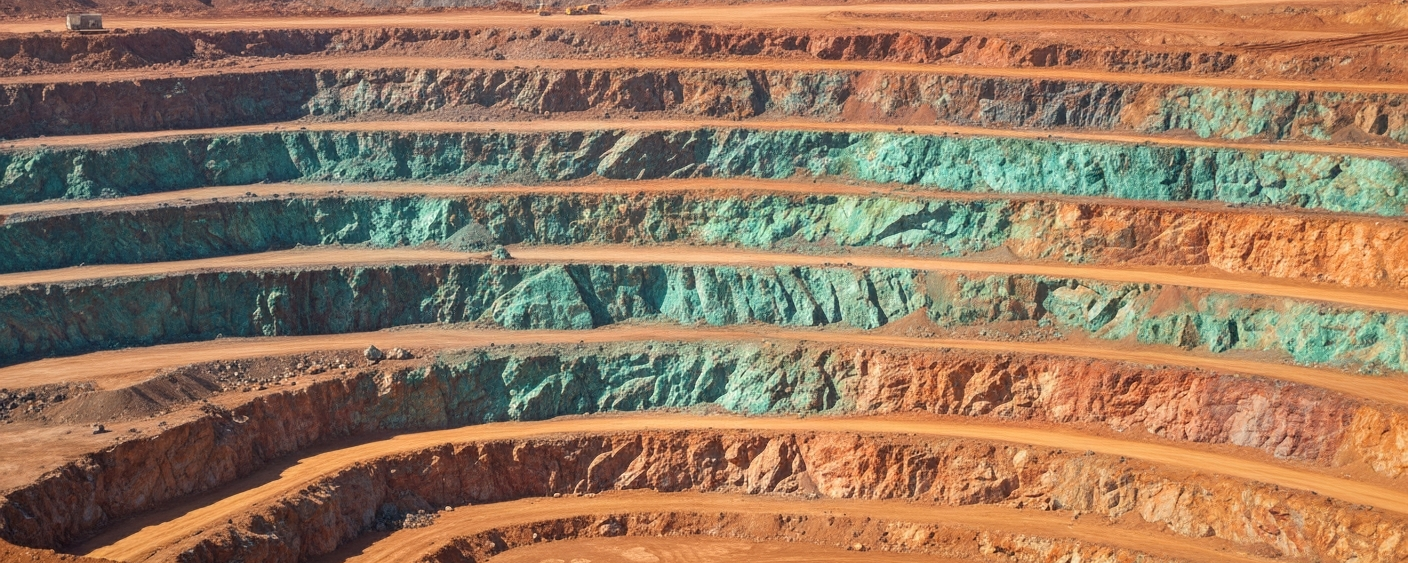
Three metals in one drill hole, and why investors often misread the number
Junior exploration has a default formula: one metal, one project, one story. A growing number of projects in Canada, Australia, and Scandinavia no longer fit that mold. Drill results that report copper, nickel, and cobalt grades in the same interval require a different kind of reading — and that reading starts with one term: copper equivalent, a method for converting different metal grades into a single comparable figure.
A current example from Canadian exploration practice shows how a drill hole returning roughly 1.2% copper equivalent over more than 24 meters can attract market attention — not because of any one metal, but because of how the three combine. What does that actually mean for an investor trying to make sense of the announcement?
Why demand for this metal combination is growing
Copper, nickel, and cobalt share one important characteristic: Western industrialized nations and the EU classify all three as critical raw materials, essential for electric mobility, battery technology, and energy infrastructure. Their demand dynamics, however, differ considerably.
- Copper is the backbone of electrical grid networks. As renewable energy capacity and charging infrastructure expand, long-term demand is rising while large new deposits are becoming harder to find.
- Nickel goes into high-energy cells (NMC battery chemistry) and remains a classic alloying metal in the steel industry. Its market is more volatile because Class 1 and Class 2 grades serve different end buyers.
- Cobalt was long considered indispensable for batteries. Newer chemistries such as LFP have reduced its relative weight, but it remains in demand for aerospace and defense applications.
When all three appear together in a single geological formation — as in certain magmatic sulfide deposits — the result is an industrial breadth that doesn’t often come packaged in one project.

The valuation logic behind polymetallic results
Why does the market often react more strongly to polymetallic drill results than to comparable single-metal figures? There are concrete reasons, but each comes with real limitations.
1. A broader buyer base in any potential sale. A junior explorer that has found only cobalt in a remote jurisdiction is talking to a small pool of potential acquirers. Add copper, and significantly more industrial partners and major mining companies become relevant. This isn’t a marketing observation: the number of potential buyers directly shapes pricing in any acquisition or joint-venture process.
2. Cost distribution through co-products. In a feasibility study’s economic model, by-product revenues can significantly reduce the production cost of a primary metal. A copper mine that sells cobalt as a by-product achieves lower net cash costs per tonne of copper — even when the copper price comes under pressure, provided cobalt holds its value. The risk that both prices fall at the same time tends to get less attention than it deserves when this argument is being made.
3. Story flexibility in the capital markets. Polymetallic projects can be pitched differently depending on market conditions. During a phase of strong battery demand, cobalt moves to the forefront; when power grid investment takes center stage, copper dominates. Investors should recognize this for what it is: a communication choice, not necessarily evidence of underlying quality.
| Factor | Single-metal project | Polymetallic project |
|---|---|---|
| Potential buyers (M&A) | Narrowly limited | Broadly diversified |
| Cost structure | Dependent on one metal price | By-products buffer costs |
| Story flexibility | Low | High (varies with market conditions) |
| Valuation complexity | Low | Higher (more assumptions required) |
| Processing risk | Often simpler | Metallurgically more demanding |
The price of these advantages is metallurgical complexity. Recovering multiple metals from a single ore requires more sophisticated processing: flotation, selective precipitation, and leaching must all be coordinated. If metallurgy fails during the testing phase, the entire polymetallic case falls apart. An early drill result says nothing about this — a limitation that is easy to overlook in the enthusiasm following a strong announcement.
Trading halts and market mechanics: what CIRO suspensions mean
One detail that regularly surfaces in the analysis of Canadian junior company announcements is the short-term trading halt. The Canadian Investment Regulatory Organization (CIRO) can temporarily suspend trading in a TSX Venture Exchange stock, typically when a material announcement is imminent or has just been released but its distribution is not yet complete.
For newer investors, this matters: a halt is not a sign of a crisis. Its purpose is to give all market participants access to material information at the same time before trading resumes. The suspension generally lifts within a few hours.
What investors should consider when reading polymetallic drill announcements
A single drill result opens a valuation process; it doesn’t conclude one, regardless of how the numbers look. When reading polymetallic announcements, the first question to ask is how the individual grades behind the equivalent figure are distributed: does one metal dominate, or is the split reasonably balanced? Are there already metallurgical test results showing that all metals can actually be recovered together? What price assumptions underpin the equivalent calculation? And do the resource categories reflect the real stage of exploration, or are these still early drill data without an NI 43-101-compliant resource estimate? The gap between initial drill results and a technically recognized resource is wide, and filling it takes time, money, and a lot more drilling.
Key terms for polymetallic exploration projects
- Copper equivalent (CuEq)
- A calculated metric that converts multiple metal grades (e.g., nickel, cobalt) into a single unified copper value using current metal prices. Simplifies project comparison but hides the individual contributions of accompanying metals.
- Magmatic sulfide deposit
- A geological deposit type in which metals such as copper, nickel, and cobalt occur together in sulfide minerals formed from solidified magma. Classic examples include Sudbury (Canada), Norilsk (Russia), and Kambalda (Australia).
- Co-product / by-product
- A metal produced alongside a primary metal during processing. Cobalt, for example, frequently occurs as a by-product of copper or nickel refining. Revenue from co-products reduces the net production costs of the primary metal.
- Metallurgical complexity
- The degree of technical difficulty involved in separating and recovering multiple metals from a mixed ore economically. Polymetallic projects typically carry higher metallurgical requirements than single-metal projects.
- Inferred resource (NI 43-101)
- The least certain resource category under the Canadian standard (National Instrument 43-101). Based on limited drill data and geological inference. Not to be confused with “Reserves” (Proven/Probable), which require demonstrated economic viability.
- CIRO trading halt
- A short-term suspension of securities trading by the Canadian Investment Regulatory Organization, applied before or after material company announcements on the TSX Venture Exchange to give all participants equal access to the information.
- Feasibility study
- A technical and economic analysis that determines whether a mining project can be operated profitably under realistic conditions. Includes capital costs (CAPEX), operating costs (OPEX), metallurgical data, and economic metrics such as net present value (NPV).
⚠️ Important notice: This article is for informational and educational purposes only. It does not constitute investment advice, a recommendation, or a solicitation to buy or sell any security. Investments in small-cap exploration and mining companies carry a high risk, including the potential total loss of capital. Before making any investment decision, consult a registered financial advisor and conduct your own analysis. Boersen Post Team is not responsible for decisions taken based on the content published here.