Spin-Outs & Private Placements: Understanding Capital Structure in Gold Juniors
August 29, 2026
Understanding Antimony: When a Metal Becomes a Strategic Question
August 31, 2026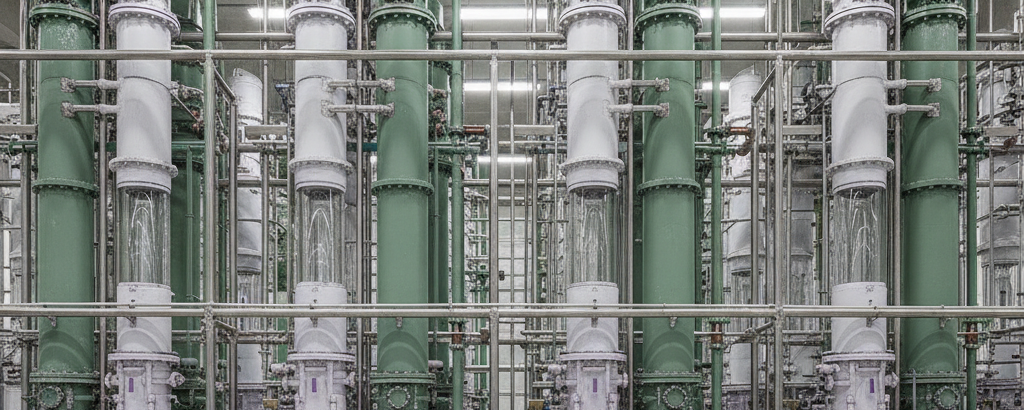
When grade tells only half the story
A high mineral concentration in rock — the so-called grade — is the number that dominates junior explorer press releases. It is also the most frequently misread. What it does not tell you: how much of that mineral can actually be extracted at a profit? That question belongs to ore chemistry, and the answer is usually far less comfortable than drilling results suggest.
For critical minerals such as rare earths, antimony, or scandium, this gap has real consequences. Many deposits that look attractive on paper are metallurgically so complex that processing costs kill economic viability before a single tonne of ore has been treated. Anyone trying to understand why so many projects never become mines despite strong drilling results needs to start here.
The arithmetic of project value
The basic formula is straightforward: project value equals mineral grade multiplied by the recovery rate, minus processing cost per tonne. In practice, each of those terms is tricky in its own right.
Grade tells you how much target mineral sits in a tonne of rock — grams per tonne for precious metals, a percentage for base metals. Higher is better, but only when other conditions are comparable. They rarely are.
The recovery rate describes what share of the contained metal actually makes it through processing. For simple oxidized gold ores, rates above 90% are achievable. For sulfidic or mixed ores, the rate can fall to 50% or below, meaning half the metal stays in the tailings.
Processing costs vary more than most investors expect. Simple flotation is comparatively cheap. Hydrometallurgical processes — the kind required for rare earths or antimony — demand specialized plants, chemicals, and often proprietary know-how, with direct consequences for both CAPEX and OPEX.

Rare earths: where metallurgy bites hardest
Nowhere is the problem more visible than with rare earths. This group of 17 elements — neodymium, dysprosium, and terbium among them — is indispensable for electric motors, wind turbines, and defense applications. Yet extraction is chemically demanding in ways that grade figures do nothing to communicate.
The core problem is that rare earth elements rarely occur in pure form. They are intimately intergrown with other minerals, often at the microscopic level, which makes physical separation genuinely difficult. Even once liberated, individual rare earth metals are so chemically similar that elaborate solvent extraction steps are needed to isolate them from one another.
A junior explorer announcing a rare earths deposit with high total grades (TREO — Total Rare Earth Oxides) is therefore only at the starting line. What matters is the mineralogical composition: does the mineral occur primarily as easily soluble ion-adsorption clay, as in southern Chinese laterites, or as hard-to-digest bastnäsite or monazite? The latter require high-temperature roasting or aggressive acid leaching before any separation can begin.
This is why functioning rare earth processing lines outside China can be counted on one hand. Every new project must essentially build its own metallurgical pathway — a time- and capital-intensive process that the market tends to ignore until something goes wrong.
| Ore Type | Typical Recovery | Processing Complexity | Example Mineral |
|---|---|---|---|
| Oxidized gold ore | 88–95% | Low (heap leaching) | Free gold |
| Sulfidic gold ore | 75–88% | Medium (flotation + roasting) | Arsenopyrite-hosted gold |
| Rare earth mineral (bastnäsite) | 60–80% | High (flotation + acid leaching) | Bastnäsite, monazite |
| Ion-adsorption REE | 75–90% | Medium (in-situ leaching) | Lateritic REE |
| Antimony sulfide ore | 50–75% | Very high (pyrometallurgy) | Stibnite |
How some junior companies are changing their approach
Detailed metallurgical studies were long treated as a task for later project phases. Some teams are now pulling that work forward, integrating mineralogy testing into early exploration programs before committing serious drilling budgets. Techniques such as QEMSCAN (quantitative scanning electron microscopy) produce precise analyses of mineral intergrowth structures from small rock samples — useful data to have when a deposit’s processability is still an open question.
Because proprietary processing methods carry real competitive weight, some junior companies seek alliances with specialized metallurgical firms or research institutions. Such partnerships are complex to structure, but they can determine whether a project attracts debt financing at all.
There is also the modular approach: build a small pilot plant first to validate the metallurgical process under real conditions, before a feasibility study forces the major capital decisions. This limits process risk in a way that shows up in auditable data rather than a risk-factors paragraph — and project financiers price that difference into their terms.
In company reports, it pays to notice what is left unsaid. Those who publish detailed metallurgical test results, with sample sizes and test conditions clearly stated, show that they understand the challenge. Those who communicate only grade figures and sidestep questions about recovery are leaving the largest risk unaddressed.
Complex ore chemistry and what it means for project valuation
Reading drill intercepts alone is no longer sufficient. A clearer picture of a project requires different questions: which minerals carry the grade? How are they intergrown? Are metallurgical test results already available, and what sample size do they represent?
A project with moderate grades but well-understood, straightforward metallurgy can sit in a considerably stronger position than a high-grade project with unresolved processing questions. Royalty companies such as Wheaton Precious Metals and Franco-Nevada now treat metallurgical risk as a standard part of due diligence and have adjusted their contract terms accordingly over the past several years.
The Preliminary Economic Assessment (PEA) stage matters more than it once did because it provides the first quantitative estimates of recovery and processing costs. When the assumed recovery shifts materially between the PEA and the Pre-Feasibility Study (PFS), junior stocks tend to react sharply in both directions. For rare earth and antimony projects, that kind of revision is not unusual.
- Grade (mineral grade)
- The concentration of a target mineral in rock, expressed in g/t (grams per tonne) for precious metals or as a percentage for base metals. High grade alone does not guarantee economic viability.
- Recovery rate
- The share of the metal contained in rock that can actually be recovered after processing. Alongside grade, it is the key factor for real project value.
- TREO (Total Rare Earth Oxides)
- The total content of all rare earth oxides in a sample. Frequently cited for rare earth projects, but says little without information on mineral type and recovery.
- Metallurgy / processing method
- The chemical and physical processes used to extract target minerals from raw rock. A main driver of CAPEX, OPEX, and recovery rates.
- CAPEX / OPEX
- Capital Expenditure (investment costs for plant construction) and Operating Expenditure (ongoing operating costs). Complex metallurgy typically increases both.
- Solvent extraction
- A hydrometallurgical separation process used with rare earths to isolate individual elements from a dissolved mixture. Capital-intensive and technically demanding.
- PEA / PFS / BFS
- Preliminary Economic Assessment, Pre-Feasibility Study, and Bankable Feasibility Study — successive study phases that increase the accuracy and detail of economic projections as a project matures.
- QEMSCAN
- Quantitative Evaluation of Minerals by Scanning Electron Microscopy — an automated analysis method that determines the precise mineralogical composition and intergrowth structure of an ore.
⚠️ Important notice: This article is for informational and educational purposes only. It does not constitute investment advice, a recommendation, or a solicitation to buy or sell any security. Investments in small-cap exploration and mining companies carry a high risk, including the potential total loss of capital. Before making any investment decision, consult a registered financial advisor and conduct your own analysis. Boersen Post Team is not responsible for decisions taken based on the content published here.