SIDEX and State Lithium Investors: What Beginners Should Know
October 7, 2026Wide Gold Intervals: What Continuity Really Means for Investors
October 8, 2026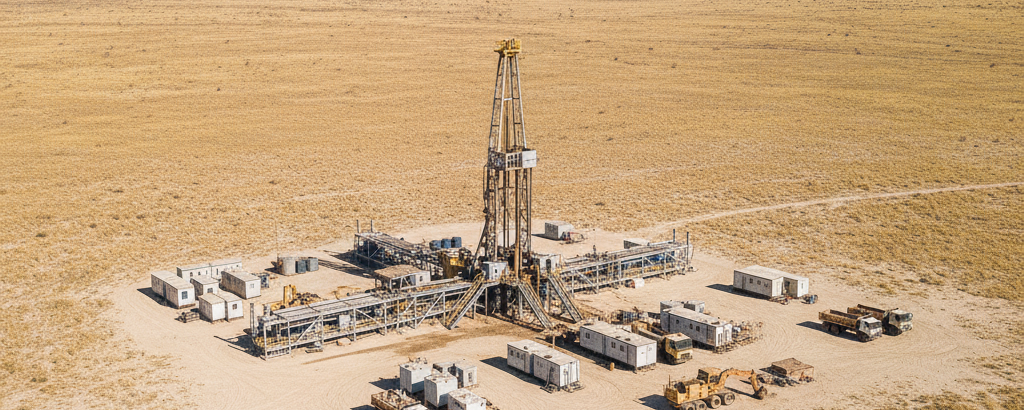
When the first drill hole matters
In commodity exploration, the first published drill result can determine the fate of a project. Not because a single hole proves a deposit (it never does), but because it gives the market a first measurable signal as to whether the ground is doing what the geology suggested it might.
An African junior explorer recently provided that signal, reporting drill intercepts of 6.0 meters averaging 2.27% Li₂O at an early-stage lithium project, with individual samples above 4% Li₂O. What follows explains what those numbers mean in practice, how they can shift the financing picture for a junior, and what questions investors still need to ask.
Li₂O grades in context: what counts as high-grade
Lithium grades in hard-rock deposits are expressed as a percentage of Li₂O (lithium oxide). Below 1.0% Li₂O is low-grade; 1.0% to 1.5% is roughly average for operating mines; above that is generally considered high-grade, provided the numbers come from consistent intercepts rather than isolated samples.
At 2.27% Li₂O over a 6.0-meter intercept, this result sits well above that threshold. Many producing hard-rock lithium mines in Australia’s Pilbara district run on reserves of 1.2% to 1.5% Li₂O. A grade noticeably higher than that at first drilling means less ore needs to be processed to recover the same amount of lithium, which feeds directly into operating costs and project economics.

Why first drill results change the financing picture
For small-cap juniors in the early exploration phase, access to capital is the tightest constraint. Without reliable geological data, investors and potential partners are rarely willing to commit significant funds. A strong first drill result can break that deadlock.
Once a company shows that the grade and thickness of a mineralized intercept match what the geological model predicted, the project becomes easier to pitch. Perceived risk drops for capital providers, and conversations that were previously speculative — new financing rounds, joint-venture talks — become more concrete.
African pegmatite projects went through this repeatedly between 2016 and 2018. Strong first drill results regularly triggered significant share price moves, not because the projects were confirmed as economically viable, but because the market recognized a shift: from pure hope to at least some data. Investors adjusted their risk assessment and moved capital accordingly. Whether those re-ratings were justified is a different question.
| Li₂O Grade | Classification | Significance for project economics |
|---|---|---|
| Below 1.0% | Low-grade | High processing requirements, weak margins |
| 1.0% – 1.5% | Average | Typical of producing mines |
| 1.5% – 2.0% | High-grade | Favorable cost structure possible |
| Above 2.0% | Very high-grade | Rare at the first drilling stage |
Africa as an exploration region: the geology and the caveats
African lithium projects attract attention partly because the continent hosts some of the largest known pegmatite belts in the world, structurally comparable to the lithium-rich granite pegmatites of Australia but far less systematically drilled.
Juniors operating there face questions that go well beyond geology. Infrastructure is often thin. Water availability can be a real constraint on any future processing operation. Regulatory frameworks shift, sometimes at short notice, and political stability varies considerably across jurisdictions. A Canadian or Australian junior working in an African country has to manage local partnerships, state licensing regimes, and international reporting standards on top of the actual exploration work, all of which affect project risk even when the drill results look good.
High-grade first drill results in Africa are a geological starting point. Getting from a mineralization indication through Inferred Resources to bankable Reserves depends on far more than the Li₂O number on a press release.
What comes next in project development
Promising first results are almost always followed by infill and step-out drilling: additional holes placed systematically around the initial result to map the extent and continuity of the mineralization. Only once sufficient drill density has been reached can a first Mineral Resource Estimate (MRE) be prepared, the document most capital providers want to see before committing serious money.
A first drill result, however good, is one data point. Markets often price in the expectation that more data will follow, which is why high-grade early results frequently produce short-term share price moves that have little to do with where the project will ultimately end up.
Risk is priced in early, data reduces it hole by hole, and the market adjusts at every step toward greater certainty. Worth keeping in mind before reading any drilling announcement.
Key terms in early-stage exploration
- Li₂O (lithium oxide)
- The standard unit for reporting lithium content in hard-rock deposits, expressed as a percentage of total sample weight. Not to be confused with elemental lithium content (Li%), which is lower by a factor of approximately 0.46.
- Drill intercept (intercept length)
- The length of the drill core section carrying the reported grade. The true thickness of the mineralization may differ from the drilled length, depending on the angle of the hole relative to the deposit geometry.
- Grassroots phase
- The earliest stage of exploration, where a geological hypothesis is tested for the first time through fieldwork and initial drilling. The highest-risk phase, and usually the most cash-constrained.
- Inferred Resources
- The lowest resource category under NI 43-101 or JORC. Based on limited data, it carries no economic significance and cannot be used in economic studies.
- Mineral Resource Estimate (MRE)
- A quantitative estimate of the quantity and grade of a mineralization, prepared by an independent expert (Qualified Person or Competent Person) under a recognized reporting standard.
- Pegmatite
- A coarse-grained igneous rock that frequently contains lithium, cesium, and tantalum in economically relevant concentrations. The primary host rock type for hard-rock lithium projects.
- Step-out drill hole
- A hole drilled outside the known area of mineralization to test how far a deposit extends, as opposed to an infill hole, which adds data density within an already-known area.
⚠️ Important notice: This article is for informational and educational purposes only. It does not constitute investment advice, a recommendation, or a solicitation to buy or sell any security. Investments in small-cap exploration and mining companies carry a high risk, including the potential total loss of capital. Before making any investment decision, consult a registered financial advisor and conduct your own analysis. Boersen Post Team is not responsible for decisions taken based on the content published here.