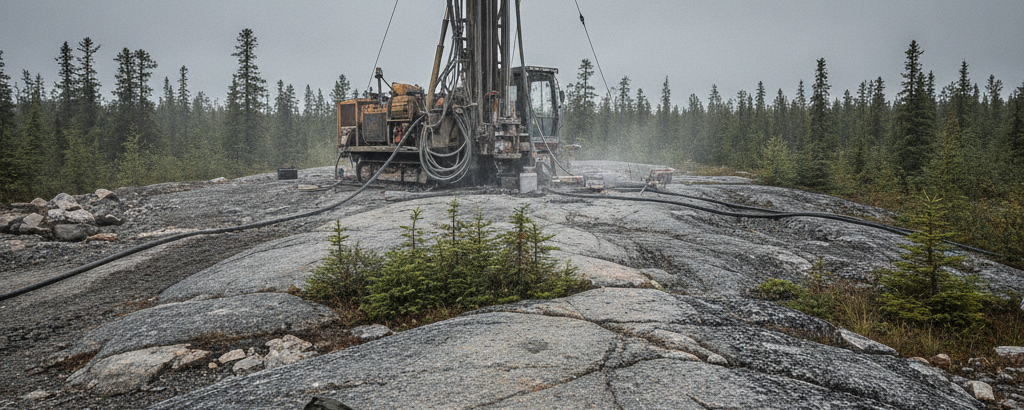
Geophysics Before Drilling: How Uranium Juniors Sharpen Their Targets
September 5, 2026
Critical Minerals as an Exploration Target: How Silver Juniors Are Expanding Their Scope
September 7, 2026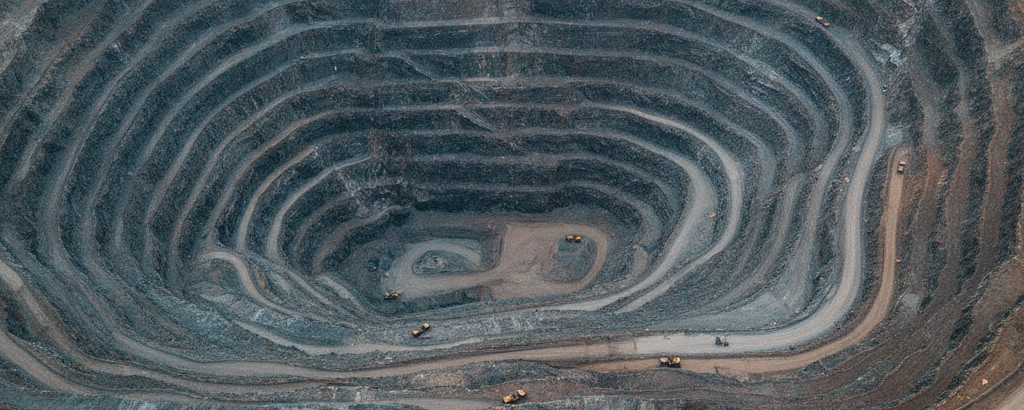
When copper sets records — and what that actually means for investors
A commodity price breaks an all-time high. For most investors, that’s a headline gone by the next morning. With copper, though, a new price record does change how the exploration sector gets valued — because copper shows up in residential plumbing, electric vehicles, and offshore wind infrastructure alike, which means a price rally carries broader weight than a niche metals spike.
For small-cap investors focused on junior explorers and small mining companies, this environment creates a particular dynamic: risk appetite rises, capital moves more readily into early exploration, and strong drilling results can produce sharp share price moves. That mechanism, however, comes with real conditions and genuine blind spots that are easy to miss when sentiment is running hot.
The commodity environment behind the record
Copper prices don’t reach record highs by accident. The energy transition is the dominant demand force right now: an electric vehicle uses roughly three to four times as much copper as a combustion engine car, and offshore wind turbines need heavy cabling for power transmission. Add rapidly growing electricity demand from AI data centers, and copper is under pressure from several directions at once.
On the supply side, the picture is one of slow-moving constraint. Major porphyry mines in Chile, Peru, and Indonesia are dealing with falling ore grades, water shortages, and political risk. New mines typically take ten to fifteen years from first exploration to production, so supply cannot respond quickly to rising demand. That imbalance has enough structural depth to give the price rally some staying power.
Geopolitics adds another layer: the U.S., the EU, and Australia are increasingly classifying copper as a “critical mineral.” Government support programs, faster permitting, and strategic investments are flowing into the sector, pulling in additional private capital alongside them.
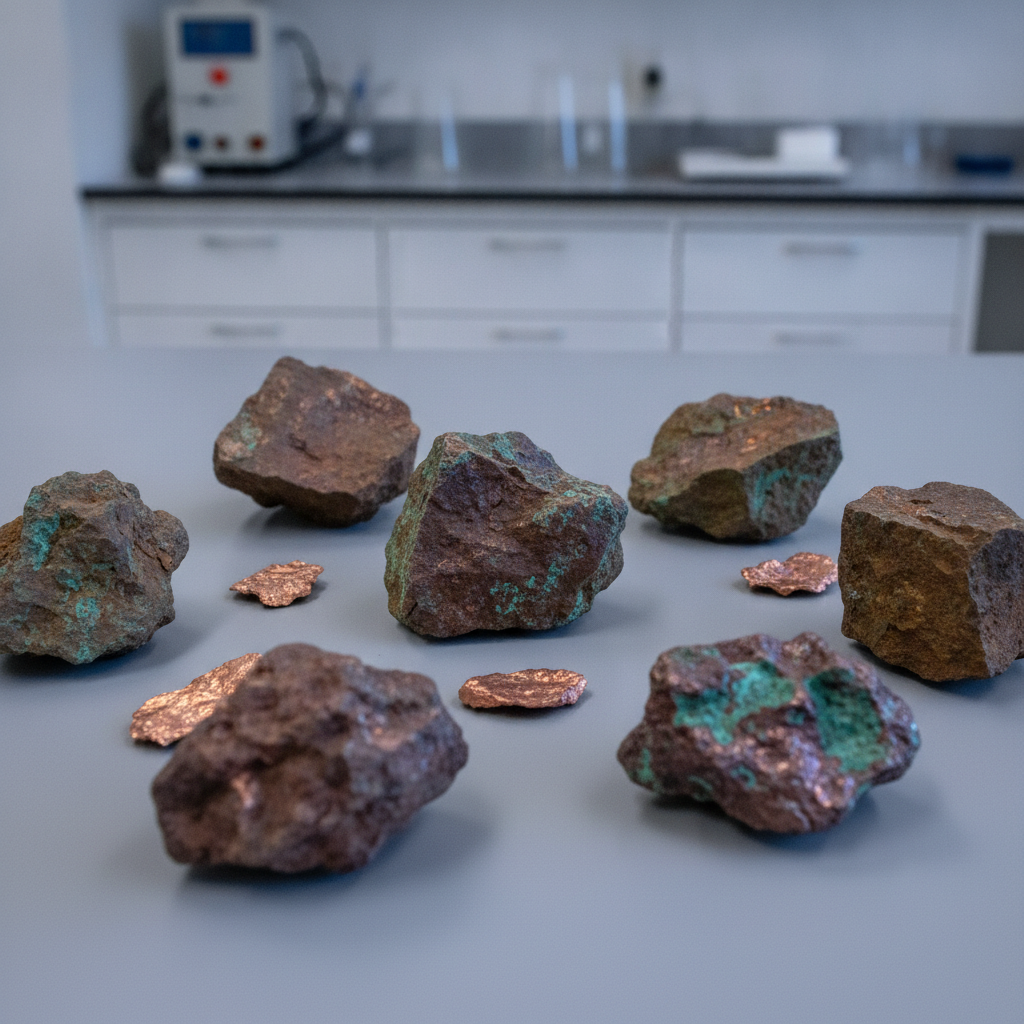
Why exploration results get rewarded more during high-price phases
At around $3.00 per pound, exploration projects with average ore grades are barely economical. Investors avoid early-stage risk, financing for junior explorers dries up, and even solid drilling results move the share price very little.
At $5.00 per pound, that logic reverses. A project with 0.4% copper grade that previously looked marginal becomes economically interesting — so do projects in remote regions or with complex ore mineralogy. A higher price tolerance shifts the profitability threshold across entire project portfolios.
Consider two identical copper projects: same volume, same grade, same jurisdiction. At $3.50 per pound, the project is “sub-economic” and struggles to attract financing. At $5.00 per pound, the same project is “viable,” draws interest from major miners as potential acquirers, and can raise private placement capital on better terms. The project’s paper value has nearly doubled, though nothing about the project itself has changed.
That is why, during periods of high copper prices, even early-stage announcements — initial drill results or new claim acquisitions — can trigger sharp share price reactions. The market is working from more optimistic assumptions about future economics.
| Copper price environment | Market behavior for juniors | Access to financing |
|---|---|---|
| Below $3.50/lb | Low risk appetite; exploration results attract little attention | Difficult; high dilution risk |
| $3.50–$4.50/lb | Selective interest; stronger projects attract capital | Moderate; dependent on jurisdiction |
| Above $4.50/lb | Broad risk appetite; early-stage projects rewarded too | Favorable; higher valuation multiples |
What high copper prices offer — and where the limits are
Higher prices increase capital availability and push up valuations, but they don’t remove the underlying project risks. That point tends to get lost when sentiment is strong.
Geological risk stays constant. Even during boom phases, most exploration projects never find economically recoverable ore. A more optimistic market doesn’t change the fact that only a fraction of all drill holes lead to a resource definition.
Many junior miners rise on general copper sentiment without holding any substantive projects. The “rising tide” effect — a strong market lifting all boats regardless of quality — masks real differences between assets. Investors who buy in after the price peak may find themselves holding exactly those juniors that were carried purely by market mood rather than by what’s in the ground.
There is also the question of cycle duration. Commodity prices move fast in both directions. A demand slowdown, or a Chinese recession — China remains the world’s largest copper consumer by a wide margin — can correct the current record price faster than any new project could reach production. Junior explorers with long development timelines are particularly exposed to that kind of reversal.
Reading a copper rally without getting swept up in it
The distinction worth drawing is between projects whose economics genuinely improve as the price rises and those being carried by general market mood. Projects with lower ore grades that crossed into viability territory above $4.50/lb are a different animal from companies that acquired marginal claims last quarter and are now riding the headlines. That difference doesn’t always show up in the share price movement, which is precisely the problem.
The current price level does open financing windows and lower the bar for early-stage projects. Institutional interest in the junior market is growing. Whether that translates into lasting value depends on what’s actually in the ground — not on where copper closed yesterday.
Key terms in copper exploration and market dynamics
- Porphyry copper deposit
- A large-volume, often low-grade copper ore type found in volcanic intrusive rocks. Porphyry systems supply the largest share of global copper production and frequently contain gold and molybdenum as by-products.
- Cut-off grade
- The minimum ore grade at which a tonne of ore is considered economically recoverable. As the copper price rises, the cut-off grade falls, meaning more material qualifies as economic and the calculated resource size increases.
- Inferred resource (NI 43-101)
- The least geologically certain resource category under the Canadian NI 43-101 standard. Inferred resources are based on limited sample data and must not be equated with reserves (Proven/Probable) — an important distinction when assessing a project’s value.
- Private placement
- A capital raise in which shares or securities are issued directly to selected investors without a public offering. Junior explorers use this frequently to finance exploration, which can dilute existing shareholders.
- Rising tide effect
- A market phenomenon in which a broad sector rally lifts even lower-quality companies. During copper price spikes, explorers across the board often rise regardless of project quality, which makes it harder to judge actual value.
- Supply deficit
- When demand for a commodity grows faster than supply over the long term, a deficit builds. In copper, this is driven by the ten-to-fifteen-year development timelines for new mines combined with rapidly growing demand from the energy transition.
- Critical mineral
- Commodities that governments classify as strategically important for economic security. The classification can trigger support programs, faster permits, and increased investment, which directly benefits the exploration sector.
⚠️ Important notice: This article is for informational and educational purposes only. It does not constitute investment advice, a recommendation, or a solicitation to buy or sell any security. Investments in small-cap exploration and mining companies carry a high risk, including the potential total loss of capital. Before making any investment decision, consult a registered financial advisor and conduct your own analysis. Boersen Post Team is not responsible for decisions taken based on the content published here.