
Partner Funding in Uranium Juniors: Who Pays, Inspects First
September 29, 2026
Copper Junior Resource Categories: What Indicated Really Means
October 7, 2026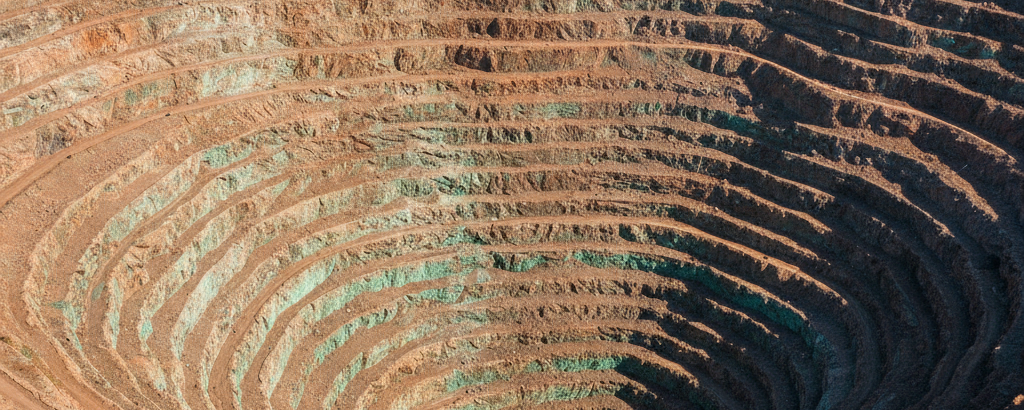
Two projects, the same question: how deep is the ore?
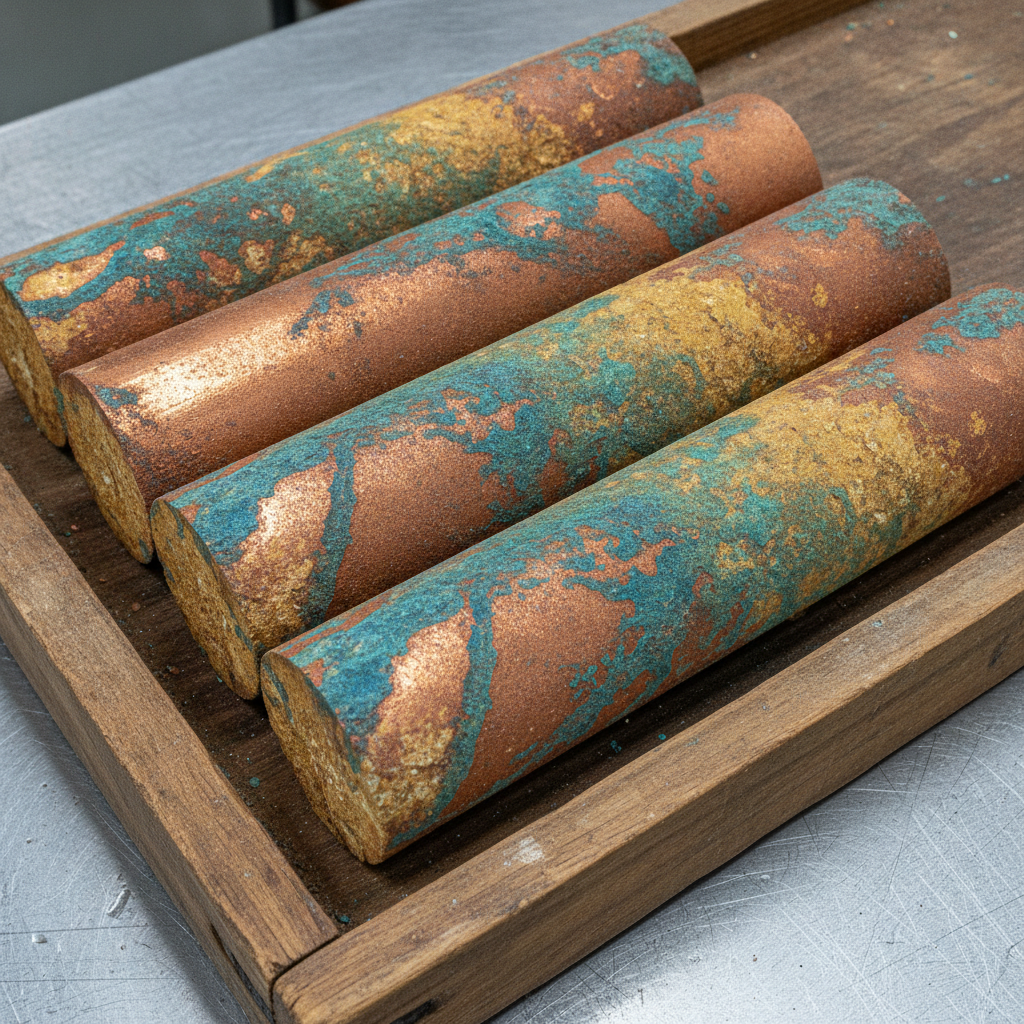
Several copper juniors are currently putting out drilling results that are getting attention for a specific reason — not grade alone, but where the mineralization actually starts. One Chilean project is logging high-grade copper intercepts from near surface; another in the same country hits a continuous copper-gold system from roughly 70 meters down, running for tens of meters of thickness. A Canadian project has extended a shallow zone to nearly 200 meters of thickness at low depth. The setups differ, but the economic question underneath them is the same: what does it actually cost to get the ore out?
Anyone new to commodities investing needs to understand that a drill intercept’s grade — the copper content as a percentage — is only part of the picture. Depth writes much of the rest.
From drill core to production
Before a copper project produces refined metal, it passes through a long chain of investments and decisions, and the deeper the ore lies, the more expensive every phase gets.
First, some terminology. The mining industry draws a firm line between resources and reserves. Resources describe geologically defined quantities with a realistic economic outlook, subdivided into Inferred, Indicated, and Measured depending on how thoroughly the ground has been explored. Only once a feasibility study confirms economic extractability do they become reserves — Proven or Probable. This distinction is binding under Canadian standard NI 43-101 and exists to protect investors from inflated claims. Fresh drilling results, such as those recently reported from Latin America and Canada, are initial data points and nothing more.
On depth: open-pit mining is generally far cheaper than underground mining. In open-pit operations, excavators and explosives work from above. Underground mining requires shafts, ventilation, and hoisting systems, plus substantially more safety infrastructure. Capital expenditures (CAPEX) can double or triple compared to a surface mine, and operating costs (OPEX) climb with depth.
Depth and infrastructure
Depth alone does not tell the whole story. Road access, power supply, and permitting timelines all factor into whether a project can move forward, but so do less obvious things: jurisdictional stability, available labor, and proximity to existing processing capacity. Chile, as the world’s largest copper producer, has well-developed mining infrastructure and a legal environment that international investors generally know how to read. That gives Chilean projects a structural advantage over comparable projects in less developed regions, even when grades are similar.
A concept central to open-pit planning is the strip ratio: the volume of waste rock that must be removed per unit of ore recovered. The shallower and more regular an ore body, the better this number looks. For very shallow, thick horizons, the strip ratio can be the single factor separating an economically viable mine from one that never gets built.
Continuity also matters. Wide, unbroken zones — such as the more than 180 meters of continuous copper mineralization one Canadian junior reported recently — are more useful for resource estimates than clusters of narrow, high-grade veins. Wide zones can be drilled with cheaper large-diameter methods and extracted mechanically at scale.
| Characteristic | Open pit (shallow) | Underground (deep) |
|---|---|---|
| Typical CAPEX | Lower | Significantly higher |
| Development timeline | Shorter | Longer |
| Operating cost per tonne | Lower | Higher |
| Grade requirement (cut-off) | Can be lower | Must be higher |
| Financing risk | Tends to be lower | Tends to be higher |
How to read a drilling result
When a junior explorer reports a drill intercept, the press release typically gives the from value (the depth at which the intercept begins), the length of the intercept, and the average grade. These figures sketch an initial picture — and only an initial one.
The reported length is the drill core length (also called drill width or downhole length), not the true thickness of the ore body. Depending on the angle at which the drill intersects the ore horizon, actual thickness can be considerably smaller. Reputable reports state the true width separately, or note that the calculation is still in progress.
Individual intercepts say nothing about lateral extent. A hole with an outstanding result may have hit an isolated high-grade pocket surrounded by low-grade rock — or it may be the first sign of a large, continuous system. Follow-up drilling and three-dimensional modeling are what settle that question.
What depth means for small-cap project valuation
Projects with near-surface mineralization are easier to finance. Banks and institutional lenders can assess CAPEX scenarios with fewer unknowns, and the path to a potential production start is shorter and more predictable.
That does not make deep projects unworkable. High-grade underground deposits can be profitable when metal prices are strong. In the small-cap context, though, where capital is tight and timelines matter, a shallower entry depth changes the risk calculation in ways that show up directly in financing terms and investor appetite.
When several junior miners report near-surface high-grade results from the same region within a short period, it shifts how investors weigh the risk and potential return of an early-stage position. Not because individual drilling results justify production decisions, but because depth is one of the few variables that early data can actually speak to.
- Depth
- The vertical or inclined distance from the drill collar to the relevant intercept. For open-pit projects, this is a key input for CAPEX calculations.
- CAPEX (Capital Expenditure)
- Capital costs for building a mine, including equipment, infrastructure, and processing facilities. The deeper the ore lies, the higher these costs typically are.
- OPEX (Operating Expenditure)
- Ongoing operating costs per tonne of ore extracted. Beyond depth, distance to the processing plant, energy prices, and labor costs all feed into this figure.
- Strip ratio
- The volume of waste rock removed relative to recoverable ore in an open-pit operation. A low strip ratio means less stripping work and lower costs.
- True width
- The actual width of an ore body measured perpendicular to the ore horizon, as opposed to the often larger drill core length.
- Resources vs. reserves (NI 43-101)
- Resources (Inferred, Indicated, Measured) describe geologically defined ore quantities; reserves (Proven or Probable) are those confirmed as extractable through an economic assessment. The two terms mean different things and cannot be used interchangeably.
- Near-surface mineralization
- Mineralization occurring close to the surface, typically within the first 100 to 150 meters below ground. This may allow for open-pit mining and a shorter development timeline.
- Cut-off grade
- The minimum grade at which a tonne of ore can be economically extracted. This threshold depends directly on CAPEX, OPEX, and the prevailing metal price.
⚠️ Important notice: This article is for informational and educational purposes only. It does not constitute investment advice, a recommendation, or a solicitation to buy or sell any security. Investments in small-cap exploration and mining companies carry a high risk, including the potential total loss of capital. Before making any investment decision, consult a registered financial advisor and conduct your own analysis. Boersen Post Team is not responsible for decisions taken based on the content published here.