On-Site Refining: Why Lithium Juniors Are Integrating Processing Into Their Projects
June 18, 2026
Exploration Planning in Lithium Juniors: What Corporate Updates Reveal
June 18, 2026
When a conference stage becomes a capital bridge
An industry conference might initially sound like routine business: presentations, panels, networking dinners with lukewarm white wine. But in the commodities sector, particularly in critical minerals, summits work differently. Capital decisions that would normally take months to mature compress into a matter of days. Those who understand this can spot earlier which jurisdictions are entering the crosshairs of institutional investors.
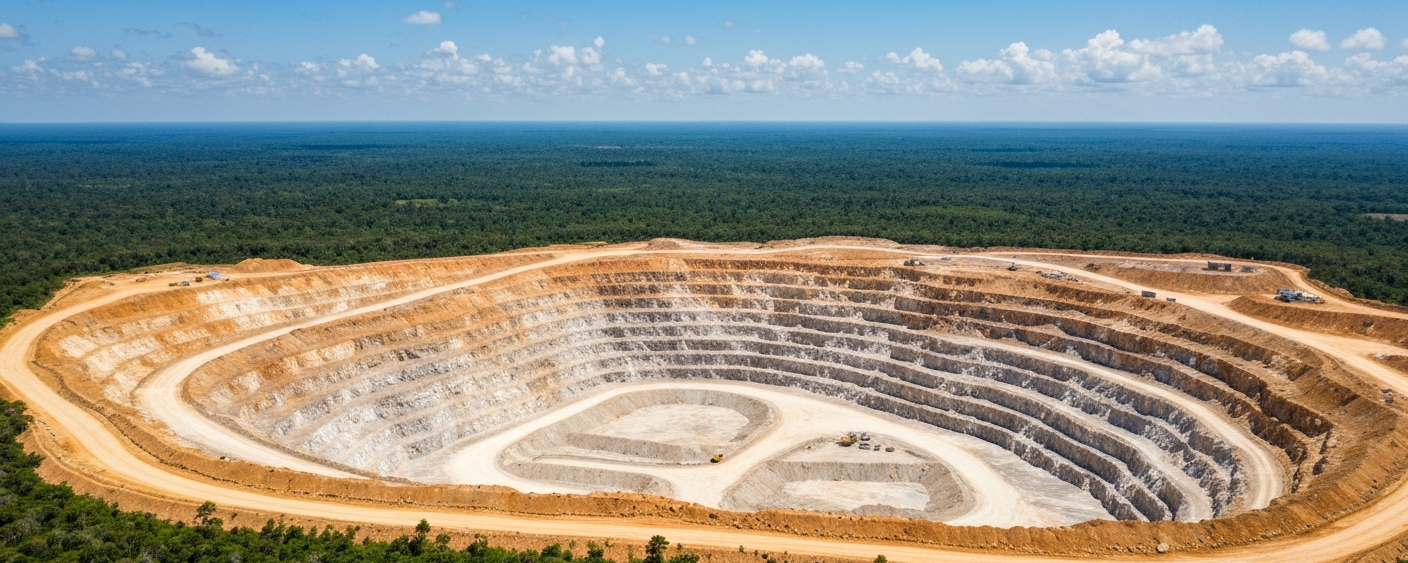
Take Brazil. Geologically, the country has long been on the radar as a lithium destination — the state of Minas Gerais sits within the so-called Lithium Valley region, home to significant pegmatite deposits. Politically and regulatorily, though, it was long considered difficult territory. The fact that a recurring summit dedicated specifically to Brazilian lithium and critical minerals now exists is itself a market signal: institutional capital is beginning to take the jurisdiction seriously.
Brazil in the lithium cycle: geology meets geopolitics
Demand for lithium carbonate and lithium hydroxide — the precursor materials for battery cathode production — is tied to the electric-vehicle strategies of major OEMs (Original Equipment Manufacturers). Since the supply chain crisis of 2022/23, when critical minerals were exposed as a strategic vulnerability, these manufacturers have been actively seeking alternatives outside the Chinese ecosystem.
Brazil has concrete advantages here. The hard-rock lithium projects in Minas Gerais sit comparatively close to Atlantic ports, which is a logistical edge over Chilean or Argentine salar projects that export via the Pacific coast. Brazil’s mining administration has professionalized in recent years, even if it has not yet reached benchmark-jurisdiction status comparable to Canada or Australia. An industrial infrastructure capable of downstream processing — upgrading ore into battery-grade material — is already in place in principle.

How summits move capital
What actually happens at an industry conference that shifts capital? It connects information with trust. Family offices and commodity funds have limited time for jurisdiction-level due diligence. A well-organized conference lets them compare multiple projects from the same region side by side in a single location, cutting out months of individual research. Being invited as a keynote speaker carries an implicit reputational signal, because the conference committee has already applied a pre-selection filter. When OEM representatives, refinery operators, and mining companies share the same room, LOIs and MOUs get signed far more quickly than through months of email chains.
An analogy from another sector: when the Athabasca Basin was considered a uranium hotspot in the early 2000s, it was not individual drill results that triggered the capital inflow. It was the critical mass of conference appearances, analyst coverage, and institutional roadshows that established Saskatchewan as a reliable jurisdiction. Brazil may be approaching a similar point in the lithium sector.
| Factor | Brazil (Pegmatite) | Chile / Argentina (Salar) |
|---|---|---|
| Project Type | Hard rock | Brine system |
| Water Consumption | Moderate | High (critical in arid regions) |
| Regulatory Maturity | Developing | Established (Chile) / mixed (Arg.) |
| OEM Interest | Growing | High (Chile), increasing (Arg.) |
| Port Logistics (Atlantic) | Advantageous | Indirect (Pacific coast) |
What small-cap investors can take away from this pattern
For investors in the small-cap exploration space, one observation is worth keeping in mind: jurisdictions that build out conference infrastructure rarely do so by accident. Behind the scenes there are usually coordinated efforts by government agencies and larger project participants seeking to attract capital, even if those actors seldom appear by name on a program.
That does not mean every project in an emerging jurisdiction is a sound investment. When capital markets turn their attention to a region, valuations often rise quickly, typically before any operational milestones have been reached. The classic pattern: a company announces a conference appearance or keynote slot, the share price ticks up short-term, then pulls back as the market waits for actual drill results.
A second dynamic adds to this. Conferences drive analyst coverage. When analysts or financial media systematically cover a jurisdiction, an information environment develops that lowers the barrier to entry for smaller investors. For TSX Venture- or Nasdaq-listed juniors, broader coverage generally means tighter bid-ask spreads and a wider potential investor base.
Conference as indicator, not as proof
Industry summits are leading indicators of capital flows, not guarantees. Brazil as a lithium jurisdiction is currently going through a process similar to the one Australia completed during the previous lithium cycle between 2016 and 2018: geological discoveries came first, conference infrastructure followed, and institutional capital arrived after that, with a significant lag before individual projects reached production readiness.
For small-cap explorers, the implication is fairly direct. Those positioned early in an emerging jurisdiction who deliver operational milestones can benefit from growing capital interest. Those who rely on conference appearances and jurisdiction buzz without substantive project progress risk getting caught in the consolidation phase that typically follows the initial hype. In small-cap mining, telling a jurisdiction signal apart from actual project substance is simply what separates returns from losses.
Key terms for the lithium junior market
- Pegmatite
- A coarse-grained hard-rock deposit containing lithium in the form of spodumene mineral. The basis of Brazil’s lithium projects, and technically distinct from brine-based deposits in terms of processing requirements.
- Salar (Brine System)
- A salt flat in high-altitude arid zones (primarily Chile and Argentina) in which lithium is dissolved in subsurface brines. It is concentrated through evaporation ponds — a fundamentally different process from hard-rock mining.
- OEM (Original Equipment Manufacturer)
- In the commodities context, OEM refers to large vehicle manufacturers (e.g., automotive groups) that demand lithium as a precursor for batteries and are increasingly investing directly in supply chains.
- LOI / MOU
- Letter of Intent and Memorandum of Understanding: non-binding agreements frequently signed in the context of conferences that signal the interest of institutional partners.
- Inferred Resource (NI 43-101)
- The lowest resource category under the Canadian NI 43-101 standard. Based on limited drilling and sampling data; considered too uncertain for economic calculations. Must not be equated with “reserves.”
- Downstream Processing
- The upgrading of lithium ore or concentrate into saleable end products such as lithium carbonate or lithium hydroxide. Critical for value creation within a jurisdiction.
- Bid-Ask Spread
- The difference between the buying price and the selling price of a share. In small caps with low liquidity this spread is often wide; greater analyst coverage can narrow it by increasing trading volume.
⚠️ Important notice: This article is for informational and educational purposes only. It does not constitute investment advice, a recommendation, or a solicitation to buy or sell any security. Investments in small-cap exploration and mining companies carry a high risk, including the potential total loss of capital. Before making any investment decision, consult a registered financial advisor and conduct your own analysis. Boersen Post Team is not responsible for decisions taken based on the content published here.