Heap Resources: When Historic Mine Tailings Become a Commodity Base
June 19, 2026
Fluorspar and Chip Manufacturing: What Niche Commodities Mean for Small Caps
June 19, 2026

Three metals, one geological structure, and a supply gap
When people think about semiconductors and data centers, silicon, rare earths, or gallium tend to come to mind first. Less attention goes to the metals embedded in the physical infrastructure of chip production. Cobalt stabilizes high-performance alloys in cooling compressors and battery cells. Nickel provides corrosion resistance in critical connections. Copper is the electrical backbone of every server room. All three can often be extracted from a single mineral structure: the so-called Volcanogenic Massive Sulphide deposit, or VMS.
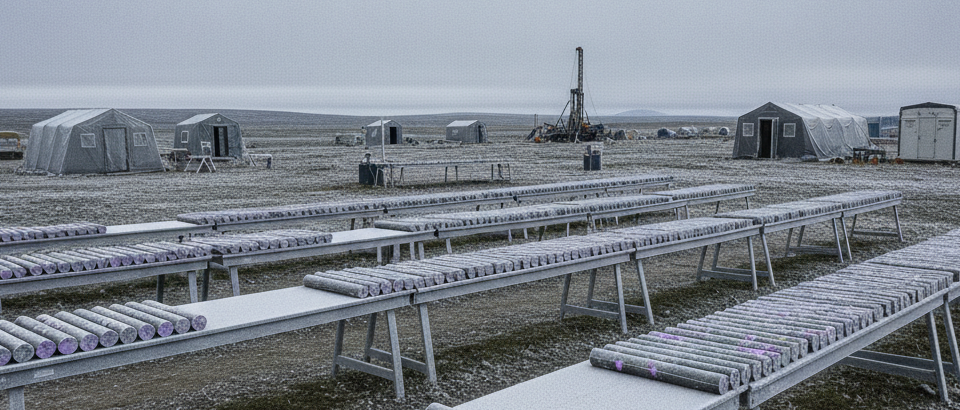
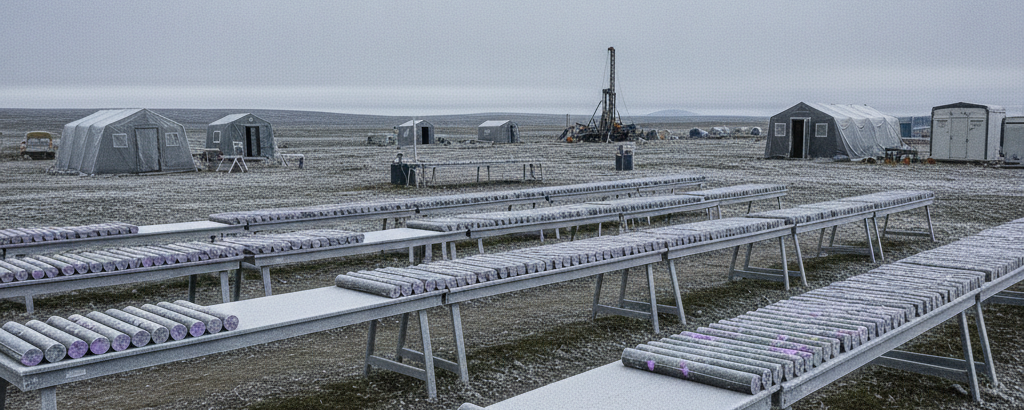
Over the past several weeks, multiple junior explorers have reported VMS drill hits. One company intersected visual mineralization over 234 meters in a single drill hole, apparently re-defining a copper-rich VMS horizon. Another drilled through more than 30 meters of massive sulphide directly beneath a VTEM conductivity anomaly. A third started a first drilling program on a nickel-copper-cobalt project while securing additional claims in the same jurisdiction. None of these announcements name specific companies or include independently verified grades — an important distinction. The announcements do, however, follow a logic that is worth examining.
VMS geology: why volcanic seafloors carry base metals
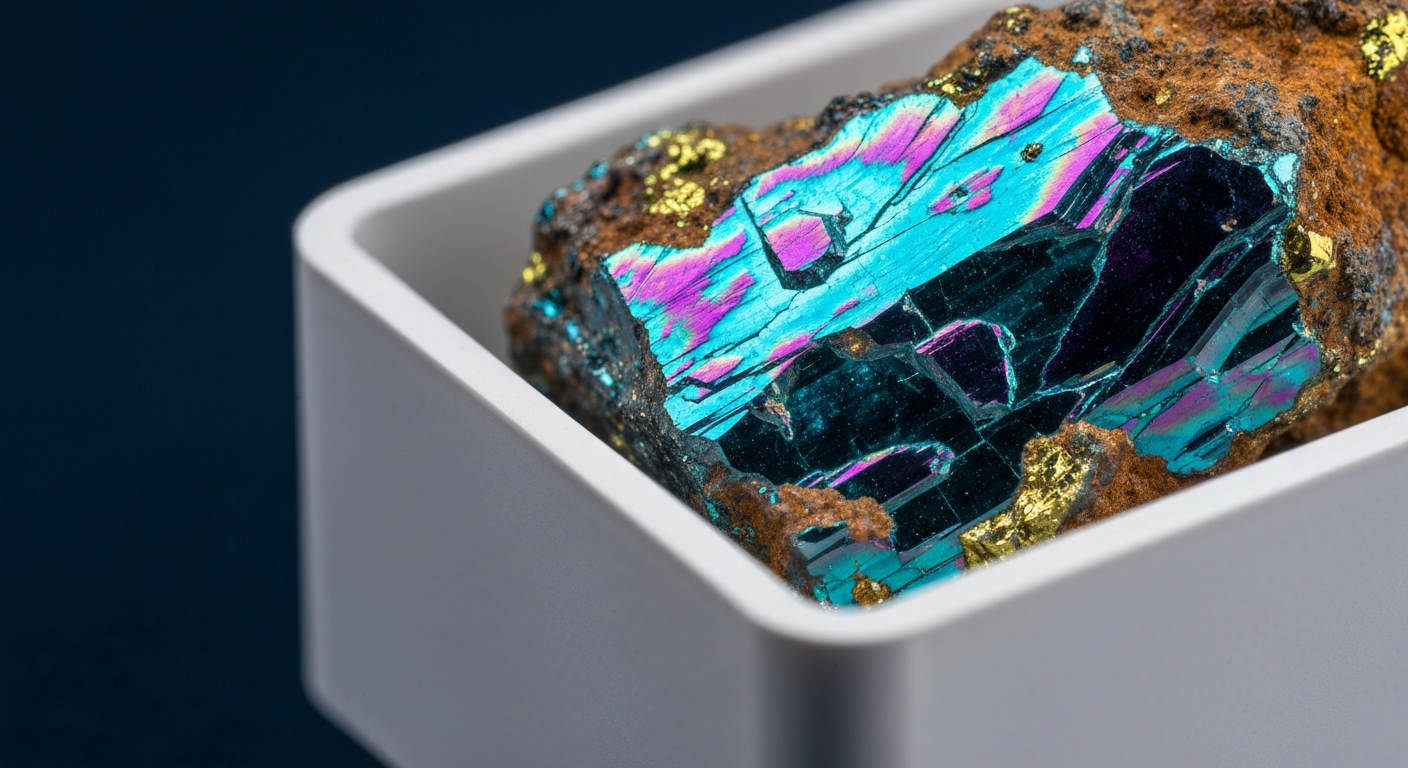
VMS deposits form on ancient submarine volcanic floors, where hydrothermal fluids rise through porous rock and cool abruptly on contact with cold seawater. This process precipitates sulphide mineral compounds — pyrite, chalcopyrite, pentlandite, cobaltite — in compact, massive layers. The result is a stratigraphically embedded ore lens, often several dozen to hundreds of meters thick, with potentially high concentrations of copper, zinc, lead, nickel, and cobalt.
Exploration geologists are looking for something specific: the lens, the “stack,” the massive core of the deposit. Concentration forms because a volcanic vent uses the same fluid pathway over millions of years, and metals accumulate where that upward path terminates.
What makes VMS systems geologically interesting from a sourcing perspective is that they deliver multiple metals at once. This matters because more than 70% of the world’s cobalt currently comes out as a byproduct of copper mining, primarily in the Democratic Republic of Congo. VMS deposits in Canada or Australia offer a geographically separate supply option.
From drill core to supply chain: how the market reads VMS hits
Junior explorers have no revenue. Their market capitalization depends almost entirely on how geologically credible their projects appear and how plausible it seems that an economically viable resource will result. So why do markets respond to drill announcements that are still years away from production?
Cobalt and nickel appear on the critical minerals lists of the EU, the United States, and Canada. Governments and major end-users are actively looking for new sources outside existing, politically exposed supply chains. For a chipmaker or data center operator, an early-stage project in a stable jurisdiction can be worth watching from a procurement standpoint, even if it is still in the resource-definition phase. That interest pulls capital into exploration well before the first tonne of ore is mined.
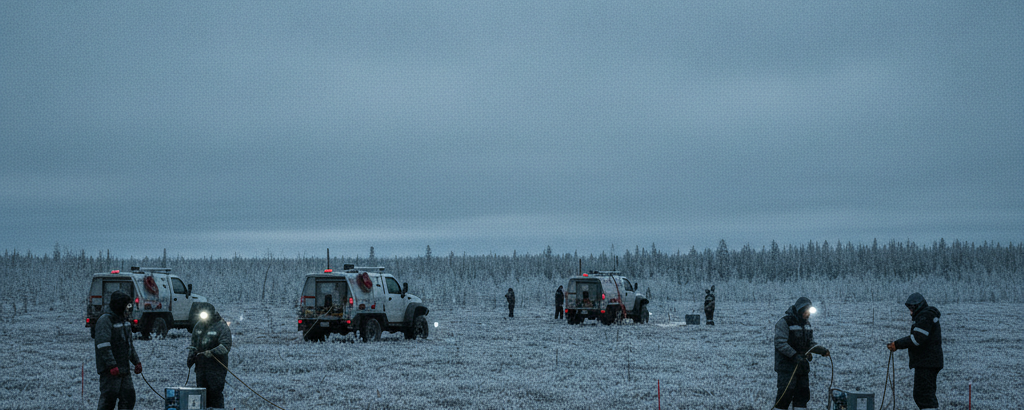
VTEM surveys (Versatile Time Domain Electromagnetic) play a specific role in this. This airborne geophysical method measures conductivity anomalies in the subsurface. Massive sulphides conduct electricity significantly better than surrounding rock, so a strong VTEM signal can point to a deep-seated VMS lens. When drilling confirms such an anomaly with actual massive sulphide, it validates the exploration methodology and gives the company grounds for follow-up programs.
| Metal | Relevance to semiconductors / data centers | Primary supply region (conventional) |
|---|---|---|
| Cobalt | High-temperature alloys, battery cells for UPS systems | DR Congo (~70% of global production) |
| Nickel | Corrosion-resistant connections, battery chemistry (NMC) | Indonesia, Philippines |
| Copper | Electrical infrastructure, heat exchangers, busbars | Chile, Peru, DR Congo |
How VMS projects differ from other exploration types
Not every deposit category works equally well as a source of technology metals. VMS systems differ from porphyry copper projects or sediment-hosted nickel laterites in ways that have practical consequences.
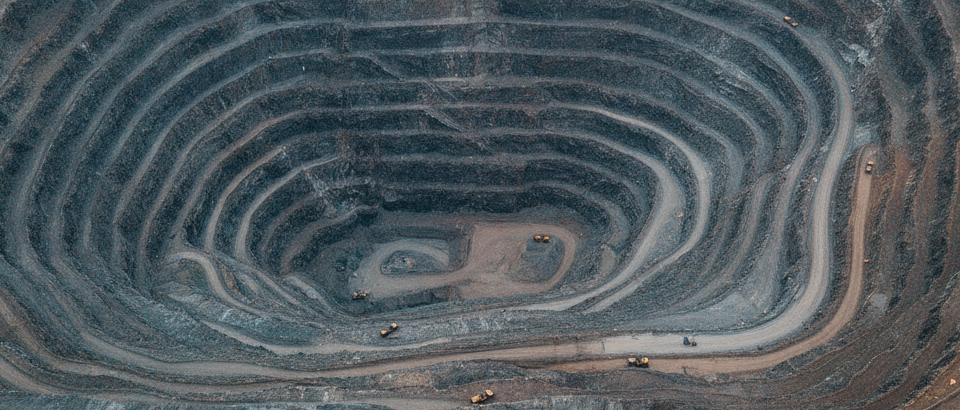
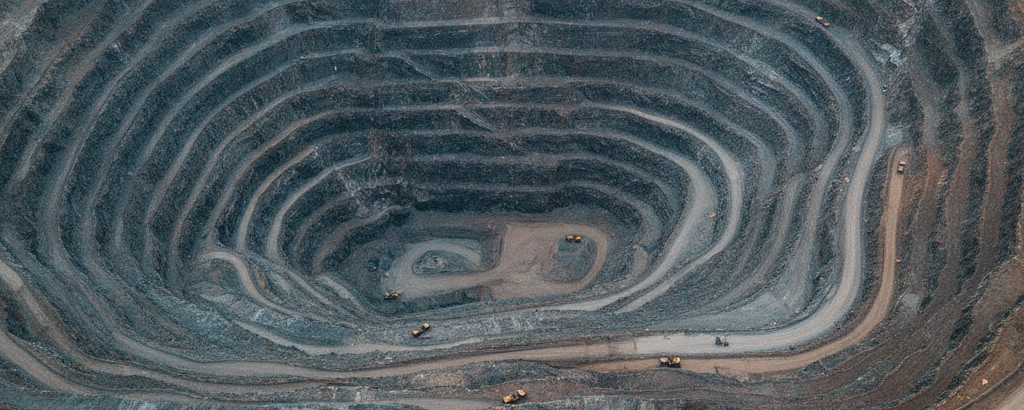
VMS deposits are often high-grade but spatially compact. Smaller mining operations are feasible because billion-dollar infrastructure is not a prerequisite from the outset, which puts these projects within reach of junior explorers in principle. Historical examples show that such systems can produce for decades: the Iberian Pyrite Belt in Spain and Portugal and the Flin Flon Belt in Canada have given generations of geologists enough data to model these systems with considerably more confidence today than was possible fifty years ago.
Metallurgical risk is real, though. Because VMS ores contain several metals at once, processing is more complex than with single-target projects. Flotation and concentrate separation determine how much of the geologically present grade is actually recoverable, and the full picture only becomes clear after processing.
What investors can take away from the VMS wave
The current run of VMS exploration announcements follows a pattern that repeats regularly in the junior market: once a sector enters the focus of industrial or government procurement strategies, capital flows into early-stage projects. Drilling programs expand and press releases multiply, and they do not all carry the same weight.
The distinction that matters most is straightforward. What a company observes in a drill core and what an independent laboratory subsequently measures can diverge significantly. Wide intercepts and visual findings are geologically meaningful, but only assay results and an NI 43-101-compliant resource estimate produce numbers on which an economic assessment can actually rest.
VMS projects at the exploration stage typically require five to fifteen years to reach production, from the first drill hit through permitting, financing, and mine construction. That timeframe is worth keeping in mind when reading exploration announcements.
Key terms in VMS exploration
- VMS (Volcanogenic Massive Sulphide)
- A deposit type that forms at submarine volcanic centers. Characterized by massive, compact sulphide ore lenses with high concentrations of copper, zinc, lead, nickel, and/or cobalt.
- VTEM (Versatile Time Domain Electromagnetic)
- An airborne geophysical survey method that detects electrical conductivity anomalies in the subsurface. Massive sulphides are strong electrical conductors and produce characteristic VTEM signatures.
- Visual mineralization
- A geological observation made on drill core in which ore phases (e.g., chalcopyrite, pentlandite) are visibly present. This is not proof of economic grades — only laboratory analyses (assays) provide quantitative values.
- Assay
- A laboratory chemical analysis of drill core samples to determine metal content, expressed in grams per tonne (g/t) or percent (%). Assay results form the basis of any resource estimate.
- NI 43-101
- A Canadian regulatory standard governing the disclosure of information about mineral projects. Resource estimates must be prepared and certified by an independent Qualified Person (QP).
- Resources vs. Reserves
- Resources (Inferred, Indicated, Measured) are geological estimates carrying varying degrees of confidence. Reserves (Probable, Proven) additionally account for economic, mining, and metallurgical factors and are considered bankable. The two terms are not interchangeable.
- Polymetallic deposit
- An ore deposit that contains several economically relevant metals simultaneously. VMS systems are typically polymetallic, which allows for by-product revenues but makes metallurgy more complex.
- Thickness (intersection length)
- The length of a mineralized zone intersected in a drill hole, measured in meters. The drill hole thickness does not necessarily equal the true deposit thickness — the angle between the drill hole and the ore lens significantly affects the reported length.
⚠️ Important notice: This article is for informational and educational purposes only. It does not constitute investment advice, a recommendation, or a solicitation to buy or sell any security. Investments in small-cap exploration and mining companies carry a high risk, including the potential total loss of capital. Before making any investment decision, consult a registered financial advisor and conduct your own analysis. Boersen Post Team is not responsible for decisions taken based on the content published here.