Fluorspar and Chip Manufacturing: What Niche Commodities Mean for Small Caps
June 19, 2026
Joint Venture Structures in the Uranium Sector: What JV Models Offer Junior Miners
June 19, 2026
An old idea, reimagined: what airports and ore processing have in common
Anyone who has booked a domestic flight in the United States knows the principle: you don’t fly directly from one small city to another — you connect through a major hub like Chicago or Dallas, where the network branches out. The model cuts operating costs because expensive infrastructure only needs to be maintained at one central point.
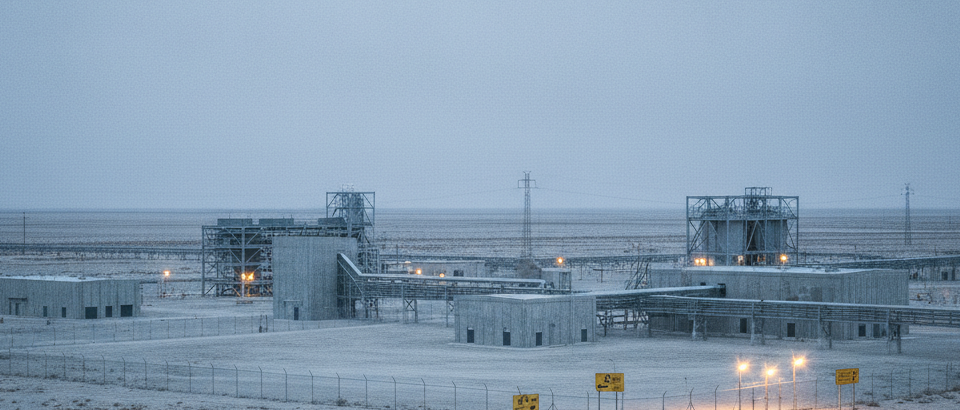
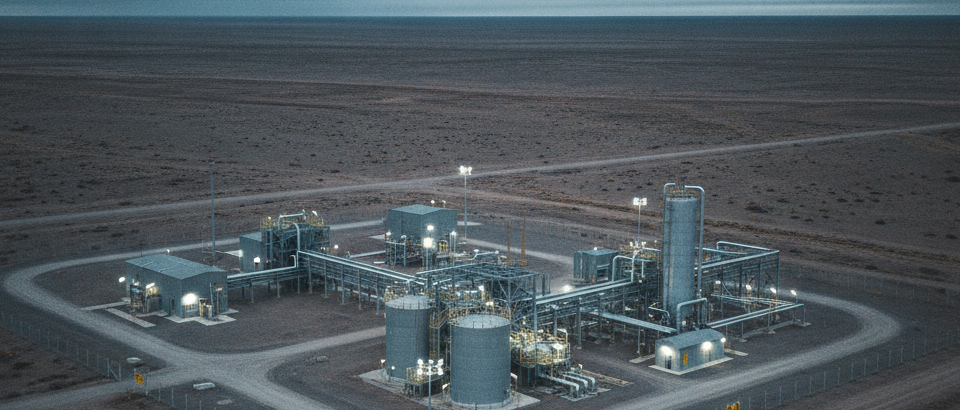
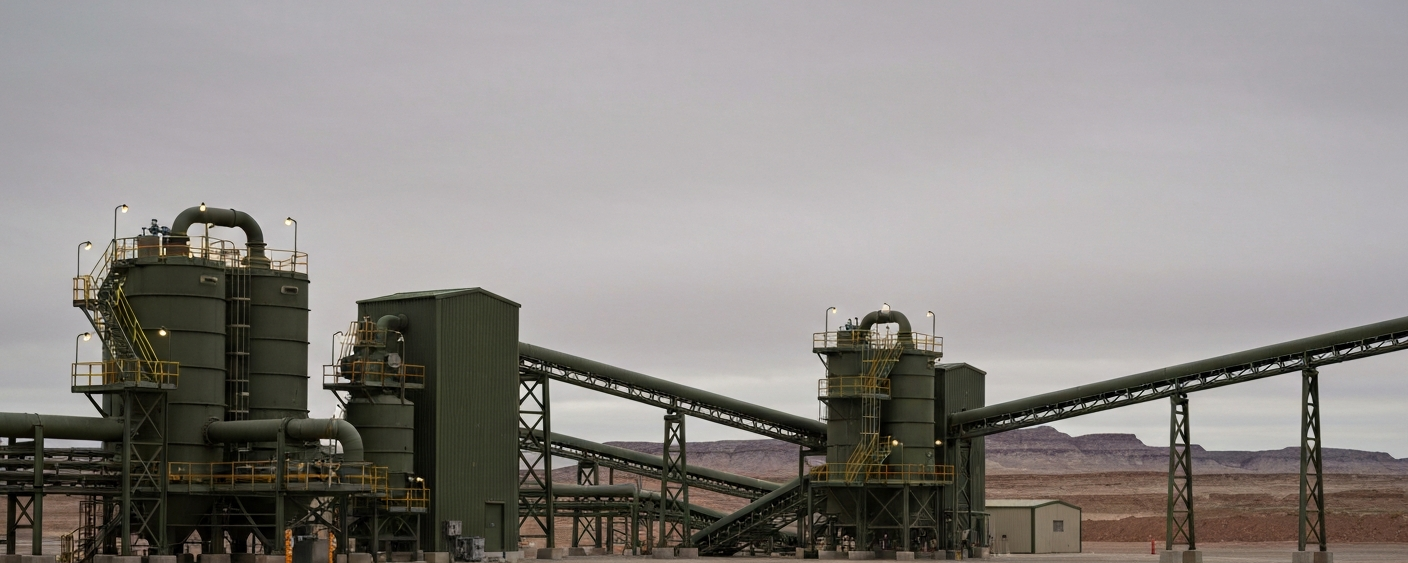
The same logic is appearing in North American uranium mining. Instead of building a dedicated processing facility for every deposit, multiple smaller mines supply a shared central mill. The mines are the spokes; the mill is the wheel’s center. One U.S.-based junior explorer has now built this architecture into a Preliminary Economic Assessment (PEA) for uranium and vanadium projects in Utah and Colorado. Understanding what that actually means in practice takes a bit of unpacking.
Why processing capacity is the bottleneck
In uranium mining, the mine itself is often not the most expensive part. Processing is. A uranium mill must be permitted, constructed and kept running continuously. In the United States, such facilities fall under Nuclear Regulatory Commission (NRC) oversight as well as state-level agencies, and permitting can take years while tying up substantial capital.
A junior explorer with one deposit faces an uncomfortable calculation: do the ore reserves actually justify a dedicated mill? Frequently the answer is no, not on a standalone basis. That’s where hub-and-spoke logic comes in.
When a mill already exists, or is planned as part of a broader portfolio, adjacent deposits can be developed without their own infrastructure. Ore is trucked to the central facility, and capital costs are spread across multiple projects. For investors, this means a company that owns a mill and several satellite deposits operates structurally differently from a conventional single-project explorer. The mill’s fixed costs are shared across multiple contributors, which reduces capital intensity per mine. The flip side: every spoke depends on a single central point. If the mill goes down, everything stalls.

Vanadium: when a byproduct stops being an afterthought
The Colorado Plateau adds another layer: uranium and vanadium occur together in the region’s sandstone roll-front deposits. That’s a regional characteristic, and vanadium’s economic relevance has grown considerably.
Two demand streams are worth distinguishing. Redox flow batteries use vanadium electrolyte for stationary electricity storage, which matters to grid operators trying to smooth out renewable intermittency. Separately, high-strength vanadium-steel alloys go into defense applications: armor plating, vehicle frames, rocket casings. Defense procurement budgets in several major economies rose sharply after 2022, and that has pulled vanadium demand along with them, though specific offtake data would be needed to quantify the effect on any single project.
For a hub-and-spoke project processing both metals, the revenue profile broadens. A suitably equipped mill can produce yellowcake (uranium oxide) alongside vanadium pentoxide. In a PEA, this is typically tested through scenarios with varying metal price assumptions, which is appropriate given how much both prices can move.
| Feature | Classic single-mine model | Hub-and-spoke model |
|---|---|---|
| Infrastructure | Each mine builds its own facility | One central mill serves multiple mines |
| Capital expenditure | High per project | Distributed across portfolio |
| Permitting risk | Multiple (one per mine) | Concentrated at the hub |
| Scalability | Limited to one deposit | New spokes relatively low-cost to add |
| Operational risk | Spread across sites | Centralized (mill outage affects all) |
What a PEA can and cannot do
A Preliminary Economic Assessment is the earliest formalized economic study in North American mining. It is frequently based on Inferred Resources, the resource category with the lowest confidence level under the NI 43-101 standard. This is a defined step in the development sequence, not a shortcut. The PEA exists to show whether a concept is economically plausible before expensive exploration capital gets committed to a Pre-Feasibility Study.
Some distinctions matter when reading one. The difference between Resources (Inferred, Indicated, Measured) and Reserves (Proven, Probable) is regulatorily fundamental, not semantic. Only Reserves can serve as a secured basis in project financing. PEA figures for NPV or IRR model scenarios under stated assumptions; they are not guarantees. In a hub-and-spoke context, the numbers that often say more than the headline IRR are the transportation cost per tonne from spoke to hub, the mill utilization rate, and the separation efficiency of the vanadium-uranium processing circuit.
When a company files its PEA on SEDAR+, the Canadian mandatory disclosure platform for listed resource companies, third parties can review the methodology and the qualifications of the Qualified Person (QP) who signed off on the report. That gives the document a different standing from a press release.
Reading hub-and-spoke projects as a small-cap investor
Hub-and-spoke structures address a genuine problem in junior mining: the mismatch between small deposits and large-scale infrastructure. They don’t solve it automatically. The direct question worth asking about any such project is: what milling capacity actually underpins this, and does the company own it, lease it, or still need to permit it?
On the Colorado Plateau, mill sites from earlier uranium production cycles of the twentieth century still exist. Projects that can draw on that existing infrastructure start from a different position than those requiring a new facility permitted from scratch. Whether through ownership or contracts with third-party operators, this distinction doesn’t always show up cleanly in market valuations. That gap can reflect undervaluation, but it can just as easily reflect risks the market has already priced in that aren’t visible from the outside.
The Colorado Plateau sits in the western interior of the United States, away from the supply dependencies on Kazakhstan or Russia that have complicated uranium procurement for U.S. utilities. Federal efforts to build domestic uranium and vanadium supply give such projects a policy dimension that extends beyond commodity price cycles. But political intent only feeds through to project valuations once it becomes actual offtake agreements or concrete support measures.
Terms that keep coming up when reading a PEA
- Hub-and-spoke model
- A mining architecture in which multiple smaller mines (spokes) deliver ore to a central processing facility (hub), rather than each mine building its own infrastructure.
- Preliminary Economic Assessment (PEA)
- The first formalized economic study for a mining project under North American standards (NI 43-101). Often based on Inferred Resources; produces scenarios, not bankable conclusions.
- Inferred Resources
- The lowest resource category under NI 43-101. An estimate based on limited data; not a bankable reserve and subject to significant revision as exploration continues.
- Reserves vs. Resources
- Reserves (Proven, Probable) are quantities confirmed through feasibility studies and demonstrated economic viability. Resources (Measured, Indicated, Inferred) are geological estimates without financial validation. NI 43-101 defines both terms precisely; they cannot be used interchangeably.
- Vanadium Redox Flow Battery (VRFB)
- A stationary energy storage system that uses dissolved vanadium in different oxidation states as an electrolyte. Suited to large-scale grid buffering and considered one of the primary drivers of current vanadium demand growth.
- SEDAR+
- System for Electronic Document Analysis and Retrieval — the Canadian mandatory disclosure platform for public companies, including technical reports filed under NI 43-101.
- Qualified Person (QP)
- An independent professional, typically a geologist or mining engineer, required under NI 43-101 to have demonstrated experience in the relevant commodity type and to sign off on technical reports.
⚠️ Important notice: This article is for informational and educational purposes only. It does not constitute investment advice, a recommendation, or a solicitation to buy or sell any security. Investments in small-cap exploration and mining companies carry a high risk, including the potential total loss of capital. Before making any investment decision, consult a registered financial advisor and conduct your own analysis. Boersen Post Team is not responsible for decisions taken based on the content published here.