Botswana as a Uranium Frontier: What African Jurisdictions Offer
June 25, 2026
MoU Partnerships: How Junior Miners Bridge the Processing Gap
June 26, 2026
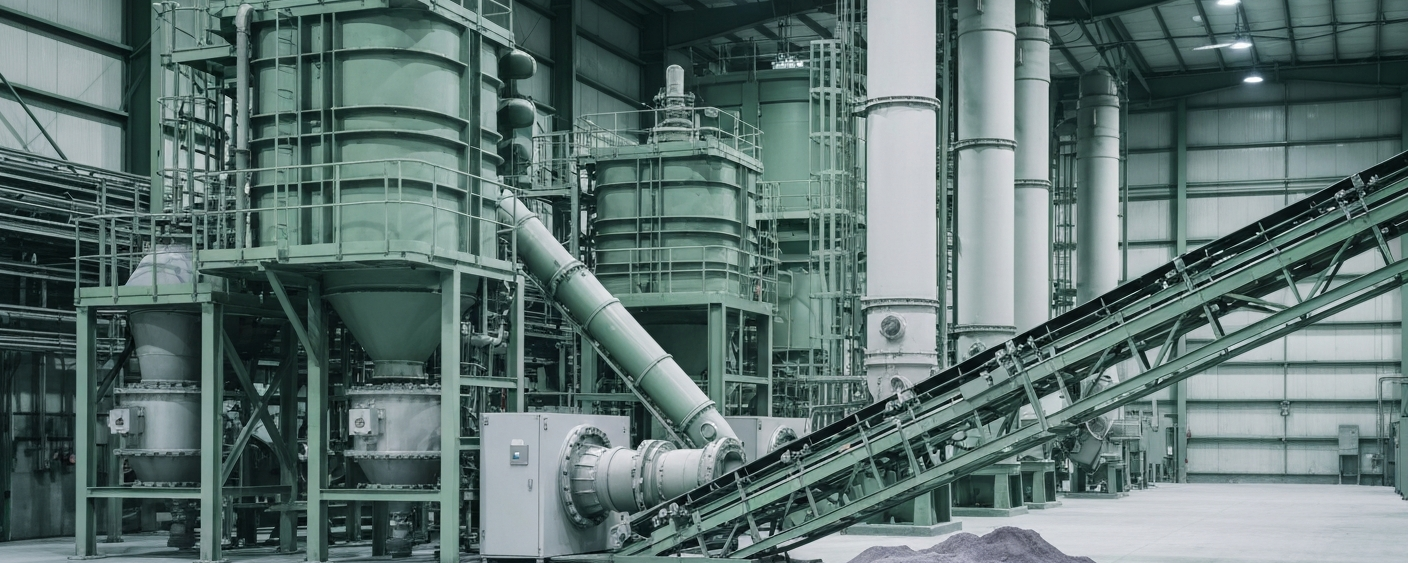
A metal in the shadows: why titanium rarely makes headlines
Titanium turns up in aircraft turbines, hip implants, paints, and defense systems, yet most investors pay it little attention. The commodity chain behind metallic titanium and titanium dioxide pigments is more complex and far less media-friendly than gold or copper exploration. The key feedstock is ilmenite (FeTiO₃), an iron-bearing titanium mineral that occurs in heavy mineral sands and magmatic deposits.
Since the United States and the European Union began actively seeking supply sources outside China and Russia, ilmenite deposits in politically stable countries have drawn more attention. Exploration projects in the Canadian province of Québec appear with increasing frequency, not because they are spectacular, but because the conditions there suit such projects reasonably well.
Ilmenite, titanium dioxide, and metallic titanium
Ilmenite is the most important titanium raw material by volume and the starting point for two very different end markets. Titanium dioxide (TiO₂) — the white pigment — accounts for roughly 90% of global titanium raw material demand. It goes into paints, coatings, plastics, paper, and food products. The market is large, broadly cyclical, and closely tied to construction activity. Metallic titanium, by contrast, represents only about 5% of mined titanium by end use. That smaller market matters in aerospace and defense because the metal is lightweight, corrosion-resistant, and difficult to replace.
China and Russia control significant portions of global titanium metal processing. That was long considered an acceptable arrangement, but after the supply disruptions of the early 2020s both the United States and the EU added titanium to their critical minerals lists. That designation brings government support programs, faster permitting in some jurisdictions, and greater investor attention.
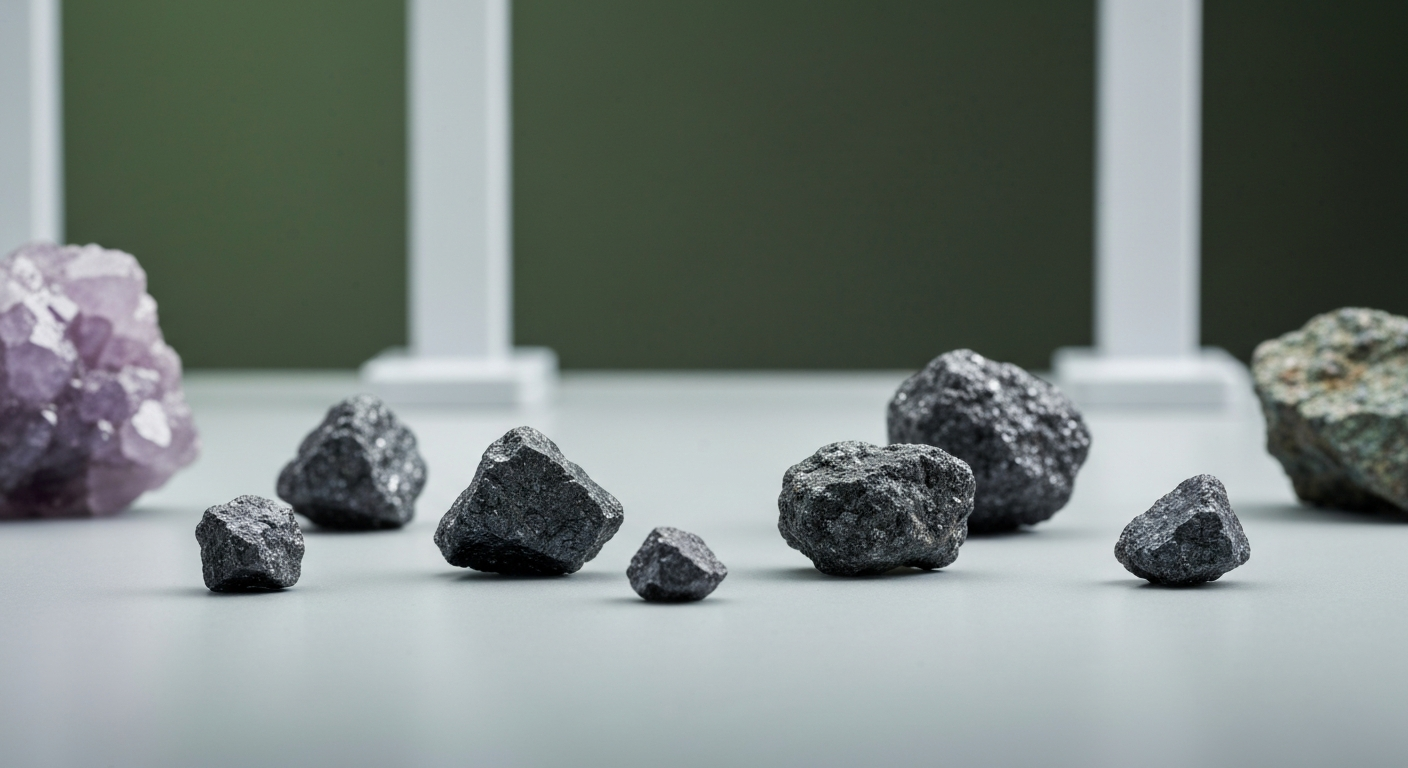
How heavy mineral deposits in Québec are evaluated
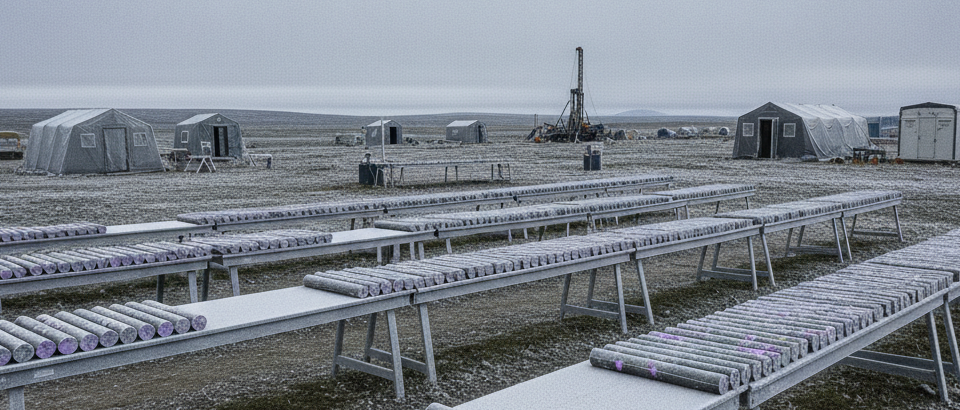
Identifying ilmenite occurrences is methodologically demanding. Unlike a gold vein that drill cores can define fairly cleanly, massive ilmenite concentrations often sit inside complexly structured magmatic bodies — anorthositic or noritic intrusions — which are common across the Québec Shield.
When an exploration company identifies new massive occurrences within a project area, geologists start by mapping outcrops and collecting rock samples for geochemical analysis. Magnetometry and gravity surveys then help locate dense, iron-rich mineral bodies beneath the surface. Only after assay results come back from an accredited laboratory does the company have usable grade data, typically expressed as a percentage of TiO₂ or Fe.
From an investor’s perspective, the key distinction is this: occurrences at this stage are not yet resources in the technical sense. A resource estimate must be prepared under a recognized standard — in Canada, NI 43-101 — before quantities and grades can be formally classified as Inferred, Indicated, or Measured Resources. The word “occurrence” describes a discovery that sits before any of that work has been done.
| Term | Meaning in the exploration process |
|---|---|
| Occurrence | First indication of mineralization, without a quantitative estimate |
| Inferred Resource | Initial statistical resource estimate; low geological confidence |
| Indicated Resource | Higher sampling density, greater confidence; basis for a preliminary study |
| Measured Resource | Highest confidence level; can form the basis for a reserve declaration |
| Reserve (Proven/Probable) | Economically extractable under defined assumptions — technically and legally verified |
What new ilmenite discoveries mean for small-cap investors
Québec consistently ranks well in the Fraser Institute’s Annual Survey of Mining Companies: political risk is low, permitting processes are clear, and infrastructure is workable. That matters to project valuations because financing costs and permitting timelines in Canada are more predictable than in many African or Southeast Asian jurisdictions.
Investors who associate Canada mainly with gold, silver, or nickel may not immediately notice that titanium-ilmenite projects follow a different demand logic. TiO₂ pigment markets, defense budgets, and space programs move largely independently of the gold price or lithium demand, which can make them a useful addition to a commodities portfolio not heavily concentrated in a single cycle.
When a company announces six new massive occurrences, that is an early milestone — comparable to a first sign of an ore vein, not a delineated resource body. Such announcements often move the share price in the short term. Investors who follow the sector closely wait for what comes next: geophysical follow-up work, additional sampling, and eventually a NI 43-101-compliant resource estimate. A discovery announcement without a resource estimate is a bit like an offer on a property with no site survey. The location may sound right, but what the ground is actually worth remains an open question.
Titanium between the commodity cycle and geopolitical pressure
China processes a significant share of the world’s titanium sponge, the intermediate product for titanium metal. Russia has traditionally been among the largest producers of raw ilmenite concentrates. After the supply chain disruptions of the early 2020s, procurement managers in aerospace and defense started questioning that concentration more directly than they had before.
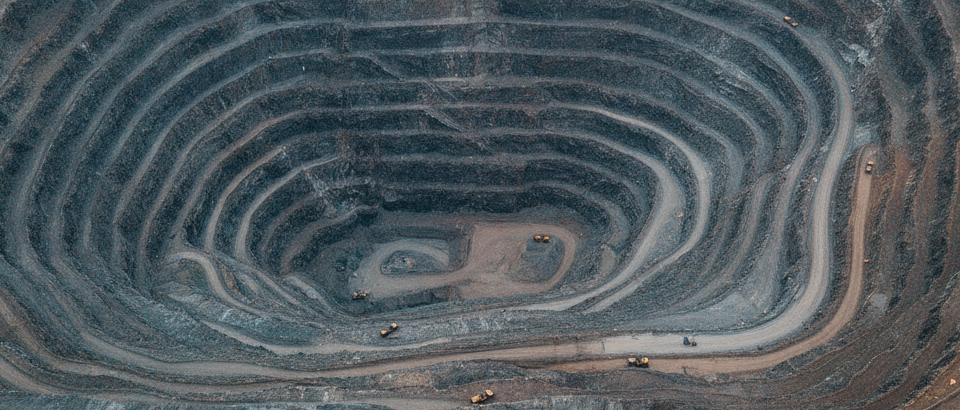
Whether a Québec ilmenite project ever becomes a mine depends on metallurgy, ore grade, and infrastructure costs. Geopolitics can make a project financeable when it might otherwise sit untouched, but a mine gets built only when the economics hold up. Those two things operate on different timelines and answer to different decision-makers.
The distance between a discovery announcement and a working mine is wide. The technical data published along the way is what narrows it — or doesn’t.
Key terms in ilmenite and titanium exploration
- Ilmenite (FeTiO₃)
- An iron-titanium ore mineral and the most important feedstock by volume for both titanium dioxide and titanium metal production. Found in igneous rocks and heavy mineral sands.
- Titanium dioxide (TiO₂)
- A white pigment with very high covering power, used in paints, plastics, paper, and food products. Accounts for approximately 90% of titanium raw material demand.
- Titanium metal (Ti)
- A high-strength, lightweight, corrosion-resistant metal used in aerospace, medical technology, and defense. Produced from titanium tetrachloride via the Kroll process.
- Critical mineral
- A raw material that a government classifies as economically significant and at risk of supply disruption. The designation often triggers government support measures.
- NI 43-101
- The Canadian regulatory standard for the disclosure of mineral resources and reserves. Resources may only be reported officially after an estimate signed by a Qualified Person has been completed.
- Occurrence
- In exploration terminology: an initial geological finding without a quantitative resource estimate. Not synonymous with “resource” or “reserve.”
- Anorthosite intrusion
- An igneous rock rich in plagioclase feldspar that commonly hosts ilmenite-titanomagnetite deposits in Québec.
- Titanium sponge
- The porous intermediate form of metallic titanium produced from titanium tetrachloride via the Kroll process. It is the basis for all further titanium metal processing steps.
⚠️ Important notice: This article is for informational and educational purposes only. It does not constitute investment advice, a recommendation, or a solicitation to buy or sell any security. Investments in small-cap exploration and mining companies carry a high risk, including the potential total loss of capital. Before making any investment decision, consult a registered financial advisor and conduct your own analysis. Boersen Post Team is not responsible for decisions taken based on the content published here.