Copper in Chile: What High-Grade Drill Hits Mean for Junior Miners
June 30, 2026
TSX Graduation: What a Stock Exchange Upgrade Means for Gold Juniors
July 2, 2026
Six kilometers of copper — and what it actually tells you
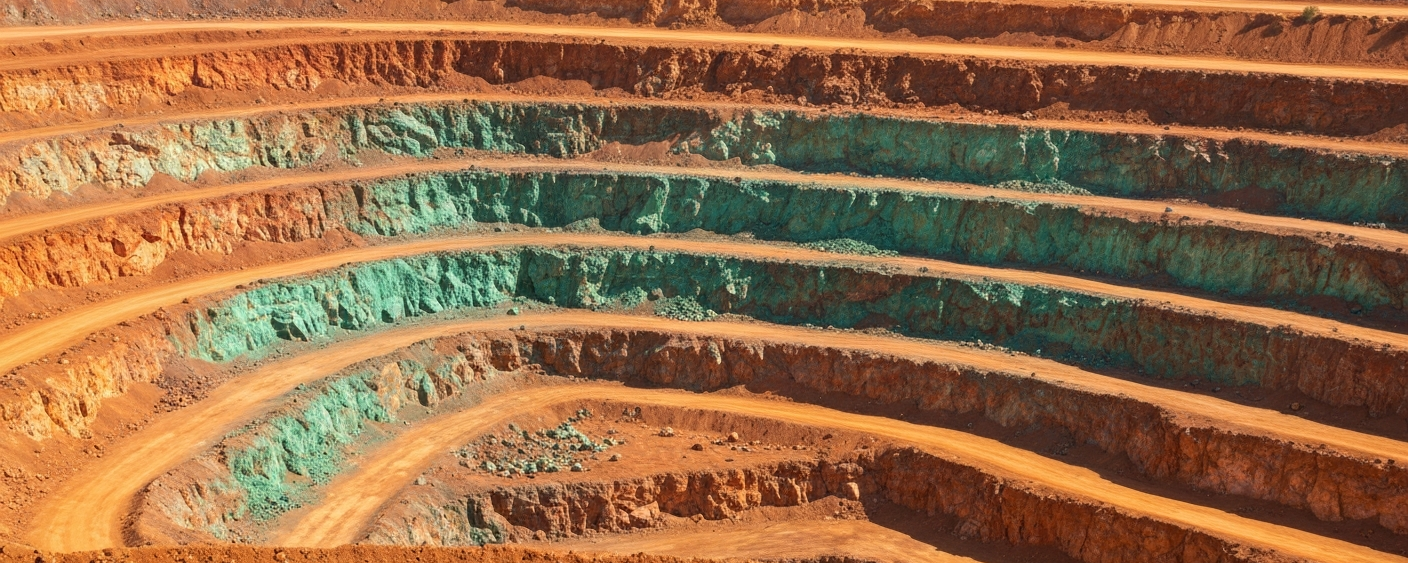
In the Zambian Copper Belt, a junior explorer has extended the known strike length of its near-surface copper mineralization to more than six kilometers. Announcements like this occasionally move markets. The reason isn’t complicated: strike length is an early indicator of how large a project might eventually become. For anyone new to junior mining, it’s worth understanding exactly what that means, and what it doesn’t, because that distinction determines whether a discovery has any plausible path to a mine.
The Zambian Copper Belt in a global commodities context
The Central African Copper Belt, running from the Democratic Republic of Congo into Zambia, is one of the most copper-rich geological provinces on Earth. It traces back to sedimentation processes roughly 800 million years ago, and the deposits that formed as a result are among the most ore-rich anywhere.
Zambia has produced copper on an industrial scale for decades. For junior explorers, the region remains attractive partly because historical mines were drilled selectively and primarily for depth. Many near-surface zones were never properly tested, which left smaller companies room to work in areas that major producers passed over on cost grounds.
Copper demand from the energy transition adds to that interest. Electric vehicles and expanded power grids require substantially more copper than the fossil-fuel infrastructure they replace. The International Energy Agency, in its 2021 report “The Role of Critical Minerals in Clean Energy Transitions,” projected that copper demand could rise sharply by the mid-2030s. Subsequent IEA scenario modelling pointed toward increases of roughly 40 to 50 percent above 2020 consumption levels, though the figure shifts considerably depending on the pace of grid investment and EV uptake.
Strike length, depth, grade: how investors read a copper discovery
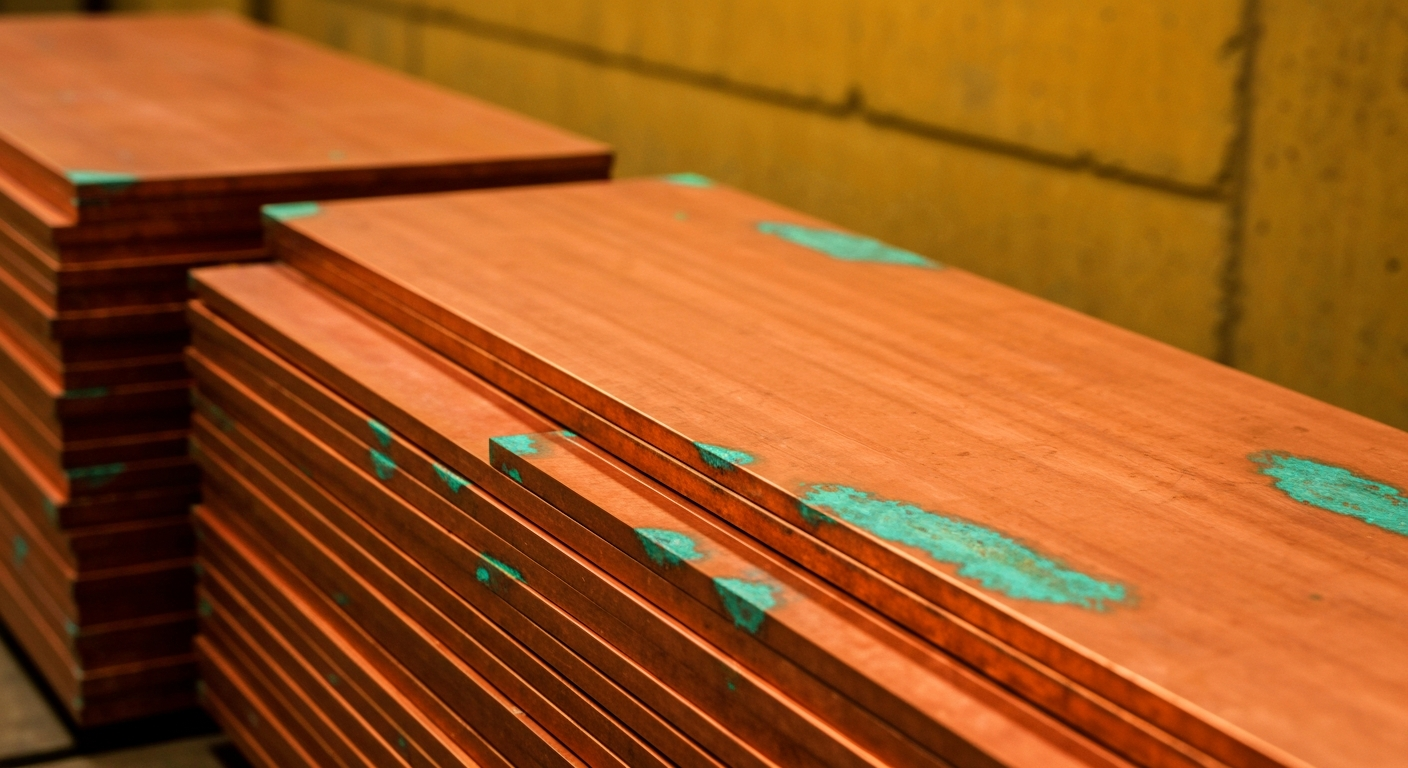
To understand why an extension to 6.7 kilometers can matter, you need to know the basic geometry of a mineral deposit. Strike length is the horizontal extent of the mineralization along the ore body’s long axis; it sets the ceiling on how much material could theoretically be present. Depth, or down-dip extent, determines how far the ore continues below surface and directly affects mining costs — open-pit extraction is a different economic proposition than sinking a shaft. Ore grade is the copper content as a percentage of the host rock, and it is the single most important factor in deciding whether any of this is worth digging up.
| Dimension | Relevance for investors |
|---|---|
| Strike length | Horizontal extent of the mineralization along the ore body’s axis — determines maximum volume potential |
| Down-dip length / depth | Vertical extent — influences mining costs (open pit vs. underground mining) |
| Ore grade | Copper content as a percentage — determines economic viability per tonne of rock |
Strike length on its own says nothing about the value of a deposit. A near-surface occurrence with a long strike and moderate grade can be more commercially attractive than a deep, high-grade body reachable only by underground methods. The numbers need to be read together.
When a junior extends its strike rapidly — as here, to 6.7 kilometers across just a few drilling campaigns — it suggests two things. The ore body appears open along strike, meaning further extensions remain possible. And the pace of expansion points to a reasonably disciplined drilling program rather than selectively reported holes.
From drill hole to resource: what the steps in between cost
An extended strike length is not a resource estimate. Beginners often conflate the two. Under NI 43-101, the Canadian regulatory standard that applies to many Africa-listed junior companies, mineralization data must be evaluated by qualified persons, statistically modelled, and sorted into defined confidence categories before any resource figure can be published.
The process starts with raw exploration data: drill intercepts, geophysical surveys, assay results. Where drill coverage is dense enough, a company can report Inferred Resources — the lowest confidence category, based partly on geological extrapolation. More drilling upgrades those to Indicated Resources, which can support a preliminary economic assessment. Only at the Measured Resource stage, requiring tight drill spacing and consistent sampling, can you derive Reserves — the numbers a bank will actually lend against.
Resources and reserves are not interchangeable terms. A longer strike raises the probability that future resource calculations will report substantial tonnages, but it says nothing about grade continuity or mineable volume. Moving from a drill campaign to a reserve estimate typically takes years and costs many millions of dollars. For small-cap investors, a positive strike extension shows that the geology is worth pursuing. It does not mean value has already been created.
How to read a strike extension announcement
Projects at this stage sit in what the industry calls “resource delineation” — well short of any production decision, carrying the highest geological risk, but also the greatest upside if the ore body holds up. Before drawing conclusions from a strike extension announcement, a few pointed questions are worth asking.
How closely spaced is the drill grid behind the stated length? Widely spaced holes can project a strike over kilometers while leaving enormous uncertainty in between. Have the intercepts appeared in published technical reports, or only in press releases? And perhaps most important: how consistent are ore grades across the full strike, or do strong values appear only in isolated intervals surrounded by low-grade rock?
That last point matters more than the headline number. A deposit with reasonably uniform copper grades across 6.7 kilometers is geologically more reliable than one showing occasional high values separated by long stretches of near-barren material. The length gets the attention. The grade consistency is what a serious analyst looks at first.
Key terms in strike length and copper exploration
- Strike length
- The horizontal extent of an ore body along its geological long axis. Expressed in meters or kilometers, it gives a rough sense of potential mineral volume.
- Near-surface mineralization
- Ore occurring at shallow depth, typically within roughly 200 to 300 meters of surface. Favorable for open-pit mining, which is cheaper than underground methods.
- Inferred resource
- The lowest confidence category under NI 43-101 and JORC. Based on limited drill data and geological extrapolation. Not sufficient for an economic feasibility study.
- Indicated resource
- The intermediate confidence category. Requires a denser drill grid and can be used in preliminary economic assessments (PEA / scoping study).
- Ore grade
- The concentration of copper in the rock, expressed as a percentage (% Cu). The primary determinant of a project’s profitability per tonne mined.
- Target definition
- The exploration phase in which geological targets are narrowed down using geophysical and geochemical methods before intensive drilling begins.
- Country risk
- The risk arising from the political and regulatory environment of a country. Affects permitting timelines, taxation, and legal certainty for mining projects.
- Central African Copper Belt
- A geological province spanning Zambia and the DRC, among the most copper-rich on Earth. Major deposits including Nchanga, Konkola, and Kansanshi all originate from this belt.
⚠️ Important notice: This article is for informational and educational purposes only. It does not constitute investment advice, a recommendation, or a solicitation to buy or sell any security. Investments in small-cap exploration and mining companies carry a high risk, including the potential total loss of capital. Before making any investment decision, consult a registered financial advisor and conduct your own analysis. Boersen Post Team is not responsible for decisions taken based on the content published here.