Quarterly Reports at Rare Earth Juniors: What the Numbers Reveal
June 8, 2026
VMS vs. Porphyry: Two Deposit Types, One Commodity
June 8, 2026

When iron pyrite becomes a strategic resource
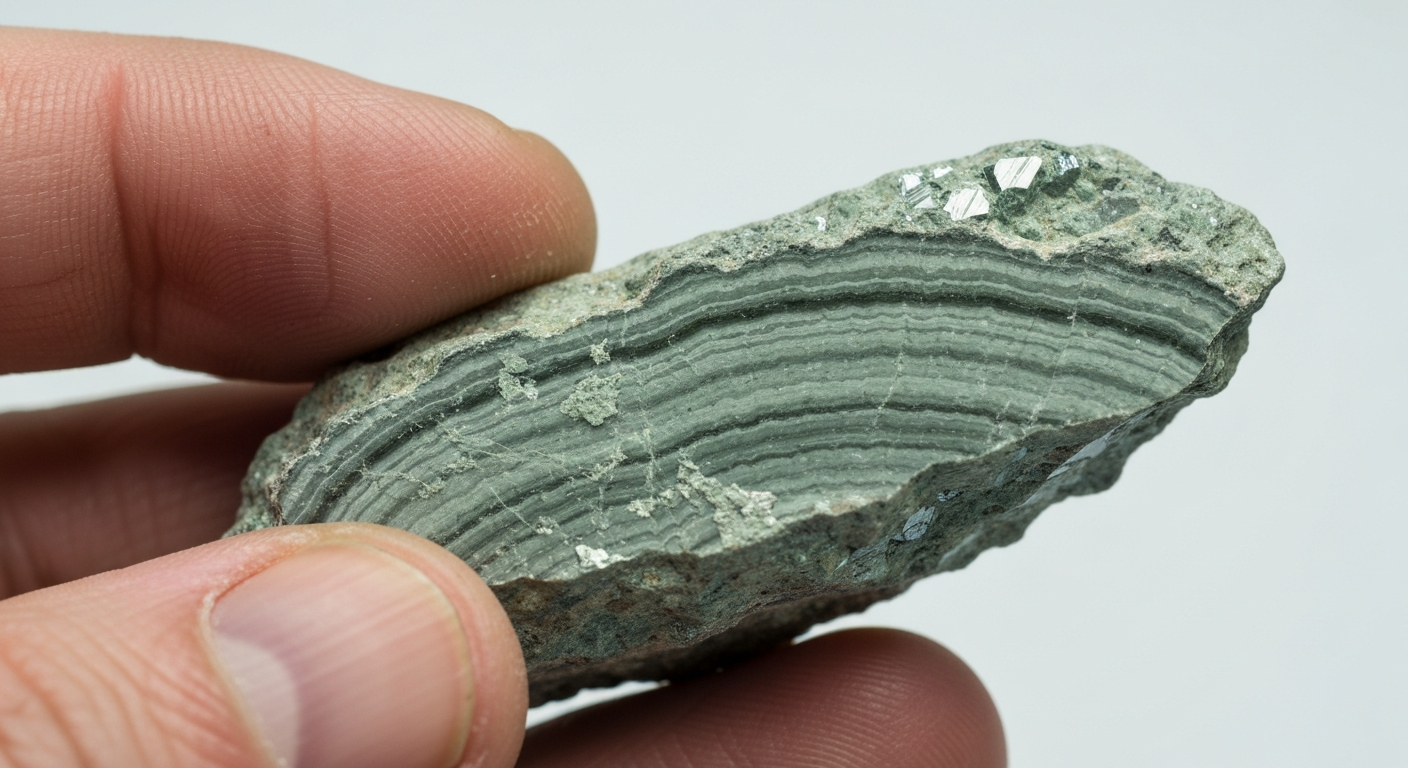
On a geological map of northern Sweden, the Skellefte Belt has captivated geologists for decades. This narrow strip running northwest across Västerbotten province is one of Europe’s most metal-rich zones. It contains VMS deposits — Volcanogenic Massive Sulphides — lens-shaped ore bodies formed hundreds of millions of years ago. Hot, metal-bearing fluids vented from the ocean floor into cold deep-sea water, creating compact accumulations of copper, zinc, lead, silver, and gold within a single rock package.
That North American junior explorers are now deliberately acquiring licenses in this region and assembling land packages exceeding 60,000 hectares reflects a pressing supply question. Where will metals for the energy transition and modern defense systems come from? And how dependable is the supply?
The geological and political framework for VMS projects
VMS deposits form at submarine spreading zones where tectonic plates diverge. Seawater filters through fissures into hot rock, dissolving metals, and emerges as metal-bearing hydrothermal fluid at black smokers. Contact with cold surrounding water causes rapid precipitation, forming a massive sulphide body. The Skellefte area underwent this process roughly 1.9 billion years ago during intense Paleoproterozoic volcanic activity.
This geology gains particular value today because of where it sits geopolitically. Europe has learned the hard way that relying on a single supplier for critical commodities is dangerous. Rare earths from China, cobalt from the Democratic Republic of the Congo, lithium from unstable regions — Europe’s supply chain problems have exposed serious gaps. Sweden, by contrast, operates as one of the world’s most secure mining jurisdictions. It has a reliable legal system, established permitting processes, highly developed infrastructure, and decades of mining tradition. Large corporations have run operations in the Skellefte Belt for decades, proving the region’s commercial viability.
Why markets react to acquisitions in the Skellefte Belt
When a junior explorer announces a VMS project acquisition in northern Sweden while expanding its land package to roughly 68,000 hectares, several valuation drivers come into play.
Jurisdiction premium. Mining projects in politically stable countries command higher prices in capital markets than comparable projects in riskier regions. Investors assess not only the ore body itself but the probability it will actually be mined. A copper deposit in a country governed by the rule of law has better odds of clearing permitting than a similar deposit in an unstable region. This pricing markup is the jurisdiction premium.
Size as exploration optionality. 68,000 hectares allows a junior to test multiple targets across a contiguous land package in a known mineral province. Larger areas increase the odds of finding something substantial.
The metal combination. Copper powers electrification through cables, motors, and transformers. Zinc protects steel in wind turbines. Lead goes into starter batteries and radiation shielding. Silver is essential for solar panels and electronics. Gold serves as a monetary reserve. A VMS project combining all five metals addresses multiple demand trends simultaneously, making it attractive in the current commodity environment.
| Metal | Primary application (energy transition / defense) |
|---|---|
| Copper | Electrical cables, motors, charging infrastructure |
| Zinc | Corrosion protection for wind turbines, battery technology |
| Lead | Starter batteries, radiation shielding, ammunition |
| Silver | Solar panels, electronic connections, defense sensors |
| Gold | Monetary reserve, high-performance electronics |
A structural point matters too. Europe chronically undersupplies its own raw materials. The EU’s Critical Raw Materials Act explicitly promotes and accelerates domestic mining projects. For junior explorers, this potentially means faster permitting and stronger political support—factors that affect capital market valuations.
What investors can take away from this pattern
This is not an isolated event. It reflects a broad restructuring of global commodity supply chains that gained momentum after Russia invaded Ukraine and competition between the United States and China intensified. Western companies and governments are actively seeking alternatives to geopolitically risky suppliers.
For small-cap investors, several takeaways emerge. First, European mining projects in Sweden, Finland, Portugal, and Spain may command higher valuations than comparable assets in less stable regions. Second, large land package consolidation signals long-term district-scale exploration, an approach that can yield outsized returns if successful but requires sustained capital if results disappoint. Third, the shift toward polymetallic projects shows the market increasingly values diversified metal supply over single commodities.
Early-stage exploration carries real technical and financial risk. Even in established regions like the Skellefte Belt, drilling can disappoint, permitting can stretch out, or funding gaps can emerge. The jurisdiction premium reduces certain risks but does not eliminate them.
Five concepts that help when reading VMS news releases
- VMS deposit (Volcanogenic Massive Sulphide)
- A deposit type formed by hydrothermal processes on the ocean floor. Typically polymetallic (copper, zinc, lead, silver, gold) and lens-shaped in structure. Well-known VMS provinces include the Skellefte Belt (Sweden), the Iberian Pyrite Belt (Portugal and Spain), and the Flin Flon Belt (Canada).
- Jurisdiction premium
- The valuation markup that capital markets assign to mining projects in politically stable, legally secure countries relative to geologically similar projects in high-risk regions.
- Land package
- The total area of a company’s exploration licenses in a region, expressed in hectares. A larger, contiguous land package opens up more exploration targets but ties up more capital.
- Polymetallic project
- A mining project containing multiple economically relevant metals within a single ore body. Unlike single-metal projects, it diversifies revenue streams but also complicates metallurgy and price modeling.
- Critical Raw Materials Act (CRMA)
- An EU regulation from 2024 that defines strategically important raw materials and grants preferential treatment to European mining projects through simplified permitting procedures and financing instruments.
- Hydrothermal genesis
- A formation process in which hot, metal-bearing fluids rise through tectonic fissures and precipitate ore minerals as they cool. The basis for many important deposit types, including VMS.
- District-scale exploration
- An exploration strategy in which a company systematically investigates a large, contiguous area in order to identify multiple mineral occurrences within the same geological framework.
⚠️ Important notice: This article is for informational and educational purposes only. It does not constitute investment advice, a recommendation, or a solicitation to buy or sell any security. Investments in small-cap exploration and mining companies carry a high risk, including the potential total loss of capital. Before making any investment decision, consult a registered financial advisor and conduct your own analysis. Boersen Post Team is not responsible for decisions taken based on the content published here.