Multi-Commodity Financing: How Battery Minerals Pool Capital
June 8, 2026
VMS Deposits: How Europe’s Ore Bodies Secure Supply Chains
June 8, 2026

When numbers tell more than drill cores
Rare earth juniors reveal themselves in their quarterly reports more than anywhere else. The financial statements and Management Discussion & Analysis (MD&A) that go out each quarter show the stage of development, how efficiently the company spends capital, and what management actually intends to do next. For newcomers to the sector, Mkango Resources (AIM:MKA, TSX-V:MKA)’s Q1 2026 filing offers a useful entry point.
The long haul from exploration to production
Neodymium, praseodymium, and dysprosium go into permanent magnets used in electric motors, wind turbines, and defense systems. Structural demand grows as the energy transition accelerates and as European, American, and Japanese policy makers treat rare earth supply chains as a strategic issue.
From deposit discovery to commercial production typically takes ten to twenty years. Exploration, resource definition, feasibility studies, metallurgical work, pilot plants, financing, and construction each demand enormous capital and specialized knowledge. Companies that advance several phases in parallel tend to be the most interesting to follow.
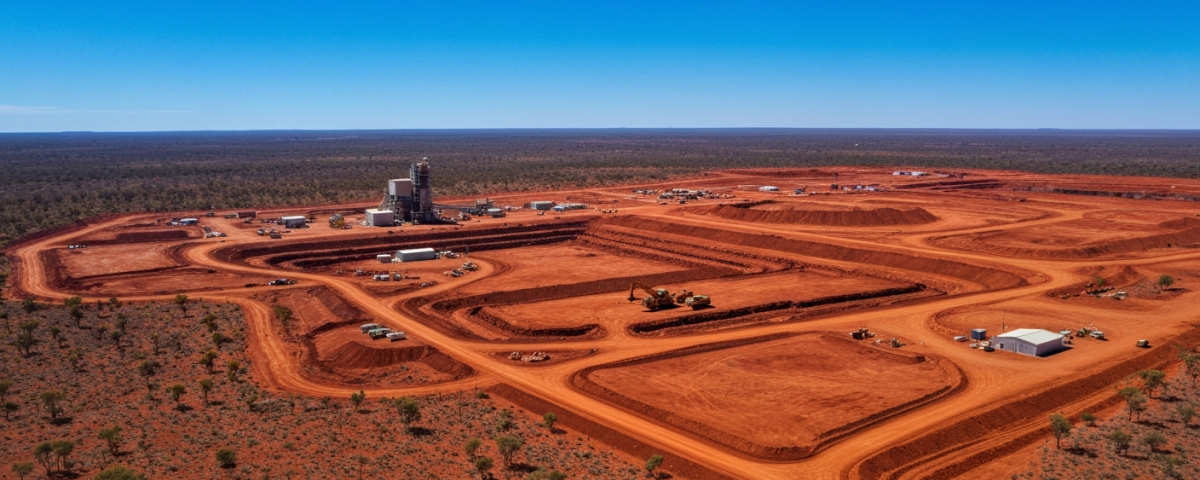
Mkango works across multiple stages. The company develops a mine deposit in Malawi while also building a separation facility in Europe and pursuing rare earth recycling. This integrated model costs more to run but potentially adds more value to the company. It also makes the quarterly reports more complicated to parse.
What to look for in a quarterly report
Cash position and burn rate tell you how long the company can operate. If monthly spending is $500,000 and the company holds $3 million in cash, the runway is six months. Under six months, capital raises become urgent. A year or longer gives management room to move.
General & Administrative (G&A) expenses matter relative to project spending. If a company spends more on salaries and office rent than on drilling or testing, that is a bad sign. High project spending relative to overhead shows capital goes toward work rather than bureaucracy.
The MD&A should describe what actually happened. Were permits granted? Did the company sign a partner? Did a feasibility study finish? Read two or three quarters in sequence to see if the company moves forward or stalls.
| Metric | What It Shows | Warning Sign |
|---|---|---|
| Cash runway | Liquidity without a capital raise | Under 6 months |
| G&A vs. project spending | Capital efficiency | G&A exceeds project investment |
| MD&A detail quarter to quarter | Real project progress | Nothing substantively changes |
Geopolitics shifts the equation
China processes most of the world’s rare earth oxides. Western governments have flagged this as a strategic weakness. The EU Critical Raw Materials Act and the U.S. Inflation Reduction Act now push investment toward non-Chinese supply chains. For companies building processing capacity outside China, this changes who will finance them and on what terms.
A European rare earth facility appeals to carmakers and magnet makers today in ways it did not five years ago, not because the technical process improved but because relying on a single foreign supplier has become politically unacceptable. References in quarterly reports to new government programs, strategic buyers, or grant applications are worth noting. They signal potential funding sources beyond equity rounds.
Commodity price cycles matter too. When rare earth prices sag, investors disappear, projects pause, and valuations fall. When prices rise, institutional buyers return. A quarterly report shows whether management kept the core work alive during weak periods, a quality that tends to pay off when the market recovers.
Reading between the lines
A quarterly report does not move the stock price. It is a baseline measure of execution. Any investor who reads several in sequence begins to sense whether management does what it says. That consistency or lack thereof is one of the best ways to judge operational quality in a field where promises often exceed results.
Rare earth developers juggle mine, processing, and recycling work at once. A quarterly report will naturally show many moving pieces. The point is whether the pieces advance or spin in place. An investor reading these documents learns to distinguish signal from noise, quarter after quarter.
Common terms in rare earth reports
- MD&A (Management Discussion & Analysis)
- Management’s written explanation of financial results and project progress. Required in every quarterly report from publicly listed Canadian companies.
- Cash runway
- How many months a company can operate using existing cash at its current burn rate. Calculated as liquid assets divided by monthly cash outflow.
- G&A (General & Administrative expenses)
- Overhead costs: salaries, office rent, legal and consulting fees. For junior companies, shows how much capital feeds the head office versus project work.
- Integrated developer
- A company that operates mine, processing, separation, or recycling in-house rather than outsourcing them or simply selling raw ore.
- NI 43-101
- Canadian technical standard for reporting mineral resources and reserves. All estimates must be verified by a qualified person (QP).
- Off-take agreement
- A contract in which a buyer commits to purchase future production under set terms. Lenders view these as proof of commercial demand.
- Burn rate
- Monthly cash outflow when a company has no revenue. Shows how fast existing liquidity disappears.
⚠️ Important notice: This article is for informational and educational purposes only. It does not constitute investment advice, a recommendation, or a solicitation to buy or sell any security. Investments in small-cap exploration and mining companies carry a high risk, including the potential total loss of capital. Before making any investment decision, consult a registered financial advisor and conduct your own analysis. Boersen Post Team is not responsible for decisions taken based on the content published here.