Failed Takeover Bids: What M&A Flops Teach Investors
May 8, 2026
Penny Stocks on the TSX-V: Opportunities and Risks Explained
May 10, 2026
When Industry Giants Lend a Hand to Small Explorers
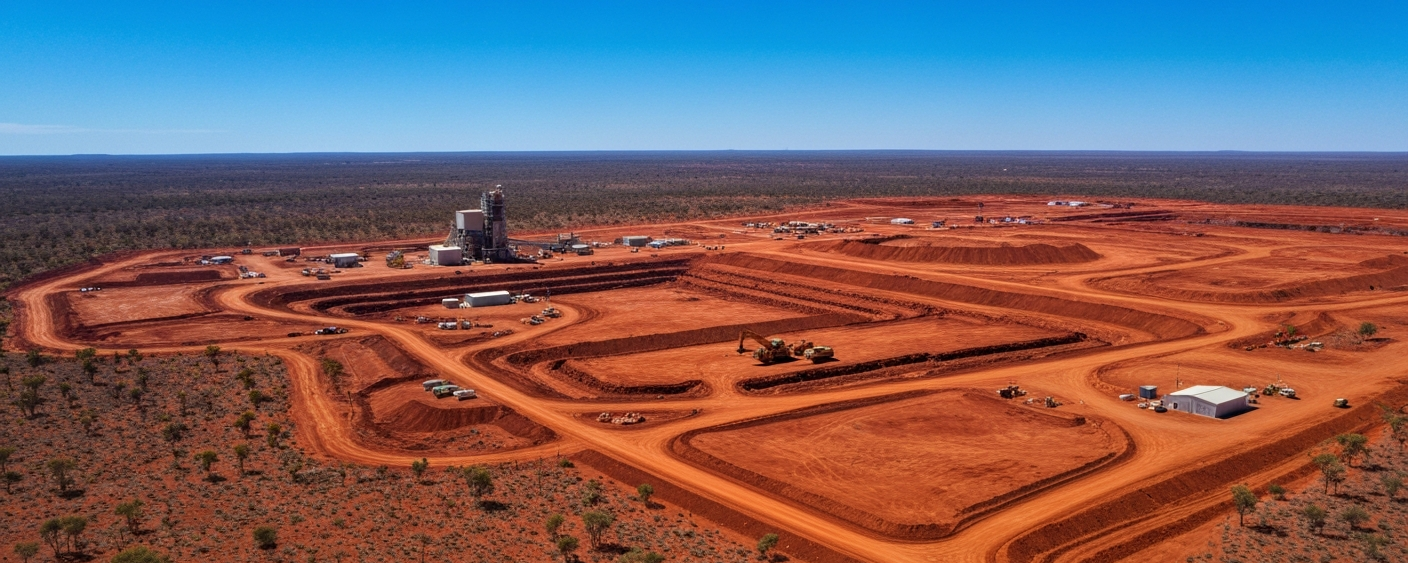
The world of commodity exploration has operated under a clear division of labor for decades: large mining companies — known as majors — run producing mines and develop established deposits. Small exploration companies, the junior explorers, take on the riskier pioneering work: searching for new mineral occurrences, often in remote regions, with limited capital and a high probability of failure. But this picture is changing. A growing number of majors are turning to structured support programs — so-called accelerators — to guide, finance, and operationally support junior explorers in a targeted way. What may look like philanthropy at first glance follows a clear strategic logic. For investors new to the world of small-cap investments, it is well worth understanding this model more closely.
The Gap Between Capital and Discovery
To understand the model, one must first grasp where junior explorers are structurally weak. These companies often have promising project ideas but possess little equity capital, infrastructure, or institutional credibility. They raise capital primarily through stock exchanges such as the TSX-V in Canada or the ASX in Australia — markets specifically geared toward risk-tolerant investors. Yet even there, capital is not unlimited, especially when sentiment across the commodity cycle is subdued.
This is precisely where a strategic opening emerges for the majors. A large mining company has resources that a junior explorer urgently needs: geological expertise, state-of-the-art exploration technology, established networks with regulatory authorities and local communities, and significant financial firepower. An accelerator program bundles these resources and makes them available to selected junior companies — usually in exchange for participation rights, right-of-first-refusal options on projects, or other strategic arrangements.
A simple analogy: imagine an experienced architect who not only lends money to a recent graduate, but also allows them to share office space, connects them with contacts, and provides feedback on designs. In return, the architect receives the right of first refusal to commission the young talent’s future building projects. Both parties benefit — but the power asymmetry remains.

How These Programs Work in Practice
Accelerator programs for junior explorers typically run in several phases. In an initial selection round, junior companies apply with their projects and management teams. Evaluation criteria include geological potential, team experience, location, and the regulatory environment. Acceptance rates are low — similar to start-up incubators in the technology sector.
Those accepted generally receive a package with several components:
- Direct financing: Grants or low-interest loans that enable drilling programs or geochemical analyses.
- Technology access: Use of proprietary exploration software, satellite data, or geophysical methods that would be unaffordable for a junior on its own.
- Mentoring: Experienced geologists and mining engineers from the major support the team in project evaluation.
- Network access: Introduction to institutional investors, regulatory authorities, and local communities.
In return, the major typically secures an option to enter the project or acquire it at a later point — on pre-agreed terms. This so-called back-in right or option-to-acquire is the major’s core strategic instrument in the arrangement.
| What the Junior Receives | What the Major Receives |
|---|---|
| Capital for exploration programs | Early project access at favorable valuations |
| Credibility through brand association | Option rights for acquisition or equity participation |
| Technology and geological expertise | Visibility into the early-discovery pipeline |
| Access to investor networks | Diversification of the exploration portfolio without full risk exposure |
Credibility as Currency — and Its Downside
For small-cap investors, one aspect is particularly noteworthy: the signaling effect. When a reputable mining major accepts a small exploration company into its accelerator program, it sends a powerful signal to the market. The major has conducted an internal review — a kind of institutional due-diligence seal of approval. Many junior companies report that the announcement of program acceptance alone moves their share price noticeably.
A word of caution, however: a credibility signal is not a promise of success. Even intensively supported exploration projects can fail — because the geology does not pan out, because permits are not granted, or because metal prices collapse in the interim. Investors should treat the signal as one factor among many, not as a guarantee.
There is also a structural risk that newcomers often overlook: dependency. A junior deeply embedded within an accelerator ecosystem may find itself in a difficult negotiating position when it comes to selling the project to a third-party buyer. The major’s pre-agreed option rights can significantly restrict the junior’s room to maneuver. This is not a flaw in the model — but it is an aspect that should be read carefully in the junior’s corporate disclosures.
A helpful analogy: a young restaurant backed by a large restaurant chain benefits from purchasing terms, marketing support, and training. But if the chain holds a preferential option to buy the establishment, the owner’s independence is limited. Sometimes that is a fair trade — sometimes it is not.
Key Takeaways for Investors
Accelerator programs between majors and junior explorers offer a fascinating window into the structure of the commodities sector. They show how large companies diversify their exploration pipeline without taking on full risk — and how junior explorers gain capital and legitimacy without immediately surrendering their independence.
For small-cap investors, this means: a major’s involvement in a junior program is a relevant criterion when evaluating a project — but not the only one. Equally important are the precise terms of the partnership: What options has the major secured? What dilution effects arise? How much operational latitude remains with the junior’s management team?
This model is expected to grow in significance in the years ahead. The commodities sector faces a structural dilemma: demand for copper, lithium, nickel, and other critical metals is rising, while new large-scale deposits are becoming increasingly difficult to discover. Majors need fresh exploration pipelines — and junior explorers need capital. Accelerator programs are a structured response to this dual pressure.
Key Terms at a Glance
- Accelerator Program
- A structured support program in which an experienced company (e.g., a mining major) provides smaller companies with capital, knowledge, and networks — typically in exchange for strategic consideration such as option rights.
- Major (Mining)
- A large, established mining company with multiple producing mines, high market capitalization, and a global presence. Majors generally have access to low-cost debt financing and institutional investors.
- Junior Explorer
- A small exploration company specializing in the search for and initial assessment of mineral occurrences. Junior explorers typically have no producing mines and finance themselves through equity issuances.
- Option-to-Acquire
- A contractual right held by a partner (e.g., a major) to acquire a project or equity stake at a pre-agreed price or formula at a future point in time. This restricts the junior’s freedom of action.
- Dilution
- When a company issues new shares, the percentage ownership of existing shareholders in the total capital decreases — even if the absolute value of their shares remains unchanged. For junior companies, dilution is a common consequence of financing.
- Due Diligence
- A thorough review of a company or project prior to an investment decision. It covers geological, legal, financial, and operational aspects.
- TSX-V (TSX Venture Exchange)
- A Canadian stock exchange specifically for small and mid-sized resource companies. It is considered a global hub for junior mining stocks and offers more accessible listing conditions compared to established senior exchanges.
⚠️ Important notice: This article is for informational and educational purposes only. It does not constitute investment advice, a recommendation, or a solicitation to buy or sell any security. Investments in small-cap exploration and mining companies carry a high risk, including the potential total loss of capital. Before making any investment decision, consult a registered financial advisor and conduct your own analysis. Boersen Post Team is not responsible for decisions taken based on the content published here.