Titanium as a By-Product: How Multi-Commodity PEAs Revalue REE Projects
June 15, 2026
Spin-Out Explained: When Portfolios Are Strategically Split
June 15, 2026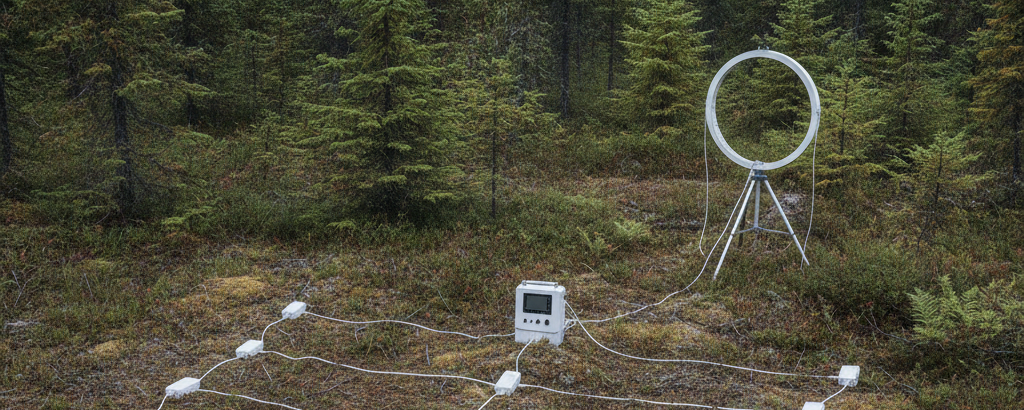
A metal almost nobody knows — that is everywhere
Fiber-optic cables only work because somewhere in the production chain there is a silver-gray metalloid that nearly disappears in the periodic table between silicon and tin: germanium, element symbol Ge. Not a bulk commodity, not a media darling, but one that certain high-technology applications depend on and cannot easily substitute. In the past two years, governments and procurement managers have begun paying closer attention to it.
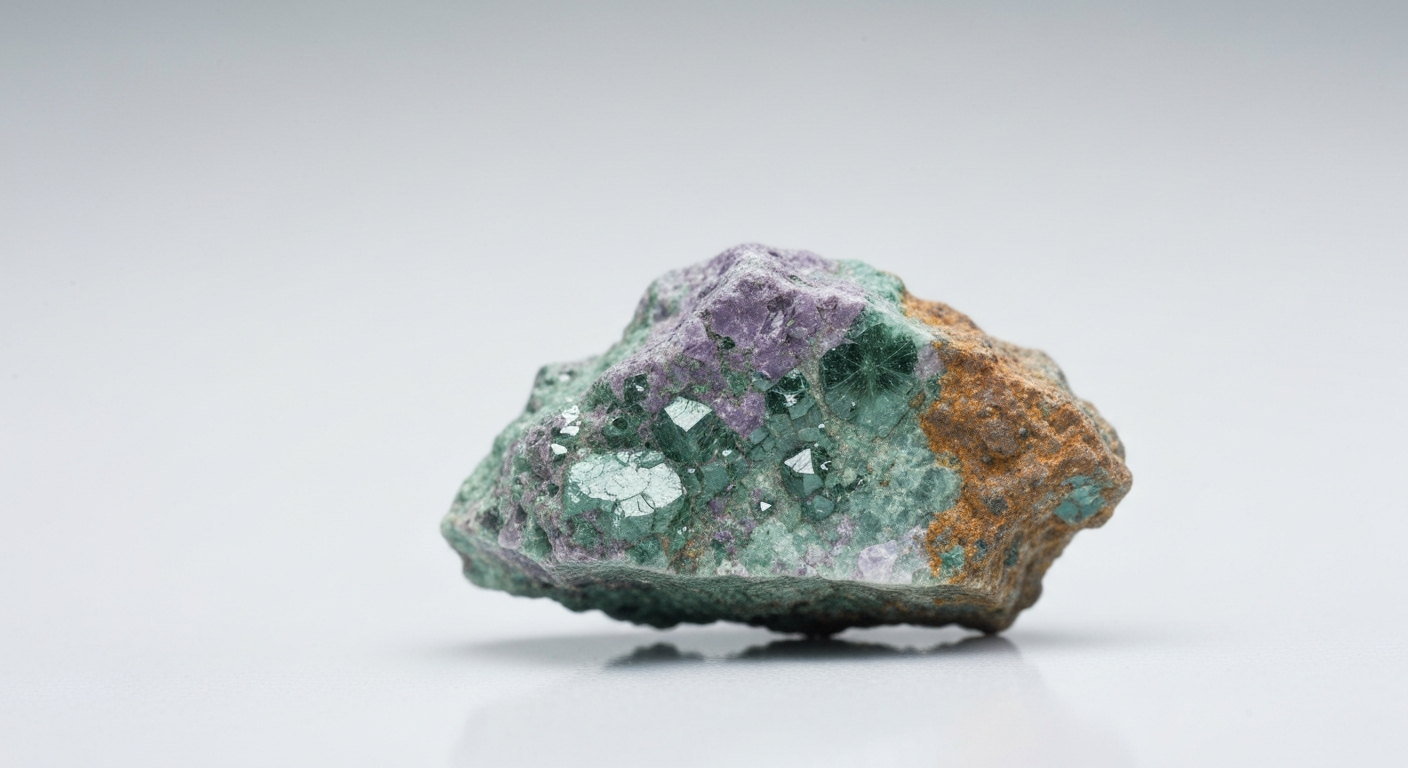
What many investors do not know: germanium is mined as a primary product almost nowhere. It typically occurs as a by-product of zinc processing or the combustion of certain grades of hard coal. That is not a minor detail. It means the global supply chain is tied to decisions made for entirely different commodities. Anyone who wants germanium depends on someone else wanting zinc. Western exploration projects that deliberately target germanium are therefore unusual, though not illogical.
China’s export controls and the scramble for western sources
More than 70 percent of global germanium production originates in China, according to the U.S. Geological Survey’s Mineral Commodity Summaries. When Beijing introduced export controls on germanium and gallium in July 2023, spot prices moved quickly: procurement teams at technology firms began building buffer stocks, and the U.S., EU, and Canada each added germanium to their critical minerals registers.
The pattern is familiar from other supply crunches. After China cut its rare earth export quotas in 2010, exploration outside China suddenly became financeable, and projects previously considered marginal attracted strategic capital. A similar window opened for small-cap explorers in stable jurisdictions after July 2023. Such windows do not stay open indefinitely.
What an electromagnetic survey actually delivers
Geophysical methods are the main tool in early-stage exploration for directing drilling capital toward the right targets. A ground-based electromagnetic survey transmits alternating electric fields into the subsurface and measures how different rock formations respond. Electrically conductive mineral structures, such as sulfide-rich zones, behave differently from insulating bedrock, so geologists end up with a map of probable target areas before a single drill rig arrives on site.
The practical case for doing this first is cost. An EM survey typically runs at a fraction of what a drilling phase costs, which matters considerably to junior explorers operating on tight budgets. You identify the anomalies, then you drill them.
For germanium projects specifically, the method also fits the geology: mineralization is frequently associated with sulfidic host phases, which are exactly what EM surveys are well suited to detect.
| Exploration Method | Typical Stage of Use | Relative Cost |
|---|---|---|
| Rock Sampling (Grab Sampling) | Very early (initial screening) | Low |
| Ground-Based EM Survey | Early (target refinement) | Medium-low |
| Airborne Geophysics | Early to mid-stage | Medium |
| Diamond Drilling | Mid to advanced stage | High |
| Mineral Resource Estimate (MRE) | Advanced stage | High |
Why Québec keeps appearing at the top of critical metals discussions
Québec has ranked among the more attractive mining jurisdictions globally for years. The Fraser Institute’s annual Mining Survey consistently places the province near the top, with respondents pointing to legal certainty and functioning permitting processes. The provincial government has also put explicit support programs in place for strategic minerals exploration, including semiconductor metals such as germanium.
For small-cap investors who price in jurisdiction risk, this matters in a concrete way. A project in a politically stable environment with workable mining legislation removes one risk category from the table, though it leaves geological and market risks fully intact.
Geology, the continuity of mineralization, and whether a commercial resource can be defined at all remain the central questions. An EM survey provides indications. It does not replace a resource estimate under NI 43-101, and no amount of jurisdictional goodwill changes that.
What a survey launch means for small-cap investors
The start of an EM survey is a concrete milestone for a junior explorer: the company has spent money to generate data that will shape its next decision. Whether the data supports further work is only known once the results come in.
In the small-cap segment, announcements of this kind draw attention to projects that had little prior coverage. Not because a survey creates value on its own, but because the sequence of project news shapes short-term perception, often regardless of what the data eventually shows. Exploration results determine long-term value.
For germanium specifically, the demand for western sources is real and grounded in documented export policy. But a producing mine requires drilling, resource estimation, permitting, and financing, each step carrying its own timeline and failure rate. Most exploration projects at this stage go no further.
- Germanium (Ge)
- Metalloid with atomic number 32. Obtained primarily as a by-product of zinc smelting and coal combustion. Used in fiber-optic technology, infrared sensors, and semiconductor devices.
- Electromagnetic survey (EM survey)
- A geophysical measurement method in which electromagnetic fields are transmitted into the subsurface to map the electrical conductivity of different rock zones. Used to identify potentially mineralized areas prior to drilling.
- Critical mineral
- A designation assigned by government agencies (EU, USA, Canada) to minerals that are economically important and simultaneously at risk of supply disruption. The designation can trigger support measures and strategic investment.
- NI 43-101
- Canadian regulatory standard for the disclosure of mineral exploration projects. Strictly distinguishes between “Resources” (Inferred / Indicated / Measured) and “Reserves” (Probable / Proven). An EM survey alone does not establish an NI 43-101-compliant resource.
- By-product metal
- A commodity recovered during the processing of other minerals rather than mined as the primary target. Germanium is typically a by-product of zinc production, which limits how quickly supply can respond to demand.
- Jurisdiction risk
- A valuation factor for mining projects that accounts for political stability, legal certainty, permitting processes, and potential government intervention in a given region. Projects in stable jurisdictions such as Québec are often valued with a lower risk discount.
- Newsflow
- The sequence of project-related announcements (surveys, drilling results, studies) that can influence short-term attention and trading volume in the small-cap segment, independently of the fundamental merits of the project.
Important notice: This article is for informational and educational purposes only. It does not constitute investment advice, a recommendation, or a solicitation to buy or sell any security. Investments in small-cap exploration and mining companies carry a high risk, including the potential total loss of capital. Before making any investment decision, consult a registered financial advisor and conduct your own analysis. Boersen Post Team is not responsible for decisions taken based on the content published here.