Non-Brokered Placements: How Juniors Raise Equity in Tranches
June 15, 2026
Germanium Supply Gap: What EM Surveys Do for Western Projects
June 15, 2026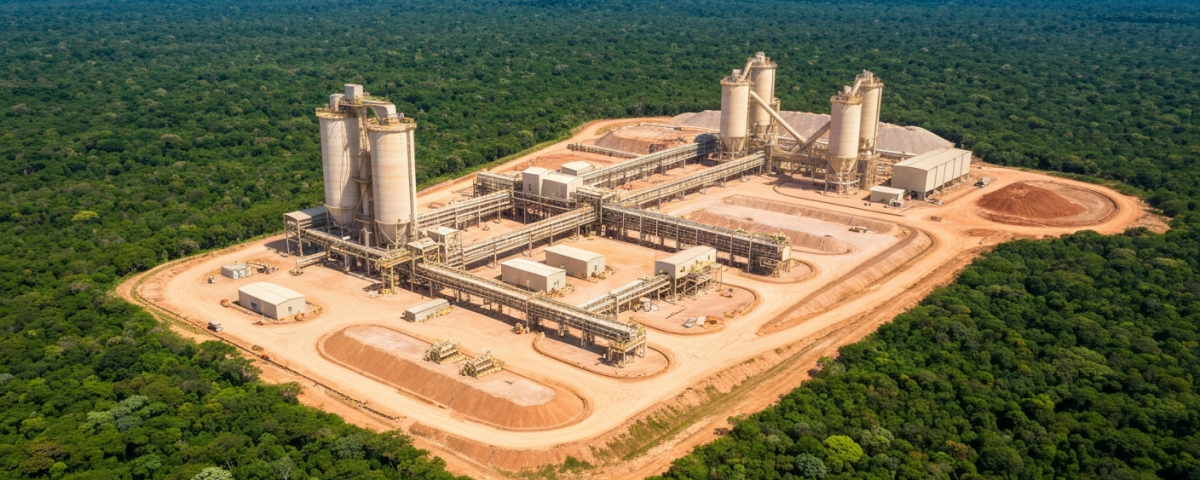
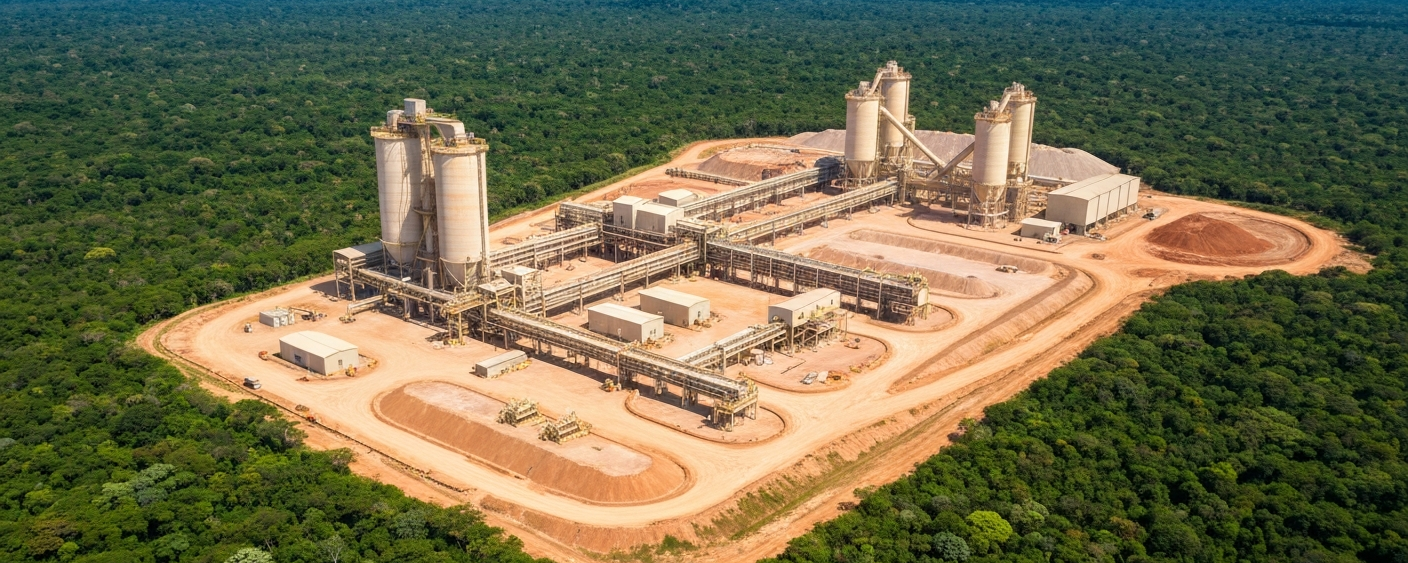
When a project addresses two commodity markets at once
Most exploration companies in the rare earths space have a clear profile: they search for the critical metals used in permanent magnets, electric vehicles, and wind turbines. Some projects, though, combine rare earths with a second commodity that has its own independent economics. Titanium is the most common example.
For investors approaching junior miners in the rare earths sector for the first time, an immediate question arises: does a second commodity make a project more attractive, or does it just add complexity? The answer lies in how such projects are actually modeled. The central instrument is the Preliminary Economic Assessment, or PEA.
What a PEA does and what it cannot do
A PEA is the first formal step by which an exploration project moves from the geological phase into an economic assessment. Under the Canadian reporting standard NI 43-101 (which applies to projects outside Canada when a company is listed on North American exchanges), a PEA must be led by an independent Qualified Person. It produces structured metrics for the first time: the project’s Net Present Value (NPV) and its Internal Rate of Return (IRR).
One thing to keep in mind: a PEA is typically based on Inferred Resources, the lowest confidence category of mineral resources. It is not a feasibility study. The NPV and IRR figures are model outputs, not guarantees, and they rest on specific assumptions about metal prices, mining rates, and operating costs.

The logic of by-product credits in REE-titanium projects
When a project produces titanium alongside rare earths, the projected revenues from titanium sales flow into the cost accounting as by-product credits. This reduces the effective operating cost per tonne of rare earth oxide, because a portion of the infrastructure and operational expenditure is offset by the by-product revenue.
The underlying idea is simple: fixed costs that are incurred regardless get spread across more saleable products. The stronger the market price of the by-product, the more the calculated cost share of the primary product falls. This mechanism is standard practice in mining.
In the rare earths context, it matters because processing costs for REE minerals have historically been high. Titanium minerals such as ilmenite and rutile have their own established end markets in aerospace, pigment paints, and metal production. A REE project that can demonstrate titanium as a genuine co-product distributes its economic risk across two demand sources that move somewhat independently of each other.
| Characteristic | Pure REE project | REE + titanium project |
|---|---|---|
| Revenue sources | Rare earths only | REE + titanium minerals |
| Cost structure | Full fixed costs allocated to REE | Fixed costs spread across multiple products |
| Commodity price risk | Concentrated on the REE market | Split across two markets |
| PEA complexity | Lower | Higher (two pricing models required) |
| Institutional readability | More straightforward | More assumptions to review |
How institutional investors read maturity stages
Several institutional funds exclude exploration projects without an economic study from their investment universe altogether. Completing a PEA therefore opens access to an investor group that pure explorers cannot reach.
The concept of a starter operation is relevant here. Rather than financing a full-scale mining facility from the outset, the initial model focuses on a smaller plant that selectively mines the most economically attractive parts of a deposit first. The upfront capital requirement (CAPEX) drops considerably, and early cash flows can be generated before any larger expansion phase is needed.
For small-cap investors, the practical question is not just whether a PEA exists, but whether the modeled scenario can realistically be scaled. A low-CAPEX starter operation looks attractive on paper, but the subsequent expansion will typically require capital inflows that are not yet secured at the time the PEA is published.
Analytical questions worth asking about multi-commodity PEAs
Not every PEA featuring by-product credits is equally robust. A few questions help focus the analysis.
What share of the NPV comes from by-products? If most of the modeled project value derives from titanium rather than rare earths, this is not a REE project with a bonus. It is a titanium project with a REE component, and the investor is primarily evaluating titanium market exposure — a different risk profile altogether.
What resource category does the study rest on? A PEA can legally be based on Inferred Resources, but if there is little in the way of Indicated or Measured Resources, the geological data foundation is still thin. The distinction between these categories describes how thoroughly a deposit has been spatially defined and chemically characterized.
Does the NPV hold up under price stress? Credible PEAs include sensitivity analyses showing how project value behaves when commodity prices move by plus or minus 20 percent. A project that turns unprofitable on a modest REE price decline is exposed, regardless of how the base-case number looks.
What completing a PEA means for a small-cap company’s position
A project without a study communicates geological potential. A project with a PEA delivers a number that can be discussed and compared, across projects, commodity scenarios, and jurisdictions.
Brazil, where significant heavy mineral deposits are known to exist, has its own regulatory and logistical conditions that factor into any project evaluation. A multi-commodity project there carries political risk, currency exposure, and development execution risk on top of the commodity price question. A PEA can reflect these factors in its assumptions, but it does not resolve them. Investors who treat the study as the conclusion of their analysis, rather than the start of it, tend to be the ones caught off guard when a project misses its development timeline.
Rare earths, titanium, and the critical commodities agenda
Geopolitically, these projects have a favourable backdrop. The EU’s list of critical raw materials includes both rare earths and titanium, and several Western governments have taken active steps to reduce dependence on Chinese REE supply chains, which have dominated the global market for decades. A project that can produce both materials from outside China fits the political rationale that governments and some strategic investors are currently paying attention to.
That said, investors should keep a clear distinction between a project that is well positioned on paper and one that has signed offtake agreements or secured grant funding. Strategic relevance is not the same as a contracted revenue stream.
- PEA (Preliminary Economic Assessment)
- The first formal economic study for a mining project under NI 43-101. Provides NPV and IRR, but is typically based on Inferred Resources and is considered preliminary.
- By-product credit
- Revenue from a by-product (e.g., titanium) applied against the production costs of the primary product (e.g., REE), reducing the effective unit cost.
- Starter operation
- A smaller initial plant that develops the most economically attractive portion of a deposit first, reducing the upfront capital requirement.
- Inferred Resources
- The lowest confidence category for mineral resources under NI 43-101. Based on limited drilling and sampling data; not sufficient for feasibility studies.
- IRR (Internal Rate of Return)
- The discount rate at which the net present value of all cash flows equals zero. A higher IRR theoretically signals more attractive capital efficiency.
- NPV (Net Present Value)
- The value of all projected project cash flows discounted to today, minus capital costs.
- Sensitivity analysis
- A calculation that shows how significantly project metrics such as NPV and IRR shift when key variables like metal prices, operating costs, or CAPEX are changed.
- Qualified Person (QP)
- A certified technical expert (e.g., geologist or mining engineer) approved under NI 43-101, responsible for signing off on technical reports and resource estimates, and required to be independent.
⚠️ Important notice: This article is for informational and educational purposes only. It does not constitute investment advice, a recommendation, or a solicitation to buy or sell any security. Investments in small-cap exploration and mining companies carry a high risk, including the potential total loss of capital. Before making any investment decision, consult a registered financial advisor and conduct your own analysis. Boersen Post Team is not responsible for decisions taken based on the content published here.