
Magnetotellurics Meets AI: How New Survey Tech Is Changing Uranium Exploration
June 24, 2026
Self-Prepared Resource Estimates: Why Withdrawal Is a Red Flag
June 24, 2026
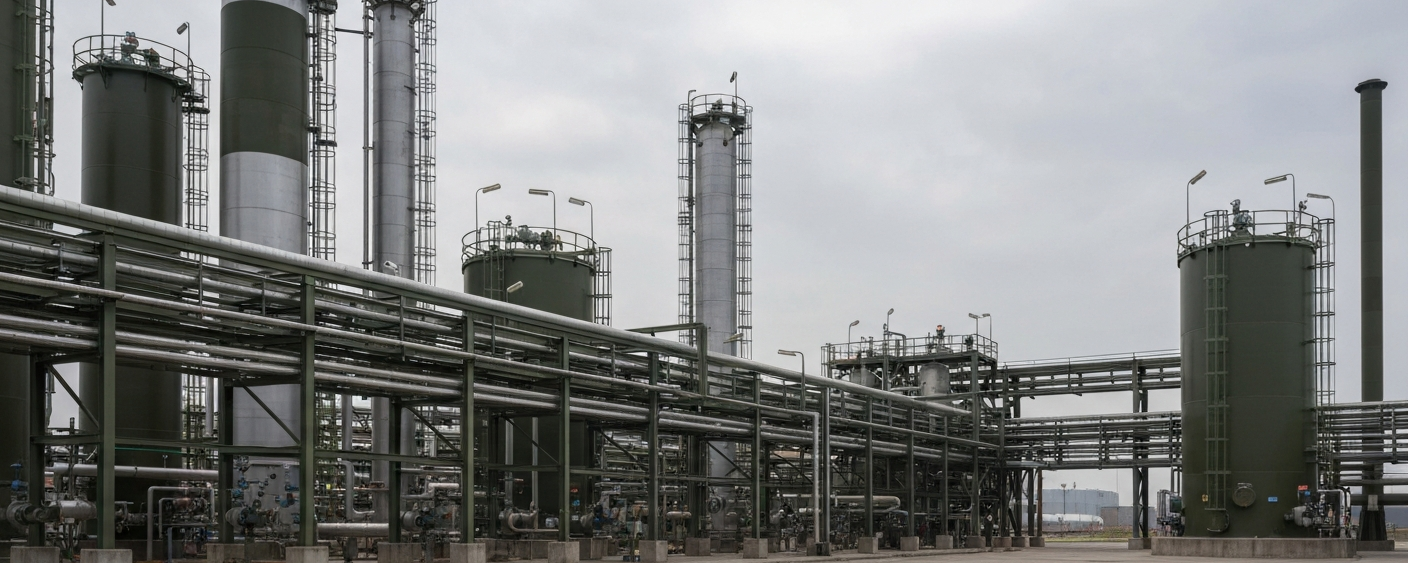
When supply chains become political: the new consolidation pressure
In critical minerals, project size used to be the primary valuation criterion. That has changed. What matters now is where a company sits along the value chain, and whether it controls more than a single step. A transaction of nearly two billion U.S. dollars, in which an American uranium processor buys an established European rare earths facility, is not a routine corporate purchase. It signals where the industry is heading.
Energy Fuels (NYSE: UUUU) has announced the acquisition of German specialty chemicals group VAC (Vacuumschmelze GmbH & Co. KG) at an equity value of approximately $1.9 billion. For the first time at this scale, a single western player is combining uranium processing with the production of rare earth-based permanent magnets. For investors active in small-cap mining, the mechanics behind this deal are worth understanding.
Why vertical integration matters right now
Export restrictions on rare earths and gallium from China, along with sanctions risks surrounding Russian uranium and growing procurement requirements from western defense programs, have created demand for domestic processing capacity that current supply cannot meet.
Vertical integration means a company controls not just one step, say uranium mining, but several consecutive stages, from raw material processing through to high-performance magnets for turbines and electric motors. The goal is reliable access to one’s own supply chain, not primarily margin expansion.
When automakers began acquiring or building their own battery cell factories, the valuation of lithium projects changed. What suddenly mattered was not just raw material quantity and metal grade, but whether a given project fit with an integrated producer. That same question is now being asked in the uranium-REE sector, and political pressure gives it considerably more weight than before.

How mega-deals reprice smaller stocks
What happens to explorer and processor stocks when a heavyweight announces a multi-billion-dollar acquisition? These transactions confirm that a strategic asset has a real market value, and that well-positioned juniors could fit into the consolidation story.
Several distinct mechanisms drive this.
Benchmark effect: A transaction of this size implicitly sets a valuation benchmark for supply chain positions. If an integrated producer pays a certain multiple per tonne of REE processing capacity, that figure becomes a reference point for smaller units, whether or not anyone formally publishes the comparison.
Strategic premium: Buyers pay for uniqueness. A junior explorer with a rare earths deposit in a western jurisdiction, or a small processing facility with existing permits, commands a value that exceeds pure project economics. A granted permit takes years to replicate, which makes it expensive to acquire.
Capital flow effect: Large announcements raise investor interest across the sector. Those who previously ignored the uranium-REE space start building positions, typically in larger names first, with money eventually moving into smaller stocks.
| Factor | Effect on junior valuation |
|---|---|
| Benchmark via mega-deal | Valuation framework for comparable assets |
| Strategic premium | Markup for western jurisdiction & permits |
| Capital flow effect | Increased sector inflows, large caps first, then juniors |
| Acquisition potential | Juniors as potential bolt-on targets |
What juniors can learn from this wave
Not every junior benefits automatically. Market reactions are selective: companies with a clearly defined asset, a processing technology that others cannot easily copy, a deposit with a high proportion of heavy rare earth elements (HREE), or an advanced project in a stable jurisdiction attract far more attention than those sitting on early-stage exploration data.
In pharmaceuticals, when a major acquires a biotech, smaller firms with similar pipeline assets often get repriced, because the buyer has publicly shown what it will pay for strategic capacity. The same logic applies in commodities. The difference is that political deadlines compress the timeline considerably.
For investors trying to make sense of this segment, a few questions are worth asking about any junior on a watchlist:
• Processing expertise: Does the company hold metallurgical know-how or downstream infrastructure, or only raw material reserves?
• Jurisdiction quality: Western countries with stable permitting processes command higher strategic premiums in an M&A context.
• Fit with integrated players: Does the project make sense as a bolt-on addition to a larger group building out a supply chain?
The structural backdrop
The Energy Fuels–VAC deal did not emerge in a vacuum. The U.S. Inflation Reduction Act and the EU’s Critical Raw Materials Act both create regulatory incentives that make vertical integration economically attractive, and Australia and Canada have introduced comparable programs. Governments on both sides of the Atlantic are, in practice, subsidizing the very consolidation this deal represents.
That context matters for small-cap investors. M&A premiums can evaporate quickly if a project fails to meet the technical or regulatory requirements of a potential acquirer, and plenty of juniors will not clear that bar. The assets that do, particularly those with western permits and downstream capability, are likely to draw further interest. Which ones specifically remains the harder question.
Key terms for beginners
- Vertical integration
- A strategy in which a company controls several consecutive stages of the value chain, for example raw material extraction, processing, and finished product manufacturing.
- Bolt-on acquisition
- The acquisition of a smaller company that can be integrated into a buyer’s existing structure without major restructuring.
- Strategic premium
- A markup above the fundamental market value of an asset, justified by its strategic uniqueness, such as a hard-to-replicate permit or a western jurisdiction.
- HREE (Heavy rare earth elements)
- Heavy rare earths such as dysprosium or terbium, required for high-performance magnets in electric motors and defense systems, and globally scarcer than light rare earth elements.
- Capital flow effect
- A dynamic in which positive signals in a sector, such as a major M&A transaction, direct institutional and private capital first into large-cap companies and subsequently into smaller stocks.
- Jurisdiction quality
- An assessment of a country based on the stability of its legal framework, permitting processes, and political risks for mining projects. High jurisdiction quality increases attractiveness as an acquisition target.
- Consolidation
- A process in which a fragmented industry merges through acquisitions into fewer, larger entities, typical in mature or strategically significant sectors.
⚠️ Important notice: This article is for informational and educational purposes only. It does not constitute investment advice, a recommendation, or a solicitation to buy or sell any security. Investments in small-cap exploration and mining companies carry a high risk, including the potential total loss of capital. Before making any investment decision, consult a registered financial advisor and conduct your own analysis. Boersen Post Team is not responsible for decisions taken based on the content published here.