Ambient Noise Tomography: How Sound Waves Help De-Risk Uranium Projects
June 26, 2026
Gold Price Correction: What Pullbacks Mean for Small-Cap Explorers
June 27, 2026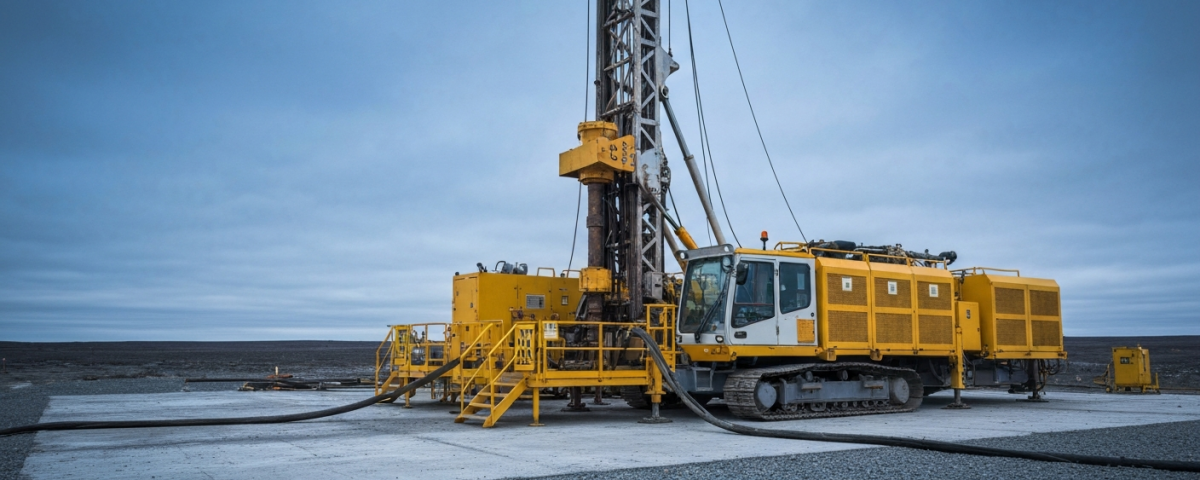
When familiar ground holds new surprises
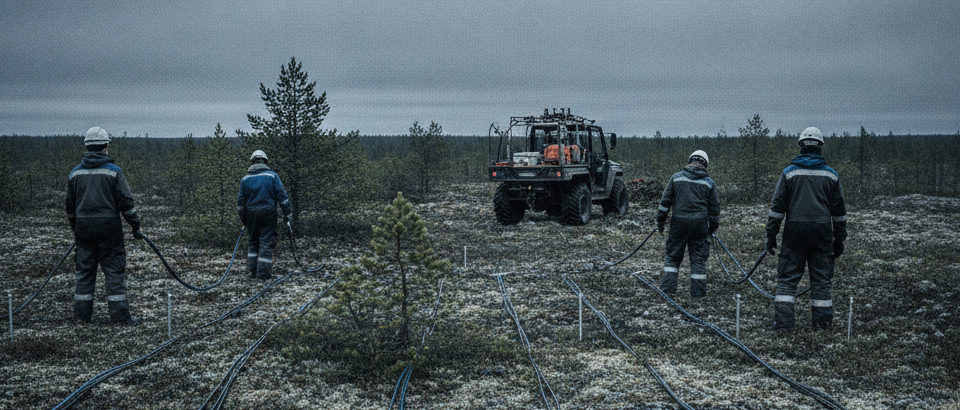
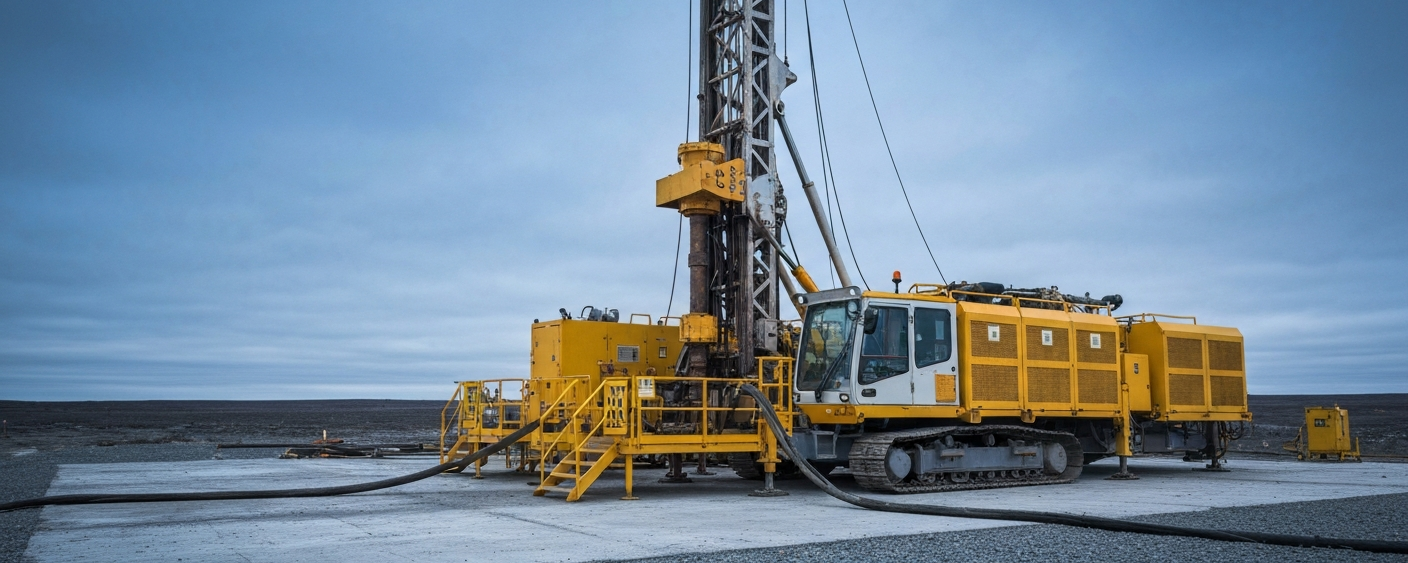
In the uranium sector, a certain type of announcement keeps appearing: a company has found new high-grade mineralization within an already-known project area. No new license, no blank spot on the map. Just a find in ground where resources are already on the books. That is what happened recently at the Patterson Lake South project in Canada’s Athabasca Basin, where Paladin Energy described a new high-grade uranium zone.
What separates such a find from a classic exploration success? And why do stock prices react differently to brownfield discoveries than to greenfield ones? The answer lies in the geological logic of the two approaches and in what each reveals about project risk.
Greenfield vs. brownfield: two worlds of uranium exploration
In the commodities industry, greenfield describes projects in areas where little or no systematic exploration has taken place. The upside potential is theoretically large, but so is the risk of finding anything at all. A company drilling in a completely uncharted corridor relies on geological hypotheses and geophysical anomalies with no prior drilling data to anchor them.
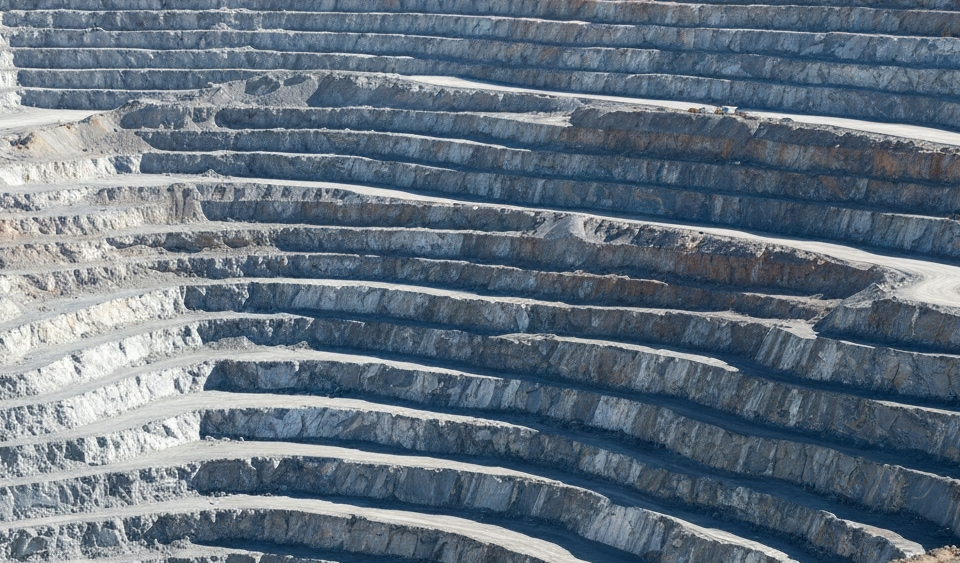
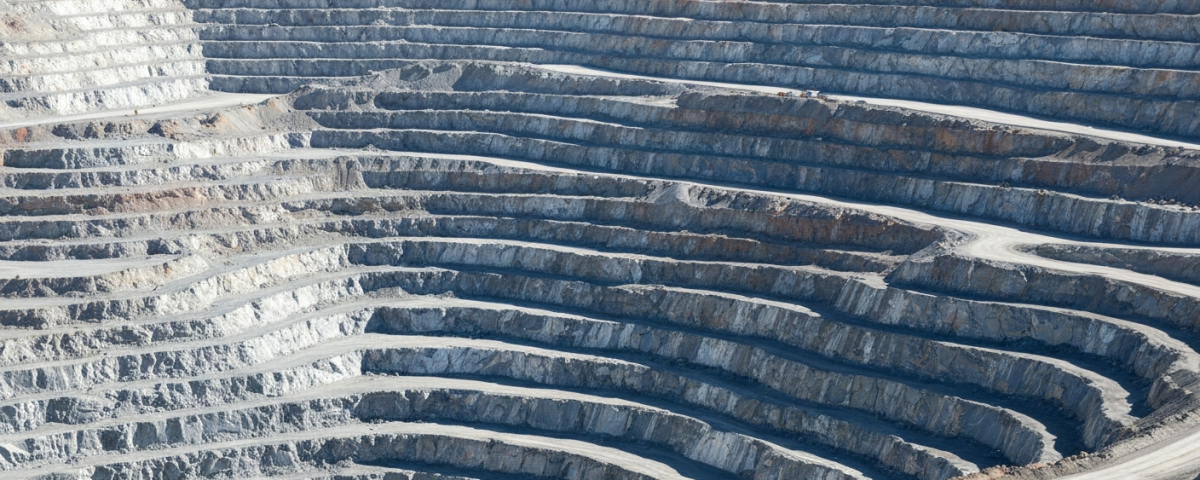
Brownfield projects sit in areas with proven mineralization. Earlier drilling programs have already defined resources, the geology is understood in its essential parts, and the subsurface is documented through technical reports. New drilling in such zones follows a more grounded thesis: ore is already known to be present. The question is where exactly and in what quantity.
The Athabasca Basin in Saskatchewan is one of the world’s premier uranium addresses. The high-grade deposits found there, with grades far above the global average, are geologically well described. Yet new zones keep appearing within known project boundaries that had not previously been drilled. The reason is structural: uranium bodies in the Athabasca are often discontinuous, steeply dipping, and distributed across fault zones in ways that make full coverage difficult in early-stage programs.

Why brownfield finds move markets differently
The value of an already-known project grows because the existing substance — permits, geological data, historical drill holes — is now spread across a larger or higher-grade resource base. No new property needs to be added; what was already known simply carries more weight than previously thought.
For small-cap companies, this matters on the cost side. A brownfield drilling campaign is typically less expensive than a greenfield one: the geological framework is already in place, and drill sites can be planned with greater precision. The capital deployed per geologically relevant data point is lower as a result.
There is also the question of how results can be read. When a greenfield hole returns high-grade values, it is initially unclear whether that is an isolated anomaly or the edge of a larger system. In a brownfield context, new results can be compared directly against existing data. Geologists can more quickly judge whether a new zone extends an existing ore body or is structurally independent.
| Characteristic | Greenfield Exploration | Brownfield Exploration |
|---|---|---|
| Prior geological knowledge | Little to none | Substantially available |
| Permit risk | Often unresolved | Generally secured |
| Drilling cost per data point | Higher | Tends to be lower |
| Interpretability of results | Complex, low context | Directly comparable to existing data |
| Resource growth potential | High, but uncertain | Stepwise, but better grounded |
Reading brownfield announcements carefully
Brownfield discoveries do not remove risk. Even within known project boundaries, new zones can prove too small or too deep to become economically viable, or they can present metallurgical complications that no one anticipated. The risk changes its form, but it does not disappear.
What does change is the nature of the uncertainty. With greenfield projects, the fundamental question is whether there is any ore at all. With brownfield projects, it becomes a question of how much more there is and under what conditions. A binary question becomes one of degree, which shifts the basis on which an investment gets assessed.
Anyone analyzing brownfield announcements should check whether the new zone lies along the strike of known ore bodies and how large it is relative to the existing resource base. The planned resource category (Inferred or Indicated) and the scope of follow-up drilling are also relevant for judging whether a find genuinely changes the project or amounts to a minor addition.
Resource growth as a process
Large deposits rarely appear in geological documentation through a single breakthrough. One drilling program follows another, geological models get refined, and known structures are traced to depth or along strike. That is how exploration normally works, even if press releases can make it sound tidier than it is.
This matters for uranium because the demand side — tied to the global expansion of nuclear energy and persistent supply shortages on the spot market — looks stable over the medium term. In that environment, projects with proven mineralization attract capital more readily. Not because brownfield is inherently superior to greenfield, but because the open questions are more specific and can be answered with less money.
Whether the next drilling program at Patterson Lake South confirms the new zone or complicates it will tell investors more than any press release can.
Key terms explained
- Brownfield exploration
- Exploration activity in areas where mineral resources have already been identified. Makes use of existing geological data, permits, and infrastructure.
- Greenfield exploration
- Investigation of geologically largely unknown areas without prior resource definition. Higher discovery risk, but potentially greater upside.
- NI 43-101
- Canadian regulatory standard for the disclosure of mineral resources and reserves. Prescribes how resources may be classified and reported.
- Inferred resource
- The lowest resource category under NI 43-101. Based on limited data; geological continuity is assumed but not demonstrated. High uncertainty.
- Indicated resource
- The intermediate resource category. Based on sufficient drill points to estimate grade and thickness with reasonable confidence.
- Assay / grade
- Laboratory analysis of a rock sample to determine metal content. In the uranium sector, typically expressed in percent U₃O₈ (triuranium octoxide).
- Strike
- The horizontal orientation of a geological structure or ore body. Critical for planning additional drill holes along known mineralization zones.
- Resource vs. reserve
- Resources are geologically estimated quantities; reserves are the economically extractable portion following feasibility studies. Resources do not automatically become reserves.
⚠️ Important notice: This article is for informational and educational purposes only. It does not constitute investment advice, a recommendation, or a solicitation to buy or sell any security. Investments in small-cap exploration and mining companies carry a high risk, including the potential total loss of capital. Before making any investment decision, consult a registered financial advisor and conduct your own analysis. Boersen Post Team is not responsible for decisions taken based on the content published here.