Magnetic Survey Before the Drill Rig: Geophysics in Copper Exploration
July 26, 2026
From Explorer to Producer: The Critical Transition for Silver Juniors
July 27, 2026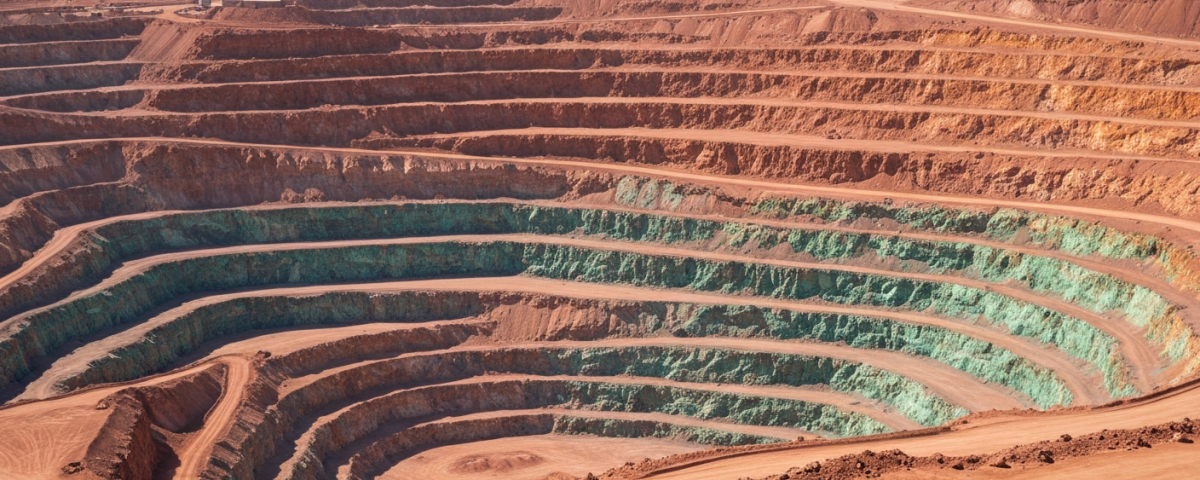

When world-class geology meets difficult operating conditions
Few mining regions anywhere enjoy as solid a reputation as Chile. The country holds roughly one quarter of global copper reserves and has built up mature infrastructure over decades: smelters, export terminals, a specialized supplier market. For junior explorers, that sounds compelling — well-understood geology, experienced local service providers, and international investors who reflexively associate “Chile” with copper.
But an established mining region is not a free pass. Anyone who focuses solely on the geological address risks missing the fact that Chile’s regulatory and water-management requirements, alongside the expectations of local communities, rank among the most demanding in Latin America. These factors shape a project’s timeline and risk profile at least as decisively as the grades in the drill core.
Copper demand, royalty reform, and the financing gap
The electrification of transport and energy infrastructure is pushing copper demand higher, and structurally so. An electric vehicle requires four to five times as much copper as a combustion-engine car, depending on the model, and grid expansion for renewable energy adds further pressure on supply. That makes exploration projects in established copper regions attractive to capital market participants, because future production sources are genuinely scarce.
At the same time, Chile has been engaged in an intense political debate since 2021 about the role of the state in mining. Higher royalties and greater state participation were on the table; corresponding legislation came into force in 2023. The sector continues to operate, but regulatory risk is real and affects concession terms and the tax burden. Junior explorers must factor this into their calculations.
The capital market context adds another layer. Junior explorers are typically listed on the TSX Venture Exchange or the ASX, raise financing through private placements, and are therefore directly dependent on institutional investors’ appetite for risk. When interest rates rise or copper pulls back, the financing base dries up far faster than it does for established producers. Sound geology helps — but it does not protect against that pressure.
Water rights, consultations, and permits: the delays that don’t make the press releases
The actual exploration drilling is often the fastest part of the process. What holds projects back in Chile receives far less attention than drill results do, and that asymmetry costs investors.
Water rights (Derechos de Agua). Chile operates one of the most privatized water systems in the world. Mining operations require substantial volumes of water for ore processing and dust suppression — and precisely where much of the copper mineralization occurs, in the arid north, water is scarce. Local agriculture and indigenous communities compete for the same resource, allocation processes can drag on for years, and the issue has become increasingly politicized. A project without secured water rights is not a developable project.
Indigenous consultations (Consulta Indígena). Since Chile ratified ILO Convention 169, mining companies must consult affected indigenous communities through a structured process before permits are granted. This is not a public information evening. It is a legally binding dialogue that can take months and whose outcome is not predetermined. If the consultation fails or legal objections arise, project development can be delayed by years.
Environmental impact assessments (DGA/SEA process). Chile’s environmental permitting system (Sistema de Evaluación de Impacto Ambiental, SEIA) is demanding. Projects above a certain size must undergo a full review, the regulatory authority can require extensive revisions, and processing times typically run from 18 months to several years.
In some African or Latin American frontier jurisdictions, permits can be obtained more quickly, at the cost of weaker legal certainty. Chile offers greater legal certainty, but no less complexity. Every valuation model should reflect that.
Evaluating junior explorers in Chile
For investors monitoring Chilean copper or silver-copper projects, specific questions must be answered before any assessment carries much weight.
| Evaluation dimension | What to look for |
|---|---|
| Water rights | Are they already secured, or still under review? |
| Community consultation | Has the process been initiated? Are there any objections? |
| Environmental permit | At what stage is the SEIA process? |
| Infrastructure access | Road, power, proximity to existing facilities? |
| Capital base | How many months of exploration are covered by current cash? |
A junior explorer reporting a promising copper-silver anomaly in northern Chile will usually not yet have answered these questions. That is not a criticism — it is the normal state of early-stage exploration. The problem is that geological results get priced in quickly while regulatory timelines get underestimated. That gap produces valuation errors in both directions.
Geology and context belong in the same analysis
Chile remains one of the world’s most important copper jurisdictions. Demand drivers — electrification chief among them, compounded by a foreseeable supply deficit and Western supply chain policy — will keep interest in Chilean projects high over the next several years.
For a junior explorer working up a new project here, a convincing geological case gets you in the door. After that, the team must show it can actually manage the regulatory and social process, not merely describe it in a press release. Investors who follow early-stage projects in Chile have no choice but to assess both sides.
What separates Chilean projects from genuine frontier bets is not the absence of risk. It is that the risks here are known and, for a competent team, addressable. That is worth something — but it is not a discount on the work required.
Key terms for copper exploration in Chile
- Derechos de Agua
- Water rights under the Chilean system. Because water is privatized and scarce, secured water rights are a prerequisite for any mining permit, particularly in the arid regions of northern Chile.
- Consulta Indígena
- A legally binding consultation process with indigenous communities, based on ILO Convention 169. It must be completed before mining permits are granted and can significantly extend a project’s timeline.
- SEIA (Sistema de Evaluación de Impacto Ambiental)
- Chile’s environmental impact assessment system. Projects above certain thresholds must complete this multi-stage process before a construction permit is issued.
- Junior explorer
- An early-stage mining company with no production of its own that raises capital through equity markets and deploys it into exploration. Typically listed on the TSX-V or ASX.
- Porphyry copper system
- A geological deposit type characteristic of Chile. Large, low-grade copper deposits hosted in an altered igneous body, often accompanied by silver and molybdenum as by-products.
- Social license to operate
- The acceptance of a mining project by local communities. Informal in legal terms, but economically consequential: legally obtained permits can become worthless if community opposition blocks access to site.
- Private placement
- A capital raise by a publicly listed junior explorer through the direct sale of new shares to selected investors — the most common financing method for exploration programs.
⚠️ Important notice: This article is for informational and educational purposes only. It does not constitute investment advice, a recommendation, or a solicitation to buy or sell any security. Investments in small-cap exploration and mining companies carry a high risk, including the potential total loss of capital. Before making any investment decision, consult a registered financial advisor and conduct your own analysis. Boersen Post Team is not responsible for decisions taken based on the content published here.