Drill Permits for Uranium Juniors: What a Permit Really Means
July 29, 2026
Why Gold Stocks Lag Behind Metal Price Rallies
July 29, 2026
When the big bang doesn’t come — and why that’s often deliberate
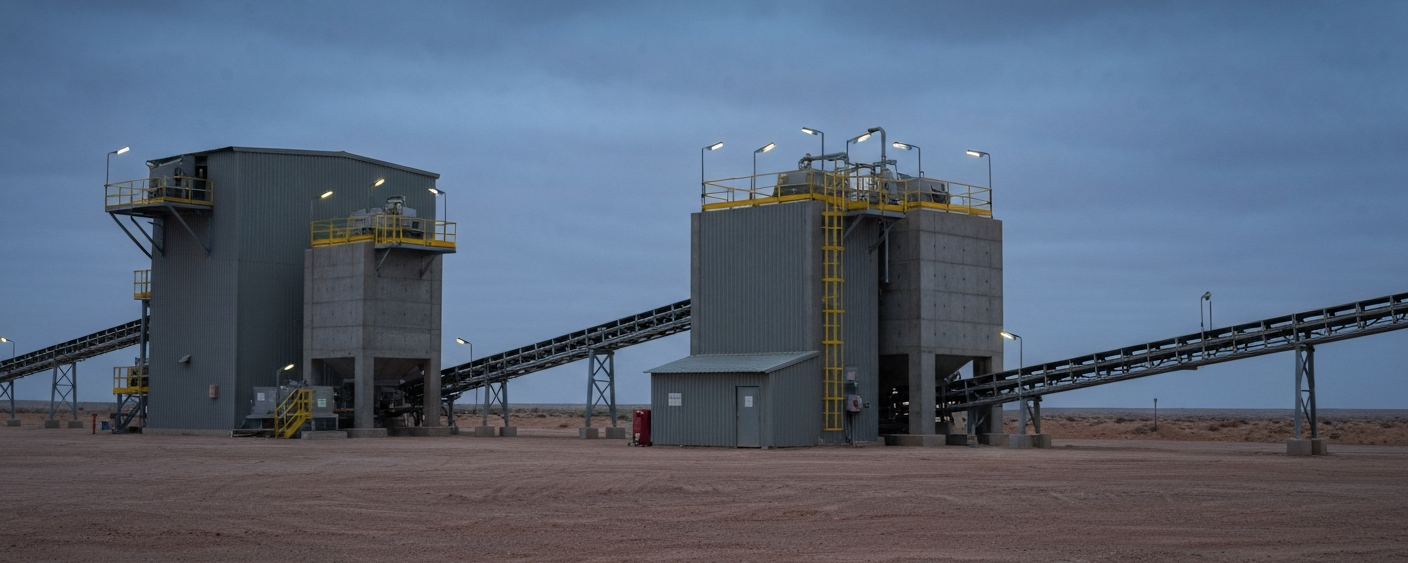
In commodity development, a “Final Investment Decision” (FID) sounds like the single defining moment: the company flips the switch, and a project becomes a mine. That clean picture is giving way to something messier but more honest — the so-called Staged Development Strategy. This model has become common among uranium developers in the pre-production phase. The reason is not a lack of ambition. Deploying capital in tranches limits downside and keeps options open when market conditions shift, and in uranium, they shift often.
Namibia offers a useful example. The country is one of Africa’s established uranium jurisdictions, with stable mining legislation and existing export infrastructure. Several development projects there are well advanced, even though no production start has been set. For those new to uranium small caps, it is worth examining how companies actually operate in this phase, and why the timing is usually more calculated than it first appears.
Spot prices, offtake agreements, and the capital problem
The financing reality uranium developers face is fairly unforgiving. Unlike industrial companies with ongoing revenue, mining project developers spend years generating nothing. Capital flows exclusively outward — toward drilling, feasibility work, permits. The only moment money comes back in is at production.
The problem: uranium prices move sharply. The spot price for U₃O₈ — yellowcake, the end product of uranium processing — has swung considerably over recent years. A company that builds a mine for $500 million today and watches prices fall tomorrow ends up holding a project that may not be economical for years. On top of that, long-term supply contracts with energy utilities, known as offtake agreements, are the actual foundation for any bank or institutional financing. Without them, large-scale debt is nearly impossible to secure.
The staging approach addresses this directly. Rather than mobilizing all capital at once and betting on a single market window, a company divides development into clearly defined phases. Each phase has its own milestones, its own capital requirements, and its own decision point. At each of those points, management asks: Are market conditions favorable? Are offtake discussions far enough along? Is the infrastructure actually ready?

Why smaller development companies use this model
Junior companies typically have limited balance sheet strength. When capital expenditure is released in tranches, the full project cost never needs to be available at once. That reduces dilution pressure on shareholders and makes the company more predictable for lenders.
There is also the question of price tolerance. A company that structures its first construction phase to break even at $60 per pound of U₃O₈ has considerably more room to maneuver than one that needs $75 from day one. If prices rise, it moves into the next phase. If prices stay moderate, the smaller production base keeps running. That flexibility disappears once the entire capex is committed upfront.
Each completed milestone also affects project valuation directly. Finished engineering or an approved environmental permit reduces perceived risk, and markets respond to that. Permitting milestones frequently trigger positive share price moves at development companies long before the first tonne is produced.
| Development phase | Typical milestones | Capital risk |
|---|---|---|
| Preliminary Economic Assessment (PEA) | Resource estimate, initial economics | Low |
| Feasibility Study (FS) | Detailed engineering, capex estimate | Medium |
| Phase 1 Construction | Base infrastructure, pilot capacity | Elevated |
| Phase 2 Expansion | Scale-up to target capacity | High — but supported by Phase 1 cash flow |
What investors should watch in staging models
For investors in uranium small caps, the staging model brings specific opportunities alongside specific risks, and the gap between the two usually comes down to how much the published milestones actually mean.
A common mistake: once a company reaches one milestone, investors assume the next follows automatically. It does not. Each phase requires a fresh capital decision, new financing rounds, and often renewed discussions with regulators or partners. Technically sound completed engineering counts for little if uranium prices collapse in the meantime, or if a geopolitical event reshuffles supply chains overnight.
What actually matters is how ready a project is to break ground. Have key equipment suppliers been contracted? Is a detailed schedule in place? Have environmental and social impact assessments been completed and approved? The more of these boxes are genuinely checked, the more concrete the path to the FID becomes.
What the staging model says about the sector
Earlier uranium price cycles saw projects scaled up too fast. When prices fell, those expansions became a serious burden, and the write-downs that followed left their mark on how capital gets allocated now. Institutional investors who sat through that period tend to look harder before committing larger sums.
A company that clearly communicates which milestones remain before the FID, and how each phase reduces overall project risk, is at least operating with its cards on the table. Mining projects still fail for reasons entirely beyond management’s control, and none of this is a formula for success. But when hype and disappointment run as close together as they do in this sector, knowing whether a company is managing a plan or simply riding sentiment is useful information.
Key terms explained
- Staged Development Strategy
- An approach in which a mining project is divided into sequential phases, each with separate capital and milestone decisions, to manage risk and preserve flexibility as market conditions change.
- Final Investment Decision (FID)
- The formal decision by a company to release full capital for mine construction. It marks the transition from development to production and typically follows feasibility studies, permitting, and offtake agreements.
- U₃O₈ (Triuranium Octoxide / Yellowcake)
- The concentrated uranium oxide produced after processing uranium ore. It is the standard commercial end product and is traded on the spot market in U.S. dollars per pound.
- Offtake Agreement
- A long-term supply contract between a mining company and a buyer, typically an energy utility, that fixes a defined quantity of uranium at an agreed price over multiple years. Most project financing arrangements require one.
- Capex (Capital Expenditure)
- Spending on physical infrastructure, processing facilities, mining equipment, and site access. In mining, it is usually the largest single cost item and the central risk element in any development budget.
- Construction readiness
- How technically, regulatorily, and logistically prepared a project is to begin building. Completed engineering, regulatory approvals, and contracted supply chains all feed into this assessment.
- De-risking
- The process by which a company progressively reduces the technical, regulatory, and financial uncertainties around a project. Each completed milestone can increase the perceived value of what remains.
⚠️ Important notice: This article is for informational and educational purposes only. It does not constitute investment advice, a recommendation, or a solicitation to buy or sell any security. Investments in small-cap exploration and mining companies carry a high risk, including the potential total loss of capital. Before making any investment decision, consult a registered financial advisor and conduct your own analysis. Boersen Post Team is not responsible for decisions taken based on the content published here.