Saskatchewan 2026: What Phase II Drilling Reveals About Uranium Projects
June 8, 2026
Capital Rotation in a Gold Bull Market: How the Cycle Works
June 8, 2026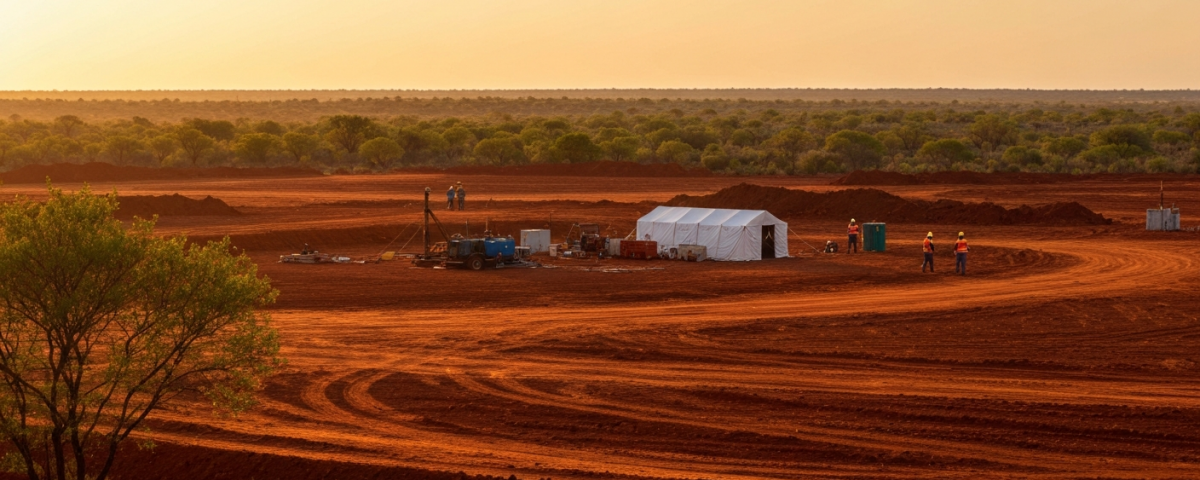
When tax debates threaten mines that haven’t been built yet
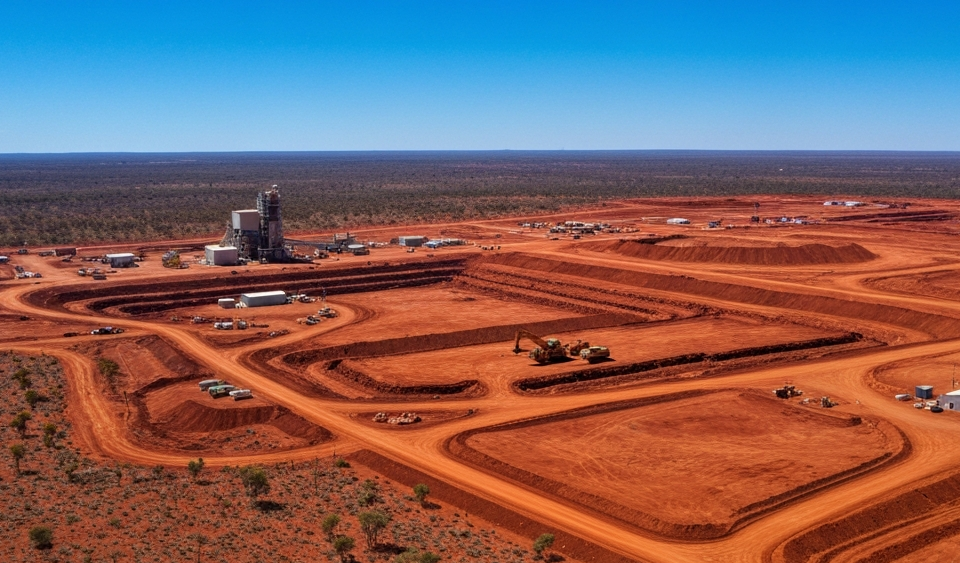
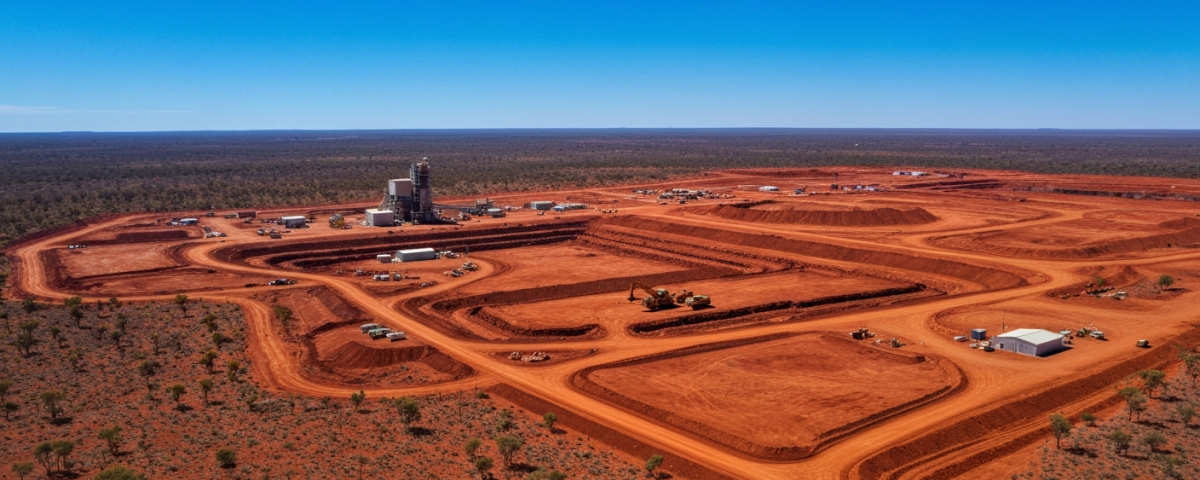
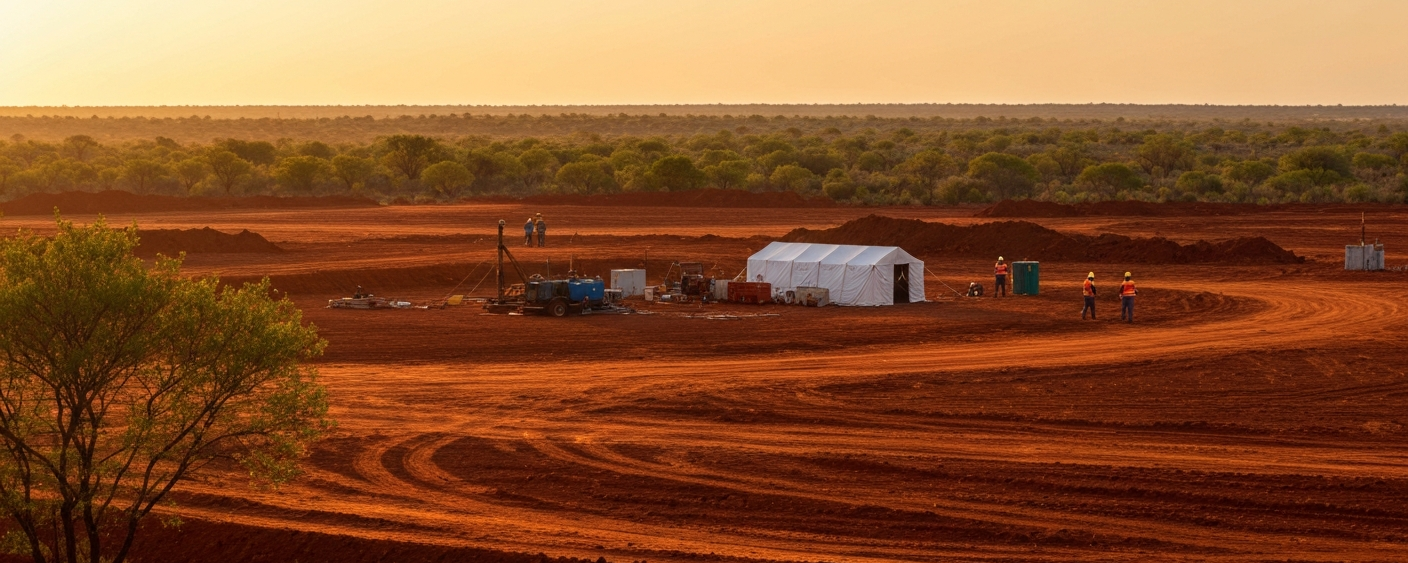
It doesn’t take a falling metal price or a poor drilling result to drive capital out of the junior mining sector. Sometimes a single announcement from the treasury is enough. Australia is experiencing this right now: a proposed reform of the Capital Gains Tax (CGT) is causing considerable unease across the small-cap mining industry.
For newcomers, this may sound abstract. Why would a tax change affect exploration projects in the Outback? The answer lies in how these companies raise money and how investors respond to changes in expected returns.
The funding model that makes junior miners vulnerable
Junior miners differ fundamentally from established mining conglomerates. They have no ongoing revenue from the sale of ores or metals. Instead, they finance themselves almost exclusively through the issuance of new shares to private investors, institutional funds, and retail buyers. On the Australian Securities Exchange (ASX), this mechanism is especially pronounced: thousands of exploration and development companies, many with a market capitalization below AUD 50 million, depend on a constant inflow of fresh equity capital.
This capital inflow depends directly on how attractive investors consider the after-tax return to be. If an investor expects to hand over a large portion of any profit to the tax authorities upon selling shares, their incentive to take on the risk in the first place is diminished.
Consider a typical retail investor in Sydney who puts AUD 10,000 into a lithium explorer listed on the ASX. After two years, the company discovers a promising deposit, the share price triples, and the investor sells at a profit of AUD 20,000. Under the existing system, they benefit from a CGT discount that reduces the taxable amount. If that discount is eliminated or reduced, the net return falls, and with it the willingness to take on such high-risk positions at all.

How tax changes shift where investors put their money
Capital markets often react to changes in net returns more quickly and more sensitively than they do to fundamental company data. This pattern has appeared repeatedly in mining history. In Canada during the 1990s, when tax incentives for so-called Flow-Through Shares were temporarily weakened, junior miners on the TSX recorded a noticeable decline in new share issuances. The reintroduction of those incentives quickly revived the market. Australia saw a similar effect in the early 2010s when the Resource Super Profits Tax was debated. The uncertainty during the debate phase alone caused exploration investment to collapse, even before the policy was formally implemented.
A simple analogy captures the mechanism. Imagine playing a game of chance where, if you win, you get to keep 70 percent of the payout. Now the rules change: you keep only 50 percent. Most people would reduce their stake or avoid the game entirely. Junior mining investments follow exactly the same logic.
For battery metals junior miners specializing in lithium, cobalt, or nickel, this sensitivity is particularly acute. These projects are often in early stages, require multiple rounds of capital, and have a long road ahead before reaching production. Every deterioration in the tax environment effectively extends the period during which investors must commit capital without any return.
| Factor | Impact of a CGT increase |
|---|---|
| After-tax net return | Decreases, investment incentive diminishes |
| Risk appetite among retail investors | Shifts toward less risky assets |
| Capital availability for new share issuances | Decreases, especially for pre-revenue companies |
| Valuation multiples | May come under pressure |
| Overall exploration activity | Declines as uncertainty persists |
The often-ignored risk: regulatory uncertainty
Investors exploring junior miners typically think first about geological risk (will anything actually be found?), operational risk (can it be mined?), and market risk (what is the metal worth?). Regulatory risk—the risk that the legal or tax environment changes unfavorably—rarely features prominently in beginner guides. Yet it can be just as severe.
The CGT debate in Australia illustrates this point. It is not only about the actual tax burden that may eventually be introduced. It is also about the uncertainty itself. As long as it remains unclear which rules will apply, many institutional investors hold back from new commitments. This is rational: anyone asked to fund a project over five to ten years wants to be able to at least roughly estimate the tax environment at the point of exit.
This effect works asymmetrically. Positive regulatory surprises (for example, new tax credits for critical minerals) energize the sector. Negative announcements or ambiguous signals dampen it disproportionately, because risk capital always has alternatives. Investors can move into more stable sectors or other jurisdictions.
What this means for small-cap investors
The Australian CGT discussion is not a uniquely Australian problem. It is a case study in how exploration and small-cap mining investments respond to anything that affects expected net returns, whether that is the metal price, drilling results, or tax policy.
For investors, this does not yield a simple course of action, but it does offer an important insight: the analysis of a junior miner should never stop at the company itself. The regulatory framework of the jurisdiction in which the company is listed and operates is an independent valuation factor. Countries that deliberately preserve or expand tax incentives for risk capital flowing into the resources sector attract more capital over time and thereby create better conditions for exploration projects.
Capital markets respond to political signals far more quickly than policymakers often anticipate. Understanding how these reactions work does not allow investors to predict returns, but it does help them assess risks more realistically.
Key terms: taxes and capital in the mining market
- Capital Gains Tax (CGT)
- A tax on profits from the sale of assets such as shares. In Australia, a historical discount applies to positions held long-term; a potential reduction of this discount is at the center of the current debate.
- Risk capital (Venture capital)
- Capital invested in early-stage, not yet profitable companies. Junior miners are typical recipients of risk capital; investors accept high loss risk in exchange for the potential for above-average gains.
- Regulatory risk
- The risk that laws or regulations change to the detriment of an investment, for example through tax increases, new environmental requirements, or amended permitting processes.
- Pre-revenue company
- A company that has not yet generated any revenue. For junior miners, this typically means no producing mine, ongoing exploration expenditures, and full dependence on equity financing.
- Flow-through shares
- A financing instrument common in Canada whereby a company’s exploration expenditures are passed through as tax deductions to investors. It serves as an incentive to channel risk capital into resource exploration.
- Jurisdiction risk
- Risks arising from the political, legal, or tax environment of a specific country. Often underestimated in junior mining, but critical to the long-term assessment of a project.
- After-tax net return
- The actual return on an investment after all taxes have been deducted. For high-risk investments, it is the decisive incentive factor for investors, not the gross return.
⚠️ Important notice: This article is for informational and educational purposes only. It does not constitute investment advice, a recommendation, or a solicitation to buy or sell any security. Investments in small-cap exploration and mining companies carry a high risk, including the potential total loss of capital. Before making any investment decision, consult a registered financial advisor and conduct your own analysis. Boersen Post Team is not responsible for decisions taken based on the content published here.