Bankable Feasibility Study: What BFS Metrics Reveal in Rare Earths Projects
June 30, 2026
Copper in Chile: What High-Grade Drill Hits Mean for Junior Miners
June 30, 2026
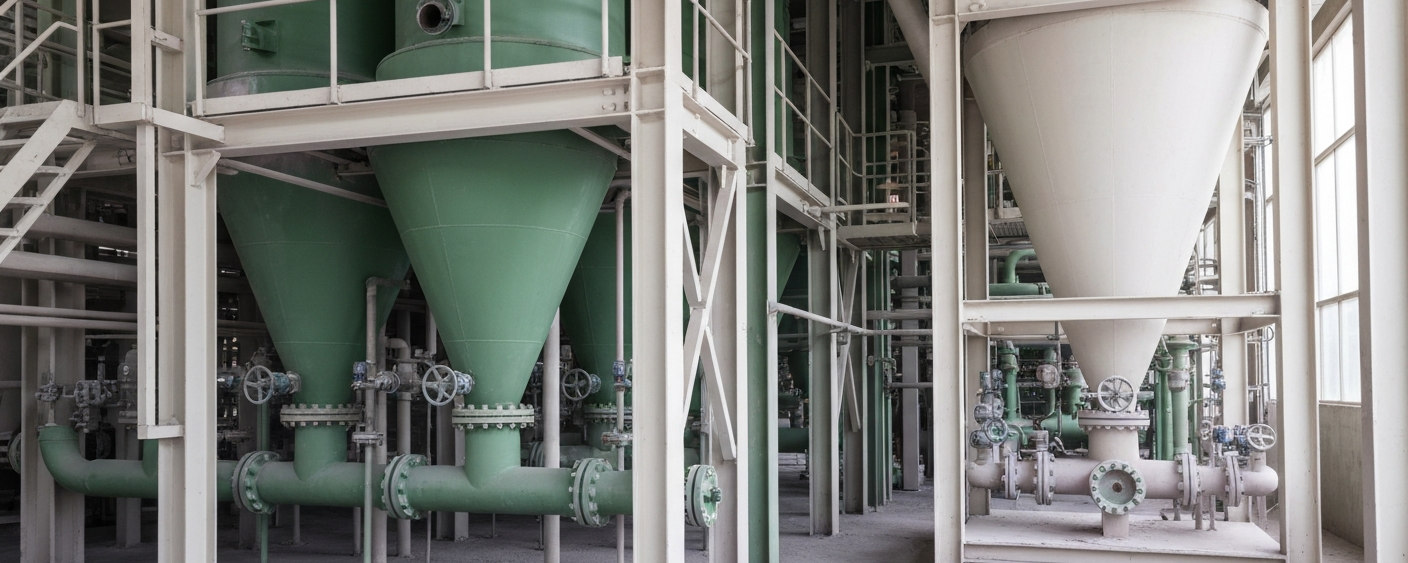
When by-products take center stage
In the commodities world, some metals are never mined as a primary target — yet they end up inside nearly every modern device. Germanium and gallium are two such metals: recovered as by-products during zinc or aluminum smelting, produced in small quantities, and without substitutes in semiconductors, fiber-optic cables, and solar cells. That small-cap explorers are now billing these elements as standalone value drivers has a concrete cause: the geopolitical reality shifted sharply after 2023.
Two factors explain why attention has turned to these metals now. Technological demand has grown steadily for years. Supply then tightened after China introduced export licensing requirements for both metals in the summer of 2023. For investors new to commodities, this illustrates how a single political decision can move exploration companies onto the radar of capital providers almost overnight.
China’s export policy as a driver of Western exploration projects
China produces the overwhelming majority of the world’s germanium and gallium. When Beijing imposed export licensing requirements for both metals in mid-2023, buyers outside China faced new administrative hurdles. The EU responded by accelerating its Critical Raw Materials Act, and the United States expanded its critical minerals programs under the Department of Energy and Defense procurement frameworks.
The mechanism is worth understanding: government intervention on the supply side can quickly raise the appeal of exploration projects in politically stable jurisdictions such as the U.S. or Canada, even when those projects are technically far from production. The rare earths wave that followed China’s 2010 export curbs ran the same course. Numerous projects outside China moved into the spotlight; only a fraction ever reached production. That precedent is worth keeping in mind, without reading too much into it.
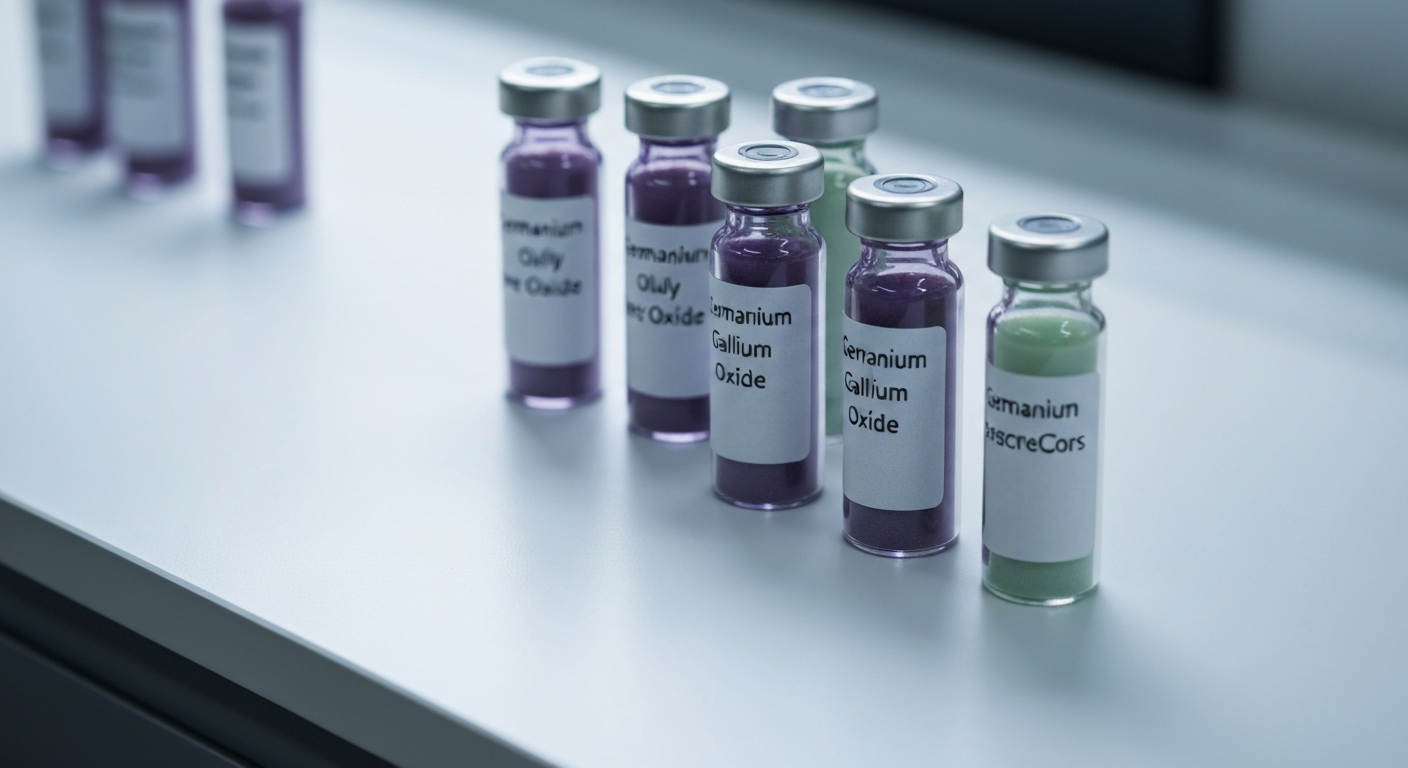
The metallurgical challenge: separating what grows together
Germanium and gallium rarely occur in pure form in nature. They are dispersed throughout the ore, often at concentrations of just a few grams or even milligrams per tonne. The question for any explorer citing these elements as a value driver is therefore not only “how much is in the rock?” but also “can it actually be extracted at a viable cost?”
This is where metallurgical recovery becomes the central evaluation criterion. A bulk sample, taken at a scale large enough to allow representative processing tests, is designed to answer exactly that. Assay data reveal what grades are present in the material. Whether those grades can be recovered economically depends on the ore’s mineral chemistry, the processing technology applied, and energy costs at the site — none of which assay numbers alone can settle.
A useful parallel from zinc production: germanium occurs there as an impurity that must be laboriously isolated from the process stream. Any operation deliberately targeting it must orient its entire process flow around that goal, which means higher capital costs. Small-cap explorers that have not yet demonstrated this capability are at an early project stage, with correspondingly high technical risk.
| Criterion | Significance for the investor |
|---|---|
| Assay data (bulk sample) | Shows element grades in the ore — not yet proof of recoverability |
| Metallurgical recovery | The share of the metal actually recovered after processing |
| Offtake market / offtake agreement | Who buys the product? Long-term contracts reduce market risk |
| Jurisdiction | Politically stable regions (e.g., USA) improve financing prospects |
| Project stage | Early stages carry higher risk, but also higher rerating potential |
What by-product metal strategies mean for small-cap markets
Gold and copper trade on deep, liquid markets with established price benchmarks like the London Metal Exchange. The markets for germanium and gallium are nothing like that: narrow, opaque, largely non-standardized, with prices negotiated bilaterally between buyer and seller. That makes valuing projects based on these metals considerably harder than for conventional base metals.
There is also the offtake problem. An explorer seeking to produce germanium or gallium must engage potential buyers in the semiconductor or defense industries, ideally through letters of intent or concrete offtake agreements. Without those, the investor carries the full sales-side risk.
Positioning as a Western primary source for critical metals can still drive share price moves under the right conditions. The rare earths wave of 2010 to 2012 shows how this typically plays out, though. Valuation surges built on enthusiasm gave way to corrections once metallurgical hurdles or weak offtake markets became visible. In sectors like this, technical scrutiny is simply a precondition for not losing money.
Critical metals in a portfolio context
Germanium and gallium are not a mass market. Investors starting to follow small-cap commodities stocks should get into the habit of asking a few direct questions: Where does the project actually stand in its development? What technical evidence exists for metallurgical separability? Are there offtake partners or government support already in place?
Both metals appear on the critical minerals lists of the EU and the United States, and that designation reflects a genuine supply vulnerability. Whether individual explorers can translate that into commercial success is not decided in Brussels or Washington, though. It gets decided in the laboratory and in financing conversations. A working mining project needs both. A rising share price sometimes needs only a good story told at the right moment.
Key terms in critical by-product metals
- Critical minerals (critical raw materials)
- Metals or minerals classified as both economically significant and subject to supply risk. The EU and the United States maintain official lists. Germanium and gallium appear on both.
- Bulk sample
- A sample taken at a larger scale (tonnes rather than kilograms) to allow representative processing tests. Assay data from bulk samples are more robust than those from individual grab samples.
- Metallurgical recovery
- The percentage of a metal actually recovered after processing. A high recovery rate (e.g., 85%) is a positive project signal; a low rate pushes up production costs.
- By-product metal
- A metal recovered during the extraction of a primary metal rather than mined as a target in its own right. Germanium, for example, is generated during zinc smelting.
- Offtake agreement
- A purchase contract in which a buyer (e.g., an industrial company) commits to purchasing a specified quantity of the produced metal under agreed terms. Reduces sales-side risk for the producer.
- Export control
- A government measure tying the export of certain goods or raw materials to licensing requirements. China introduced such restrictions on germanium and gallium in 2023, prompting supply chain initiatives in the EU and the United States.
- Primary source
- The direct extraction of a metal through mining, as opposed to recycling (a secondary source). Western primary sources for germanium and gallium are currently rare.
⚠️ Important notice: This article is for informational and educational purposes only. It does not constitute investment advice, a recommendation, or a solicitation to buy or sell any security. Investments in small-cap exploration and mining companies carry a high risk, including the potential total loss of capital. Before making any investment decision, consult a registered financial advisor and conduct your own analysis. Boersen Post Team is not responsible for decisions taken based on the content published here.