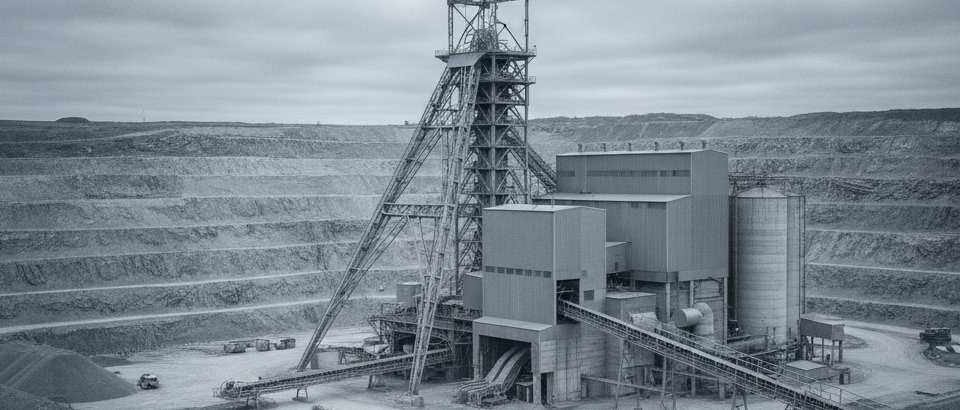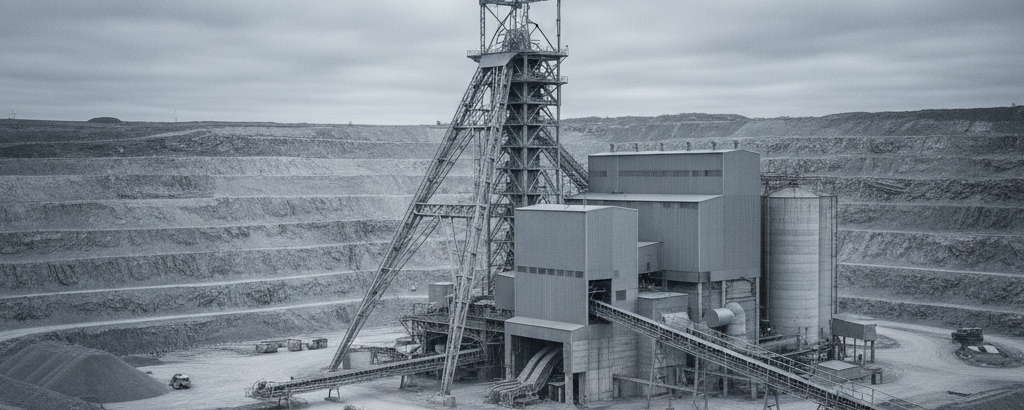
Drone Magnetometry: How Geophysics Is Reshaping Gold Exploration
July 5, 2026
Permit Risk in Copper Juniors: What Permits Really Move
July 6, 2026

When 19.9% means more than money
Capital is necessary for junior miners, but it is not sufficient. Whoever provides financing has a voice, and whoever has a voice brings credibility. That is why a C$140 million stake by a Peruvian mining group in a Canadian copper junior is worth examining closely. The investor is acquiring approximately 19.9% of the outstanding shares, a threshold the industry reads as a strategic interest rather than a passive bet.
One reasonable question follows immediately: why would an experienced mining group put so much money into a company that does not yet operate a mine? The answer has to do with commodity cycle timing and the financing gap that opens up between exploration and production.
The financing gap in copper
Junior miners pass through several development stages: exploration, resource definition, economic assessment studies (PEA, PFS, BFS), and finally mine construction. Each stage costs money, and the most expensive steps come last. The industry has coined a term for this stretch: the “Valley of Death”, the segment between proving an economic resource and generating the first cash flow from production.
In copper, that gap runs deep. Projects require substantial infrastructure, shafts, processing plants, and power lines, and capital expenditures often run into the hundreds of millions before a single tonne of ore is processed. Many junior companies cannot raise those sums on the open market without massively diluting their shareholders.
This is where an anchor investment changes the picture. An established mining company with an operating mine and active cash flow brings not only capital but also operational expertise and access to financing partners. When a group of that size commits a nine-figure sum, it has already run the project through its own due diligence. That tends to shift how other potential investors read the opportunity, though it is not a substitute for their own analysis.

The 19.9% threshold is not accidental
The chosen stake size reflects a considered position. In mining finance, different ownership levels carry different meanings:
| Ownership level | Market interpretation | Typical implication |
|---|---|---|
| 5–10% | Financial investment | Purely capital-oriented, no strategic influence |
| 10–19.9% | Strategic anchor stake | Signals confidence, often paired with board seat or information rights |
| ≥ 20% | Associated company | Consolidation requirements, stronger governance involvement |
A stake of just under 20% means strategic interest without full integration. The investor wants influence but not an acquisition yet. It secures an option on the future without triggering balance sheet obligations. This kind of positioning appears frequently across the commodities industry, and the 19.9% ceiling here is almost certainly intentional.
For investors watching from outside, the practical effect is this: a well-resourced industry player has put its own money behind the project. That carries more weight than anything the junior company could say about itself in a press release.
What to check before drawing conclusions
A large strategic stake does not guarantee project success, and investors in small caps should look past the headline number when deals like this become public.
Dilution deserves attention first. A capital raise via new share issuance increases the total number of outstanding shares, reducing each existing shareholder’s percentage. How significant that impact is depends on the issue price relative to where the stock was trading beforehand.
Lock-up clauses matter too. Strategic investors are often contractually prevented from selling their shares for a defined period, which gives other market participants some degree of predictability about near-term supply.
Strategic stakes frequently include so-called participation rights, a contractual right for the investor to maintain their ownership percentage in future financing rounds without being diluted. Whether such rights exist is found in the transaction documents, not the press release.
Finally, the project stage matters. Is the investment arriving at an early exploration phase or shortly before a feasibility study? The more advanced the project, the clearer the risk profile. A prominent investor reduces certain junior-specific risks through its external review, but whether a functioning mine ultimately results is a separate question that the stake alone cannot answer.
- Strategic investment
- A stake taken by an investor who brings more than purely financial interest, contributing operational knowledge, networks, or strategic synergies. Typically in the range of 10–20% of a company’s shares.
- Anchor investor
- The first or largest investor in a financing round, whose participation strengthens the confidence of additional investors and helps reduce the cost of capital.
- Dilution
- When the percentage ownership of existing shareholders decreases because new shares are issued, this is called dilution. The critical factor is the price at which new shares are issued.
- Valley of Death
- The financing gap between proving an economic resource and generating the first production cash flow. Particularly acute for capital-intensive projects such as copper mines.
- Non-brokered private placement
- A capital raise conducted without a bank acting as intermediary. Advantage: lower costs. Disadvantage: a smaller investor pool, as no broad marketing takes place.
- Participation rights
- A contractual right of an existing investor to subscribe proportionally in future financing rounds in order to avoid having their ownership stake diluted.
- Due diligence
- A systematic review of a company or project by a prospective investor, covering technical, legal, and financial aspects. In mining, this process often takes several months.
- Lock-up clause
- A contractual agreement that prevents an investor from selling acquired shares for a defined period of time. Increases predictability for the broader market.
⚠️ Important notice: This article is for informational and educational purposes only. It does not constitute investment advice, a recommendation, or a solicitation to buy or sell any security. Investments in small-cap exploration and mining companies carry a high risk, including the potential total loss of capital. Before making any investment decision, consult a registered financial advisor and conduct your own analysis. Boersen Post Team is not responsible for decisions taken based on the content published here.