Stream Buyback: What Debt-Free Status Unlocks for Silver Juniors
July 21, 2026
3D-DCIP in Uranium Exploration: How Geophysics Reduces Drilling Risk
July 21, 2026
When one drill hole carries three price tags
Imagine a mining company drilling for copper and hitting gold and silver along the way. In porphyry deposits, that is not a lucky accident; it is how the geology works. Porphyry systems supply the majority of the world’s copper and routinely carry precious metals alongside it. Investors who want to evaluate these polymetallic projects need to understand how the individual metal streams interact — and why the overall math differs from a straightforward single-metal play.
A drilling program currently underway in the Patagonia Mountains of southern Arizona illustrates what this looks like on the ground. Recent holes there are connecting two previously separate porphyry systems — an upper and a lower one — into a single continuous mineralized zone. A contiguous body is modeled and valued differently than two isolated ones, so the geological implications are real, even if the financial ones remain speculative at this stage.
How a porphyry system forms, and why it concentrates multiple metals
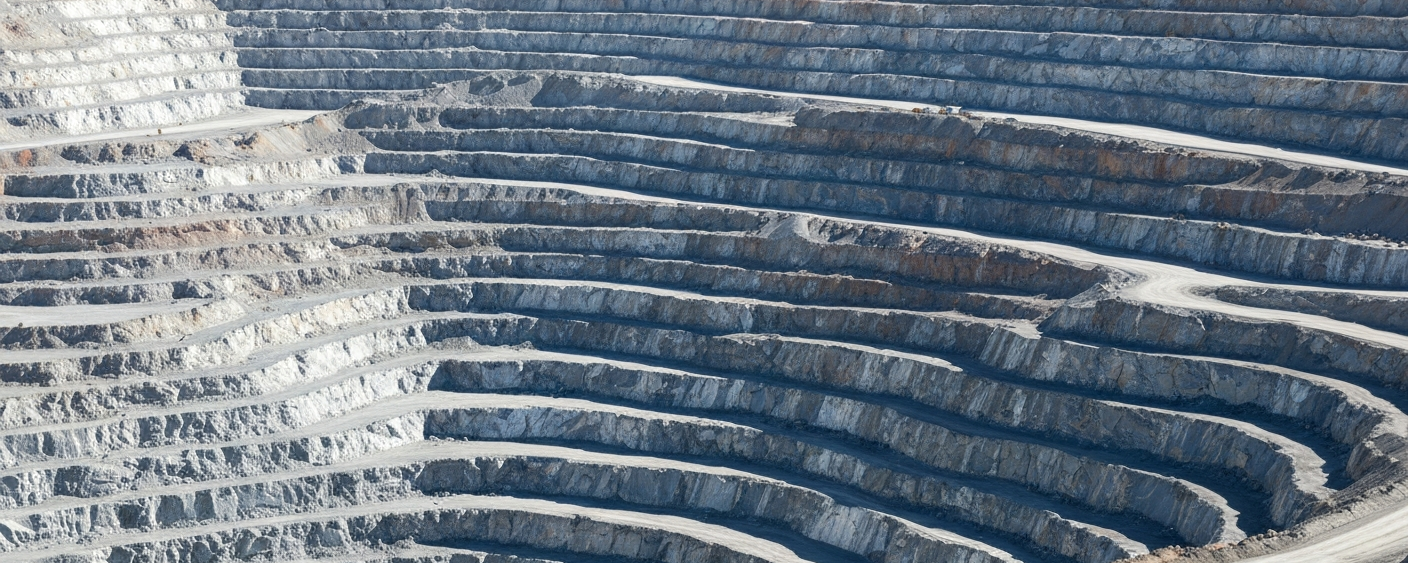
Porphyry deposits form through magmatic processes deep in the earth’s crust. Hot, mineralized fluids permeate porous rock and leave behind metals in zones that are diffusely distributed but laterally extensive. This structurally distinguishes porphyries from narrow gold veins: grades are low, but volume is enormous — hence the industry shorthand “bulk tonnage deposits.”
The multi-metal character comes from the differing solubility of metals at various temperatures and pressures. Copper precipitates deeper and at higher temperatures; gold and silver follow in the shallower, cooler parts of the system. In a complete porphyry profile, copper dominates the central, deep ore shells, gold appears in the transition zone, and silver concentrates toward peripheral or near-surface sections. Whether a drilling program treats both systems as one body or two therefore has direct consequences for how the geology gets modeled and reported.
The role of silver in project economics
A feasibility study incorporates all recoverable metals. Silver raises the equivalent grade: a drill hole returning 0.4% copper, 0.1 g/t gold, and 5 g/t silver is worth more than one with identical copper but no precious metals. That much is obvious, yet silver tends to be overlooked in copper porphyry projects simply because it rarely appears in the project name.
There is a second function. When the copper price comes under pressure from a global recession or weakening Chinese demand, a meaningful precious-metals content can stabilize project economics. Spreading revenue across multiple metals shifts some of the price risk that, in a pure copper project, sits entirely on a single market.
That said, multiple metal prices can fall simultaneously, and the metallurgical complexity of polymetallic projects drives up processing costs. The absolute price volatility of the small-cap stock itself is unaffected by any of this.
| Characteristic | Single-Metal Project | Polymetallic Porphyry |
|---|---|---|
| Dependence on one price | High | Low (distributed) |
| Valuation complexity | Simpler | Higher (equivalent grade calculation) |
| Investor awareness | Directly readable | Often underestimated |
| Production option | One concentrate | Multiple concentrates possible |
What connecting two porphyry zones means for the data picture
When a drilling program links the upper and lower porphyry systems, the mineralization becomes continuous both laterally and at depth. That enlarges the modelable volume and improves data quality. Each hole that confirms a known zone increases the reliability of the model and can, over time, help upgrade lower-confidence resource categories into higher ones — though that process requires a published technical report prepared under recognized standards before any of the numbers carry legal weight.
A single drill hole is one cross-section through an unknown body. Only when enough cross-sections from different angles are available does a three-dimensional picture emerge, much like a medical CT scan. More holes produce a more precise model; a more precise model produces a more reliable eventual resource estimate. The sequence matters.
Porphyry valuation for small-cap investors
Equivalent grades are a useful starting metric. Junior companies convert by-product metals into a unified “copper equivalent” value based on current prices and assumed metallurgical recoveries, which makes project comparisons easier. The number moves automatically with metal prices, though: a drop in the silver price lowers the equivalent grade even if nothing has changed in the ground.
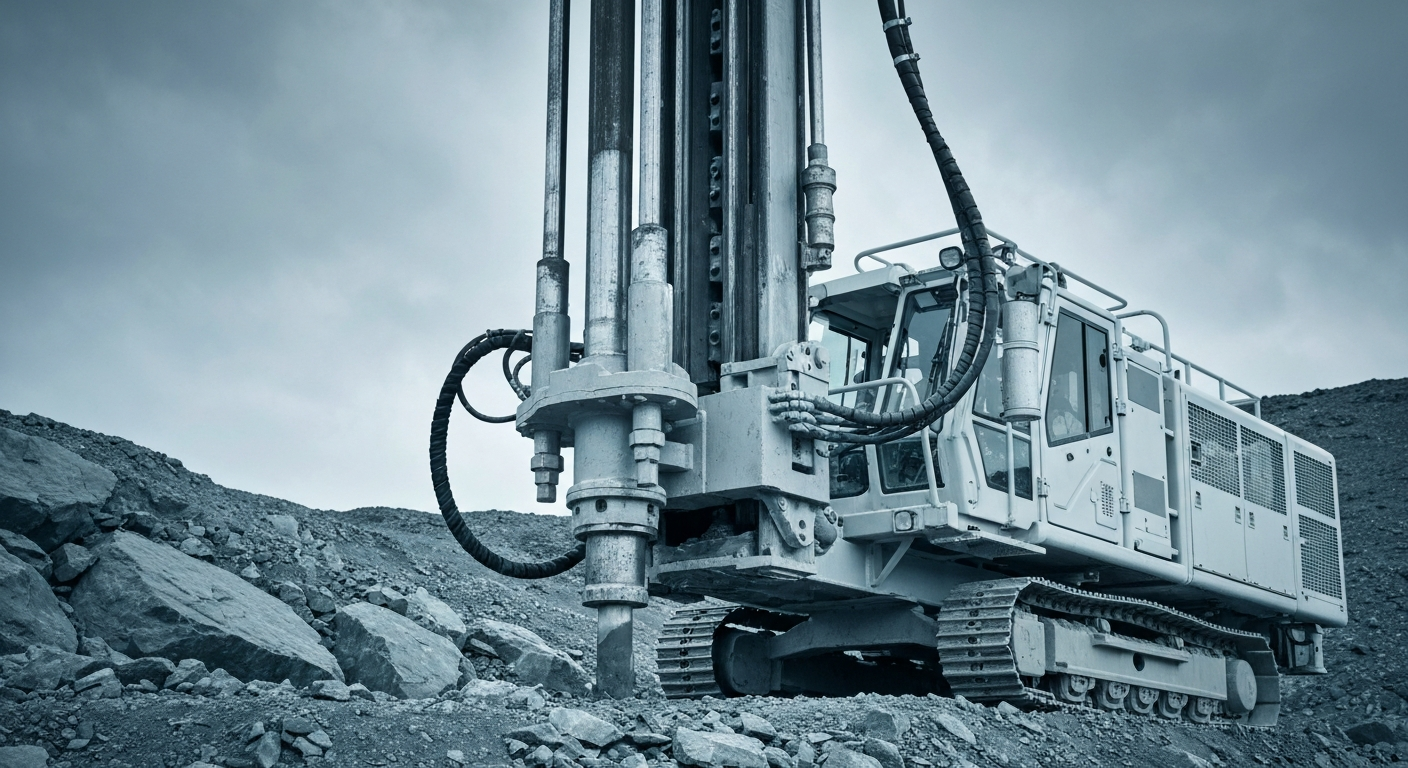
Porphyry systems are large-volume and require drilling programs that typically run for years. Reverse circulation (RC) drilling is faster and cheaper than core drilling but delivers less sample detail. The method a junior explorer chooses often says something about how management is allocating capital at a given stage of a program.
Arizona has established permitting structures, which is worth noting — not because it removes obstacles, but because projects there start from a clearer regulatory position than those in jurisdictions where the rules shift unpredictably. At early-stage exploration, when almost everything else is uncertain, that distinction can affect how long it takes to reach a decision point.
Key terms around porphyry systems
- Porphyry deposit
- A deposit type formed by magmatic fluids, characterized by low grades but large volume. Often contains copper as the primary metal, accompanied by gold and silver.
- Copper equivalent (CuEq)
- A calculated figure that converts all metal grades in a sample into a unified copper value based on current prices and metallurgical recoveries. Facilitates comparison between projects, but is price-dependent.
- Inferred resource
- The lowest official resource category under NI 43-101. Based on limited data and subject to high geological uncertainty. Must not be referred to as a reserve.
- Reverse circulation (RC)
- A drilling method in which rock material is brought to the surface through the drill string. Faster and less expensive than core drilling, but with less sample detail.
- Built-in hedge
- The concept that multiple metal streams from a single project distribute economic risk: if one metal price falls, other prices may stabilize overall project economics.
- Bulk tonnage deposit
- A deposit type with low grades but enormous volumes. Economically viable only through large-scale mining; typical of porphyry systems.
- Stratigraphy
- The layered sequence of rocks within a deposit. In porphyries, stratigraphic position often determines which metals occur at which depth and concentration.
⚠️ Important notice: This article is for informational and educational purposes only. It does not constitute investment advice, a recommendation, or a solicitation to buy or sell any security. Investments in small-cap exploration and mining companies carry a high risk, including the potential total loss of capital. Before making any investment decision, consult a registered financial advisor and conduct your own analysis. Boersen Post Team is not responsible for decisions taken based on the content published here.