Drilling Metres as a Signal: What Exploration News Reveals and What It Hides
May 7, 2026
Failed Takeover Bids: What M&A Flops Teach Investors
May 8, 2026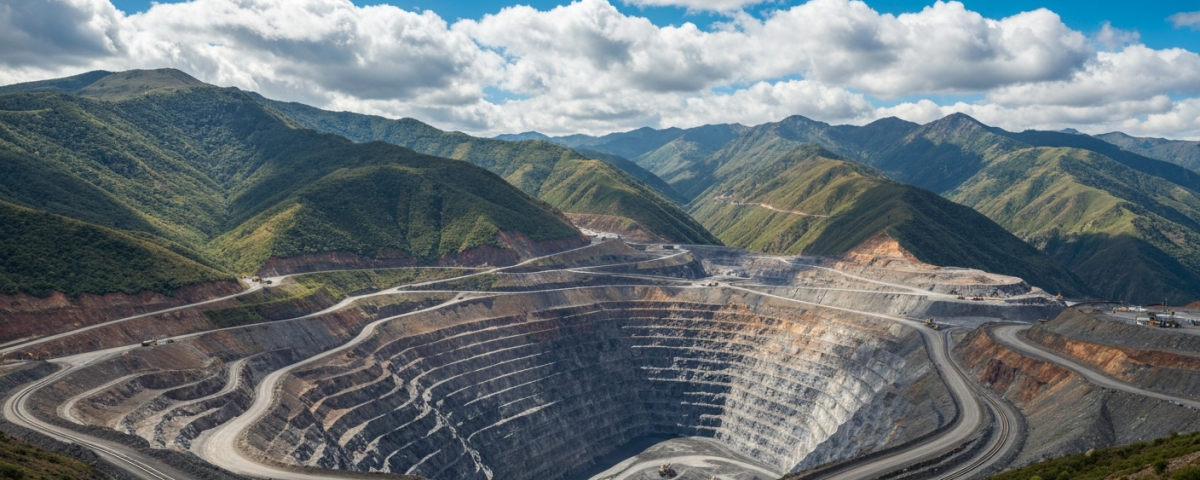
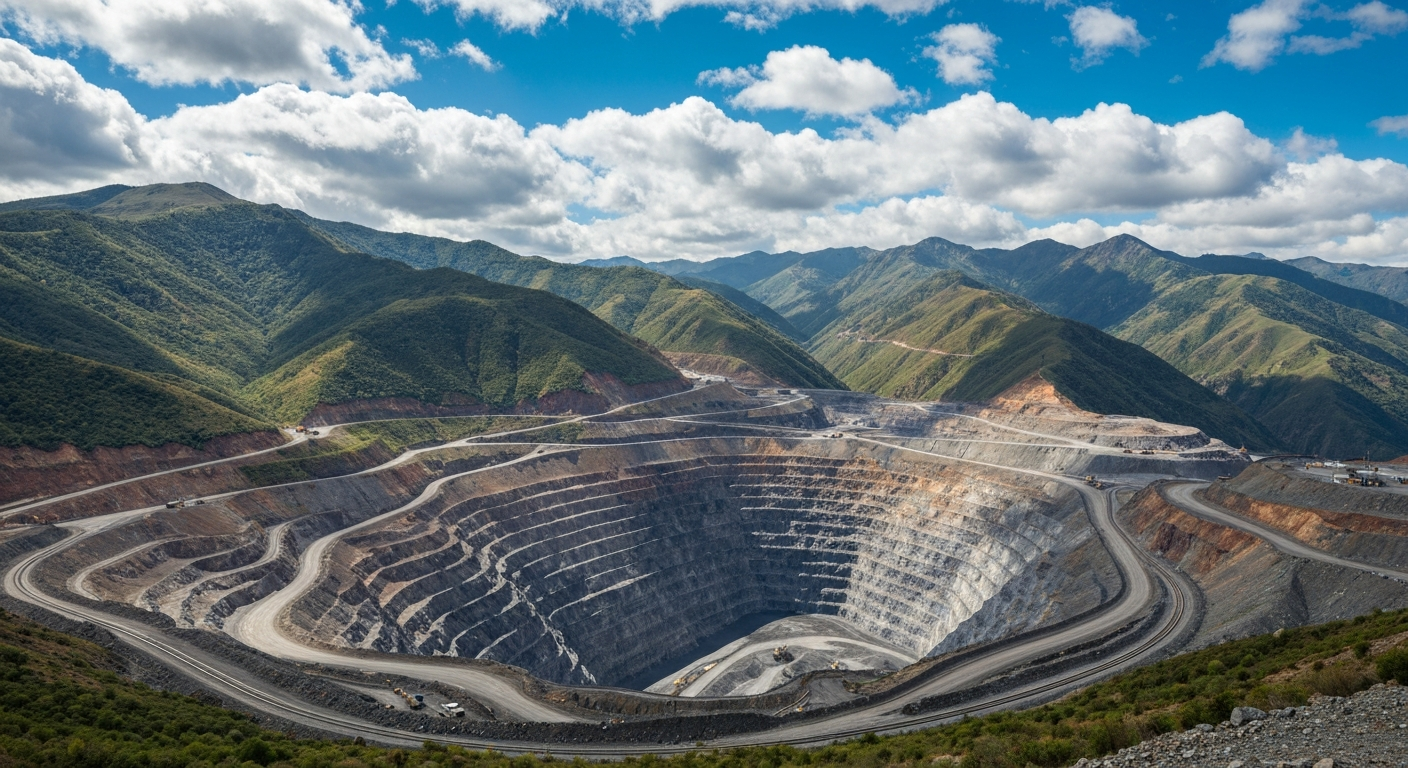
When the Earth Promises Gold, but the People Say No
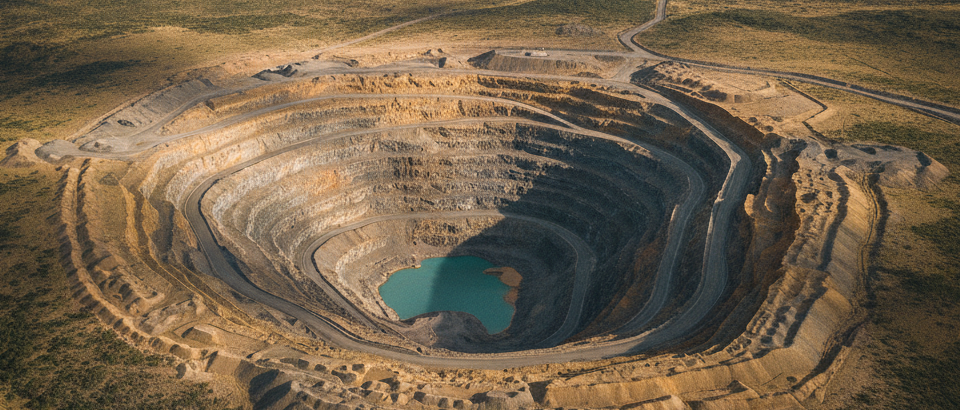
Imagine this: a junior miner spends years exploring a gold deposit. The drilling returns excellent grades, the resource estimate grows, the stock rises — and then a single executive order from the head of state brings the entire operation to a halt. Not because of a geological failure, not because of a market crash, but because tens of thousands of people are protesting in the streets.
That is precisely the scenario that recently played out in the Caribbean: a gold-copper project on a Caribbean island was suspended by presidential decree after mass protests forced the government’s hand. For newcomers to the world of small-cap mining investments, this event is a masterclass — because it reveals a dimension of risk that appears on no geological drill map: political and social risk.
The Invisible Foundation of Every Mining Project
The mining industry refers to this as the Social License to Operate — the societal acceptance of a project by the local community and the broader public. The term sounds abstract, but its consequences are very concrete: without this “social license,” even the richest ore deposit cannot be developed.
Market context is critical here. Latin America and the Caribbean are home to some of the world’s most significant precious metal and copper deposits. Many junior explorers have pushed into these regions for exactly that reason — driven by favorable exploration capital and rising commodity prices. Yet as interest in these resources grows, so does social resistance, particularly where water supplies, agriculture, or indigenous rights are at stake.
A structural political shift compounds this dynamic: in numerous Latin American countries, environmental movements have gained considerable strength over the past two decades. Social media accelerates mobilization. What was once a small local protest can become national headline news within days — compelling governments to act even when all formal permits are in place.
The Mechanics of the Political Domino Effect
How does a project with all its permits suddenly get stopped? The mechanics follow a typical pattern that has been observed repeatedly across different regions — from the Andes to the Caribbean.
First, grassroots resistance emerges: local communities, often in rural or water-rich areas, perceive a mining project as a threat to their livelihoods. Water contamination, noise, dust, and changes to the landscape are common grievances. These concerns are not always rationally quantifiable, but they are real — and they mobilize people.
In the second step, actors from beyond the local level intervene: NGOs, environmental organizations, and opposition politicians amplify local voices and carry the issue into the national media. A parallel to capital markets is instructive here: just as a falling stock price attracts more sellers, a high-profile protest attracts more supporters — a self-reinforcing cycle.
In the third step, the political system responds. Governments in countries facing upcoming elections or with weak institutional foundations are especially susceptible to yielding to street pressure. A presidential decree suspending a project is often politically easier to justify than upholding an unpopular permit — even when the project’s legal basis is sound.
The outcome for the junior explorer is devastating. Unlike a purely geological setback — such as a drill hole returning uneconomic grades — a politically motivated project suspension is difficult to “fix.” The geology does not change; the social climate, however, can entrench itself for years.
| Risk Type | Detectability | Remedability |
|---|---|---|
| Geological risk (e.g., low grades) | High (through drilling) | Medium (further exploration) |
| Financing risk (e.g., capital shortfall) | Medium (balance sheets, market) | Medium (new investors, dilution) |
| Political-social risk (Social License) | Low (difficult to measure) | Low to very low |
What This Means for Evaluating Small Caps
For newcomers looking to evaluate junior explorers and small-cap mining companies, this trend opens up an important perspective: the classic analytical framework — resource size, grades, infrastructure, management competence — is necessary, but not sufficient.
A useful analogy from real estate: a developer can have the most beautiful project on paper — a perfect location, a good price, solid financing. But if the neighborhood unites in opposition and the municipality reverses the zoning approval, the plot stays undeveloped. The political dimension is an external factor that can nullify internal quality.
The same applies to mining projects in regions with high social tension potential. Investors active in this segment should learn to read country assessments: indexes such as the Fraser Institute Annual Survey of Mining Companies rank jurisdictions by their political stability and regulatory reliability. Countries with low scores signal elevated non-geological risk — regardless of how attractive the geology may be.
It is also worth examining a company’s community relations strategy. How does management communicate with the local population? Are there community engagement programs? Are environmental impact assessments publicly accessible? Companies that proactively invest in social acceptance reduce their risk profile — even if that effort generates costs in the short term.
Non-Geological Risks as Part of the Investor’s Toolkit
The example of a Caribbean project shut down by mass protests is not an isolated incident — it is a symptom of a structural shift in the global mining industry. The era in which a mining company could simply move forward with a government permit in hand is over in many parts of the world. Public participation is now a real factor that affects project timelines, capital costs, and ultimately stock market valuations.
For investors who are just beginning to understand the mining sector, the most important takeaway is this: risk in mining is multidimensional. Reading only the drill results means seeing only part of the picture. The political landscape, the mood of society, and the quality of the dialogue between a company and local communities are equally relevant variables — even if they cannot be summarized in a single column of a spreadsheet.
A robust understanding of these dynamics transforms a passive observer into an informed investor — one who knows which questions to ask before a presidential decree provides the answer.
Key Terms: Political Risk in Mining
- Social License to Operate (SLO)
- The informal, societal acceptance of a mining project by local communities and the general public. It exists independently of formal government permits and must be actively built and maintained.
- Jurisdiction Risk
- The risk arising from the political, legal, and regulatory stability of a country or region. High jurisdiction risk increases investment uncertainty, even in the presence of attractive geology.
- Presidential Decree (Executive Order)
- A direct order issued by a head of state that can carry the force of law or administrative action without going through the legislative process — used in the mining context, it often results in the immediate suspension of projects.
- Community Relations
- The strategic communication and interaction between a mining company and local communities, government authorities, and civil society groups, aimed at building trust and preventing conflict.
- Non-Geological Risk
- All risk factors associated with a mining project that are unrelated to geology — including political instability, regulatory changes, social conflicts, currency risk, and inadequate infrastructure.
- Junior Explorer / Junior Miner
- A small mining company in the exploration or early development stage, typically listed on smaller stock exchanges such as the TSX-V, with no production yet. These companies offer high upside potential but carry an elevated risk profile.
- Fraser Institute Mining Survey
- An annual survey of mining executives and geologists that ranks countries and regions by their political attractiveness for mining investment. It is considered an important benchmark for assessing jurisdiction risk.
⚠️ Important notice: This article is for informational and educational purposes only. It does not constitute investment advice, a recommendation, or a solicitation to buy or sell any security. Investments in small-cap exploration and mining companies carry a high risk, including the potential total loss of capital. Before making any investment decision, consult a registered financial advisor and conduct your own analysis. Boersen Post Team is not responsible for decisions taken based on the content published here.