Gold Price Meets Capital Market: How Junior Explorers Fund Their Programs
May 4, 2026
Social License: When Protests Shut Down Mining Projects
May 7, 2026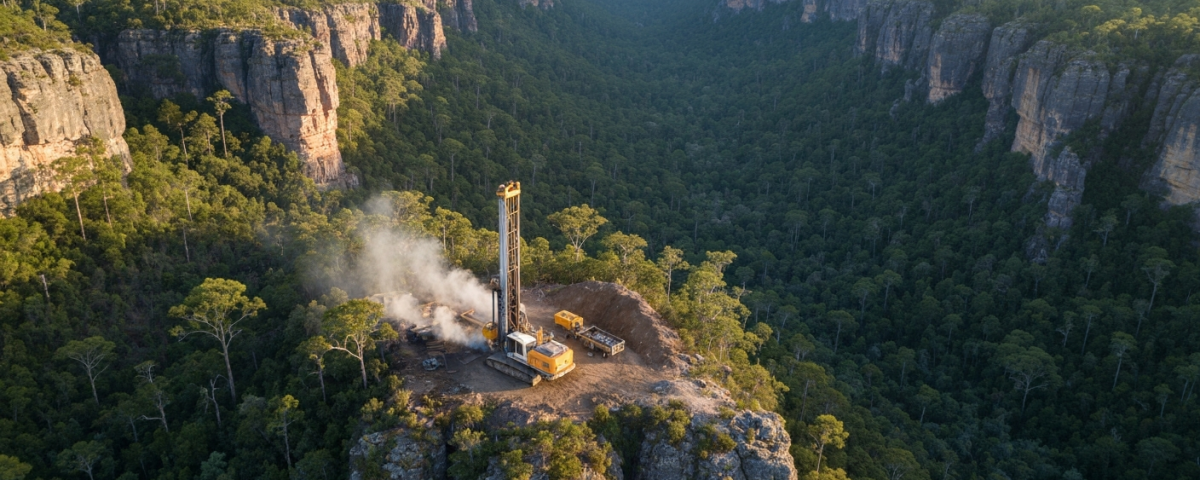
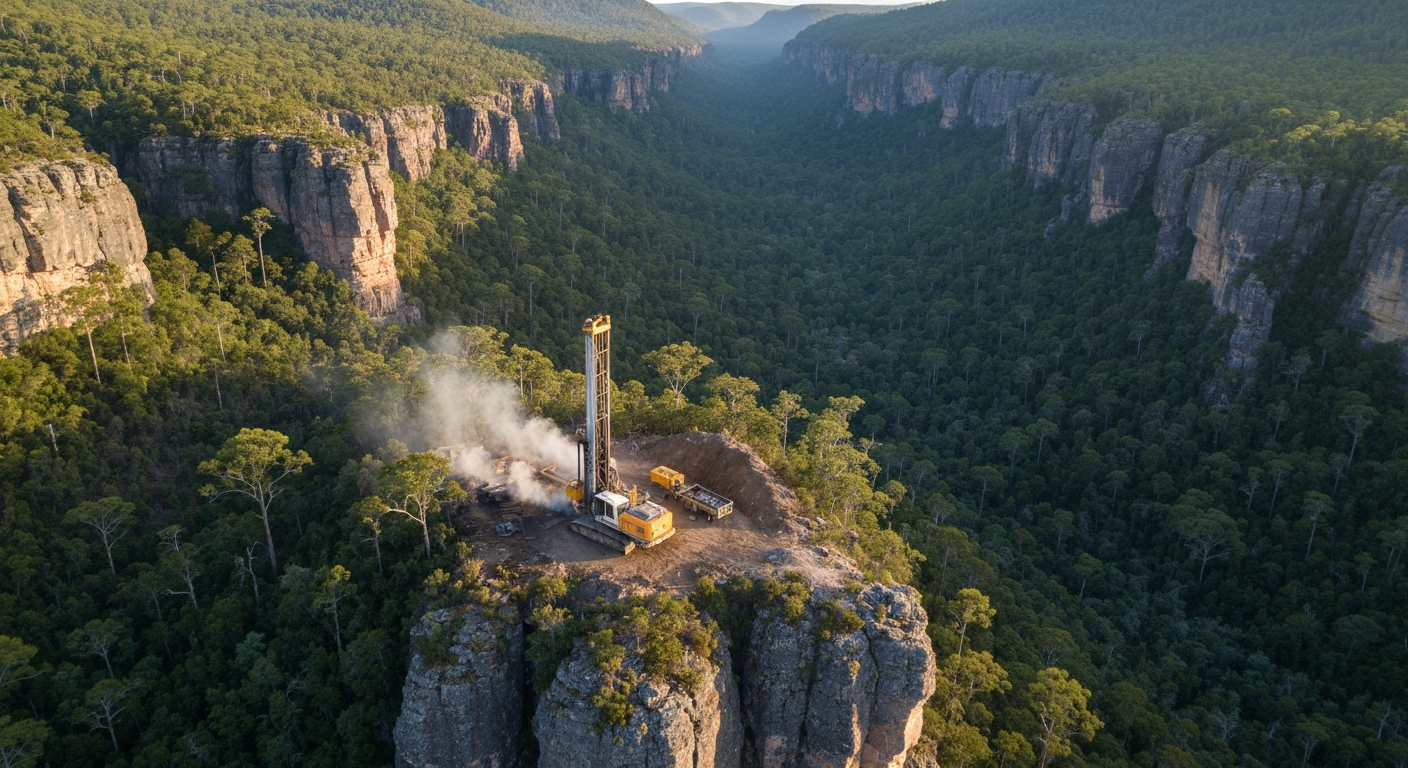
A drill turns — and an entire industry awakens
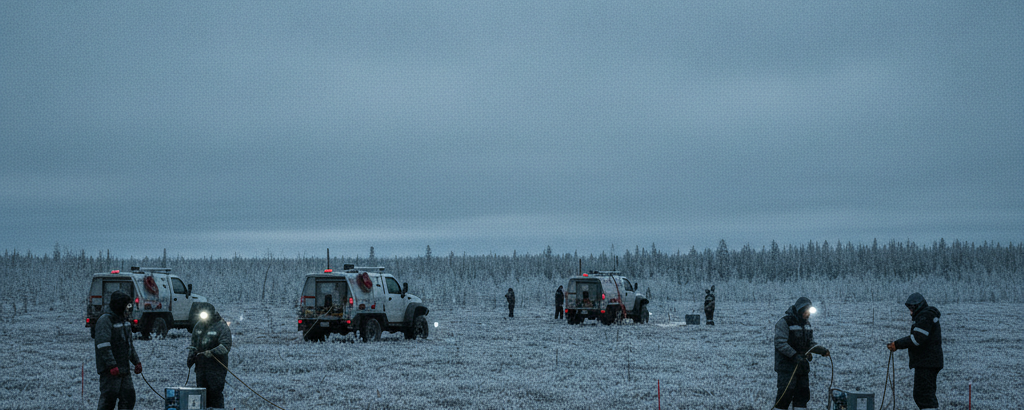
Anyone who has been watching the junior mining sector over the past several months could not have missed a striking pattern: companies worldwide are announcing new or significantly expanded drilling programs for 2026. The stated scope is impressive — ranging from a few thousand to more than 160,000 drill meters on individual projects, with up to eight rigs operating simultaneously. Numbers like these are no coincidence. They signal that risk capital is once again prepared to flow into the earliest and most uncertain phase of the commodities cycle: exploration.
For beginners and students interested in small-cap investments in the mining space, this phenomenon is particularly instructive. It illustrates how macroeconomic forces, commodity prices, and investor behavior interact — and how an aspiring investor can read these signals without getting swept up in the excitement.
Commodity prices, risk capital, and the exploration cycle
Exploration follows a clear cycle: during periods of low commodity prices, investors pull back, drilling programs are halted or postponed, and many junior companies simply fight for survival. When prices for gold, copper, critical minerals, or uranium rise sustainably, however, the calculus changes fundamentally. Suddenly it makes sense again to drill millions of dollars into the ground — in the hope of finding an economically viable deposit.
This appears to be exactly the moment the market is experiencing right now. Several factors are driving current interest:
- Rising commodity prices: Gold is trading at historically high levels, copper and critical minerals are benefiting from the global energy transition, and uranium is experiencing a renaissance driven by the return to nuclear power in many countries.
- Increased risk appetite: Institutional and private investors are seeking higher returns and are once again willing to accept more risk — junior explorers offer precisely that potential.
- Catch-up effect: After years of relative restraint in the exploration segment, pent-up demand is now being expressed in concentrated form.

What drill meters reveal — and what they conceal
The sheer volume of announced drill meters is a powerful sentiment signal, but it must be interpreted correctly. A drilling program covering 50,000 meters sounds impressive — yet what ultimately matters is what comes out of it. Junior companies typically pass through the following phases in a drilling program:
| Phase | Description | Risk for Investors |
|---|---|---|
| Planning & Permitting | Site selection, geological modeling, regulatory approval | Delay risk |
| Mobilization | Equipment transport, rig setup | Cost risk |
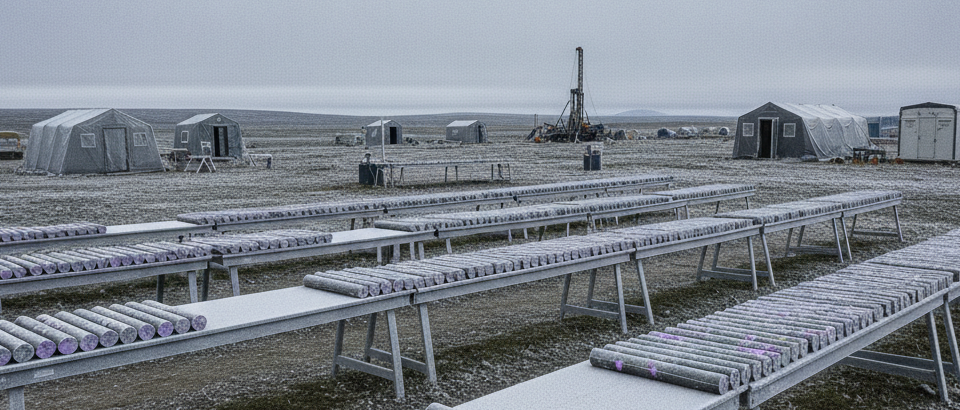
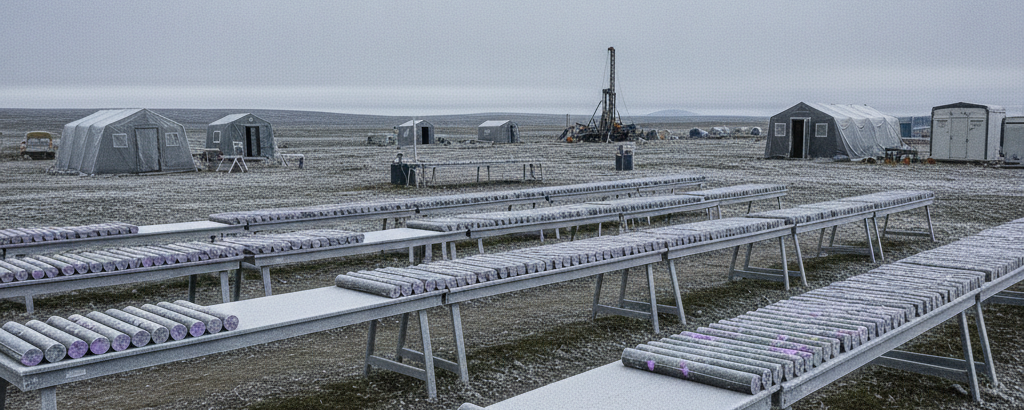
| Core Drilling | Extraction of rock cores from depth | Results risk |
| Laboratory Analysis (Assay) | Chemical testing of samples | Interpretation risk |
| Resource Estimate | Calculation of mineral quantity and grade | Valuation risk |
Each of these phases consumes time and money. For large programs — such as those running several rigs simultaneously — capital requirements can quickly climb into the tens of millions of dollars. It is therefore critical for investors to understand how a company is financing its program: Is it already fully covered by existing funds or project partners, or does management plan to raise new capital through share issuances? In the latter case, existing shareholders face the risk of dilution.
Notably, some current programs have already been announced as fully funded. This represents a meaningful qualitative distinction from programs that still depend on future capital rounds — and is a detail beginners should pay close attention to when analyzing a company.
What the current trend teaches us about the sector
The simultaneous launch of so many junior companies into new drilling campaigns is a classic hallmark of a cyclical upswing in the commodities sector. Historically, such phases of intensive exploration are frequently followed by a period of consolidation, during which results are evaluated, disappointments emerge, and the market differentiates between promising projects and failures.
For the investor who is still learning, this situation offers a rare opportunity to observe the exploration cycle in real time. One can follow how announcements influence sentiment, how markets react to initial drill results, and which factors — grades, vein thickness, geographic location, infrastructure — determine whether a discovery has value or not.
A clear-eyed perspective remains essential throughout: statistically, only a small fraction of all exploration drill holes leads to the discovery of an economically viable deposit. The majority of programs either produce no significant result or prove to be too small or too low-grade to mine profitably. This is not a flaw in the system — it is the inherent nature of exploration, which by definition operates under conditions of uncertainty.
Learning to read exploration — a toolkit for beginners
The current wave of drilling programs is an instructive moment for anyone who wants to understand how the junior mining sector works. Three core insights stand out:
First, the intensity of exploration activity is a sentiment barometer: when many companies simultaneously announce large programs, it reflects growing confidence in commodity markets — and indirectly mirrors the state of the global economy and geopolitical demand dynamics.
Second, the quality of financing separates the wheat from the chaff: fully pre-funded programs are structurally more stable than those still dependent on capital raises. This distinction is a central tool in the fundamental analysis of junior companies.
Third, patience is an underrated virtue: between the first day of drilling and a valid exploration result, months often pass — laboratory analyses, geological evaluations, and regulatory steps all take time. Anyone who wants to understand this sector must internalize this rhythm.
The 2026 drilling boom is a fascinating chapter in the ever-recurring cycle of the commodities world. Observing it, analyzing it, and placing it in context — that is one of the best exercises an aspiring junior mining investor can undertake.
Key terms in exploration and drilling campaigns
- Junior Explorer
- A small mining company in an early stage of development, primarily engaged in the search and evaluation of potential commodity deposits. It typically produces no commodities yet and funds itself through capital markets instruments.
- Drilling Program
- A planned sequence of drill holes within a defined area, designed to gather geological data and test for the presence of commodities. The scope, depth, and orientation of the holes are determined on the basis of geological models.
- Assay
- The chemical laboratory analysis of rock samples taken from drill cores. It reveals the type and concentration of minerals present and forms the basis of every resource estimate.
- Exploration Cycle
- The recurring process in which commodity prices, capital availability, and exploration activity mutually influence one another. High prices attract capital that funds exploration — falling prices slow the cycle back down.
- Resource Estimate
- A calculation, prepared according to international standards (e.g., NI 43-101 in Canada), of the quantity and quality of a commodity believed to be present in the ground. It is divided into categories (inferred, indicated, measured) depending on the degree of geological confidence.
- Dilution
- The reduction of existing shareholders’ percentage ownership through the issuance of new shares, commonly used to finance exploration programs. Heavily dilutive capital raises reduce the proportional value per share.
- Drill Core
- A cylindrical column of rock extracted from the ground during core drilling. It serves as the primary sample material for geological and geochemical analysis.
⚠️ Important notice: This article is for informational and educational purposes only. It does not constitute investment advice, a recommendation, or a solicitation to buy or sell any security. Investments in small-cap exploration and mining companies carry a high risk, including the potential total loss of capital. Before making any investment decision, consult a registered financial advisor and conduct your own analysis. Boersen Post Team is not responsible for decisions taken based on the content published here.