Copper Squeeze: Why M&A Premiums for Small Caps Are Rising
June 8, 2026
Drilling Program Expansion: What the Signal Means for Uranium Juniors
June 8, 2026

When melting points and explosive suitability drive share prices
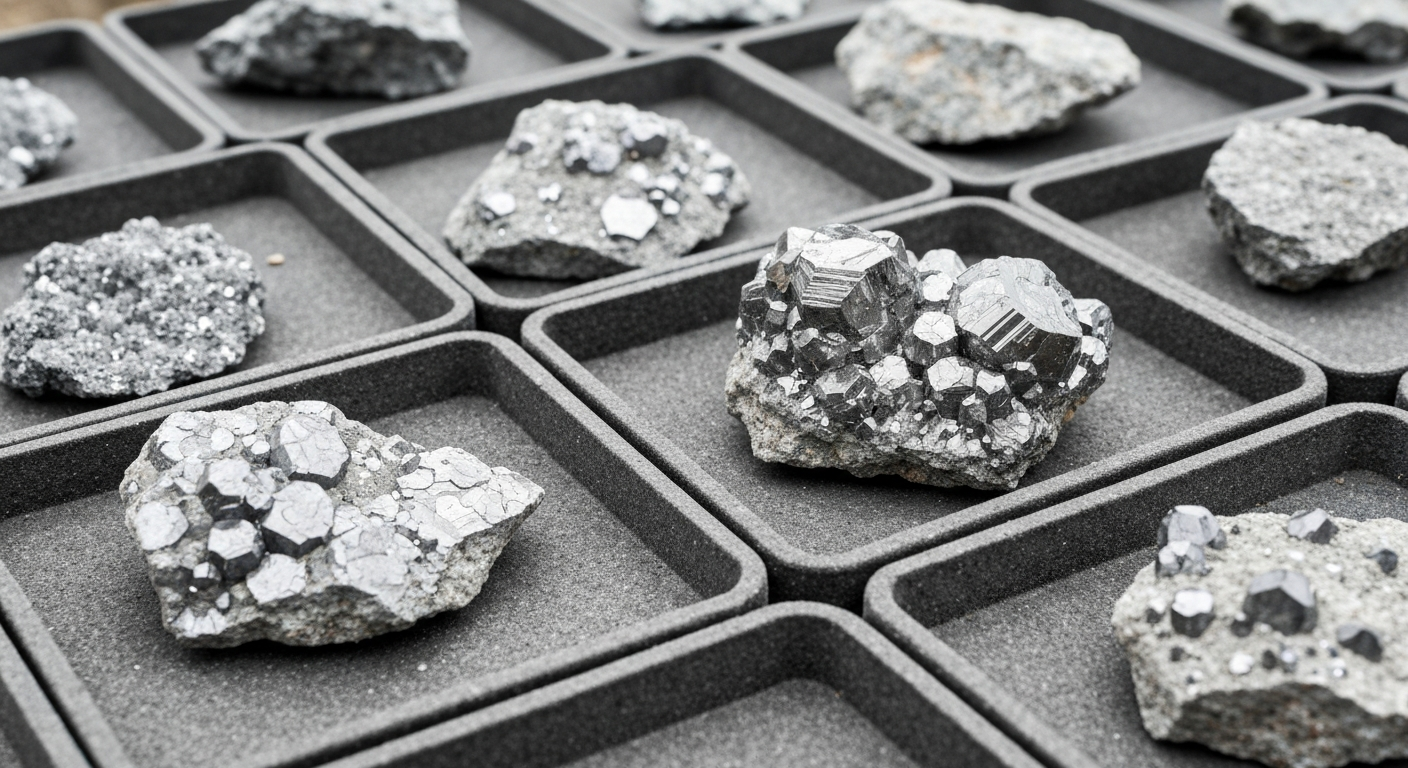
Some commodities rarely make headlines, yet no modern weapons system can function without them. Antimony and tungsten belong to this quiet category. Antimony hardens lead projectiles, appears in military detonators, and forms a key ingredient in explosive compounds. Tungsten has the highest melting point of any metal, which makes it essential for armor-piercing ammunition, high-temperature applications, and precision components in guided missiles.
Both metals share a critical characteristic: roughly 80 to 90 percent of global production comes from China. For Western defense planners, this dependency has become uncomfortable. For exploration companies in Canada, Australia, and Northern Europe, it represents a tangible opportunity that has grown more visible in recent years.
Supply chain logic in the shadow of geopolitical shift
Since Russia’s invasion of Ukraine in 2022, security awareness across NATO member states has shifted fundamentally. Defense budgets have risen, armaments programs accelerated, and it has become clear that modern weapons systems cannot be produced without a secure supply of critical metals.
This awareness has had political consequences. The EU’s Critical Raw Materials list, the U.S. Critical Minerals Act, and similar initiatives in Canada and Australia have classified antimony and tungsten as strategic materials. Behind these classifications lie concrete funding programs, government procurement guarantees, and off-take agreements in which government agencies commit to purchasing future production before a mine enters operation.
For junior explorers on exchanges such as the TSX-V or the CSE, the shift matters considerably. Companies pointing to antimony or tungsten projects in politically stable jurisdictions can now build an investor narrative that includes geopolitical positioning alongside geology and metal prices.
Geophysics as a first step: how exploration projects gain strategic substance
When a small mining company develops a potential antimony or tungsten deposit, the typical starting point is a geophysical survey campaign. Heliborne magnetic surveys and radiometric spectrometry deliver a detailed picture of geological structures beneath the surface from the air without sinking a single drill hole.
These data help geologists identify promising anomalies where magnetic or radioactive signatures could indicate mineral-rich zones. Drilling follows only after this work is complete. Geophysical surveys relate to exploration much as ultrasound relates to surgery: they provide guidance before the actual procedure begins.
For investors, geophysical results are often the first publicly announced milestones of a project. They indicate the size and shape of potential mineralization zones, though they do not replace a resource estimate prepared under recognized standards such as Canada’s NI 43-101. The distinctions matter:
| Term | Meaning in the exploration cycle |
|---|---|
| Inferred Resource | First rough estimate based on limited data; high geological uncertainty |
| Indicated Resource | Better-supported estimate; sufficient for preliminary economic studies |
| Measured Resource | Highest data density; basis for feasibility studies |
| Probable / Proven Reserve | Economically mineable quantity; requires a complete feasibility study |
Geophysical surveys do not yet yield any of these categories. They merely prepare the ground for subsequent drilling, which forms the basis for an NI 43-101-compliant resource estimate.
Jurisdiction matters in two ways. Government procurement programs in Western countries explicitly favor projects in allied nations—Canada, Australia, Scandinavia, or the United States. Stable legal systems and transparent mining laws also facilitate financing, because institutional investors can price in lower regulatory risk. An antimony project in Nova Scotia benefits from Canadian mining law, relatively short permitting timelines for strategically classified commodities, and geographic proximity to North American defense customers.
What dual-use classification means for small-cap investors
Classifying a commodity as “dual-use” changes the valuation logic for exploration projects in several ways.
First, it increases certainty on the demand side. While copper prices follow construction cycles and electric vehicle trends, demand for defense metals is driven by government defense budgets, which are rising across much of the Western world. Antimony and tungsten prices still move with markets, but they have a structural demand component less sensitive to economic cycles than conventional industrial metals.
Second, strategic classification opens access to financing channels unavailable to ordinary exploration projects. Government loan programs, grants for critical commodities, and equity stakes from defense agencies are instruments normally beyond reach for junior explorers. The right commodity in the right jurisdiction can change that, though the path from exploration to production remains long and capital-intensive.
Third, the investor narrative shifts. Small caps exploring for antimony or tungsten can position themselves within supply security and national defense policy, a narrative that appeals to institutional investors with ESG and security mandates. This is not a guarantee of success, but it can influence how much attention and liquidity a stock receives.
Structural tailwind, not a free pass
Dual-use metals sit at an interesting intersection of geopolitics, defense policy, and commodities markets in a way that did not exist a decade ago. For exploration projects in stable countries, this represents a structural revaluation in public perception and in access to capital and government partners.
The fundamental risks of exploration remain intact. It is capital-intensive, time-consuming, and most projects never reach production. The geopolitical tailwind shifts the risk-reward profile but does not eliminate it. Investors in this space should weight the quality of geology, management experience, and progress through the exploration cycle as heavily as the geopolitical story itself.
Key terms for beginners
- Dual-use commodity
- A metal or material used in both civilian and military applications. Antimony is used in ammunition and detonators. Tungsten appears in armor-piercing projectiles and precision components.
- Off-take agreement
- A forward contract in which a buyer commits to purchasing future production from a mining project, often before the mine enters operation. Government off-takes are particularly valuable because they reduce offtake risk.
- Heliborne magnetic survey
- A geophysical method in which a helicopter carries measurement instruments over terrain to detect variations in the Earth’s magnetic field. Anomalies can indicate mineral-rich rock formations beneath the surface.
- NI 43-101
- Canadian regulatory standard for public reporting of mineral resources and reserves. It distinguishes between resources (Inferred, Indicated, Measured) and reserves (Probable, Proven).
- Jurisdiction
- The political and legal environment in which a mining project operates. Stable jurisdictions such as Canada and Australia offer reliable regulatory frameworks and improve a project’s ability to attract financing.
- Critical minerals
- Materials officially classified as strategic by governments, whose supply disruption poses a national security risk. The EU, USA, Canada, and Australia maintain their own lists, on which antimony and tungsten appear regularly.
- TSX-V / CSE
- Canadian stock exchanges for smaller companies. The TSX Venture Exchange and the Canadian Securities Exchange are the primary trading venues for junior explorers and small caps in mining.
⚠️ Important notice: This article is for informational and educational purposes only. It does not constitute investment advice, a recommendation, or a solicitation to buy or sell any security. Investments in small-cap exploration and mining companies carry a high risk, including the potential total loss of capital. Before making any investment decision, consult a registered financial advisor and conduct your own analysis. Boersen Post Team is not responsible for decisions taken based on the content published here.