Tungsten: Why a Quiet Commodity Is Moving Small Caps
June 8, 2026
Athabasca Basin: What High-Grade Uranium Really Means
June 8, 2026
When commodities policy meets defense logic
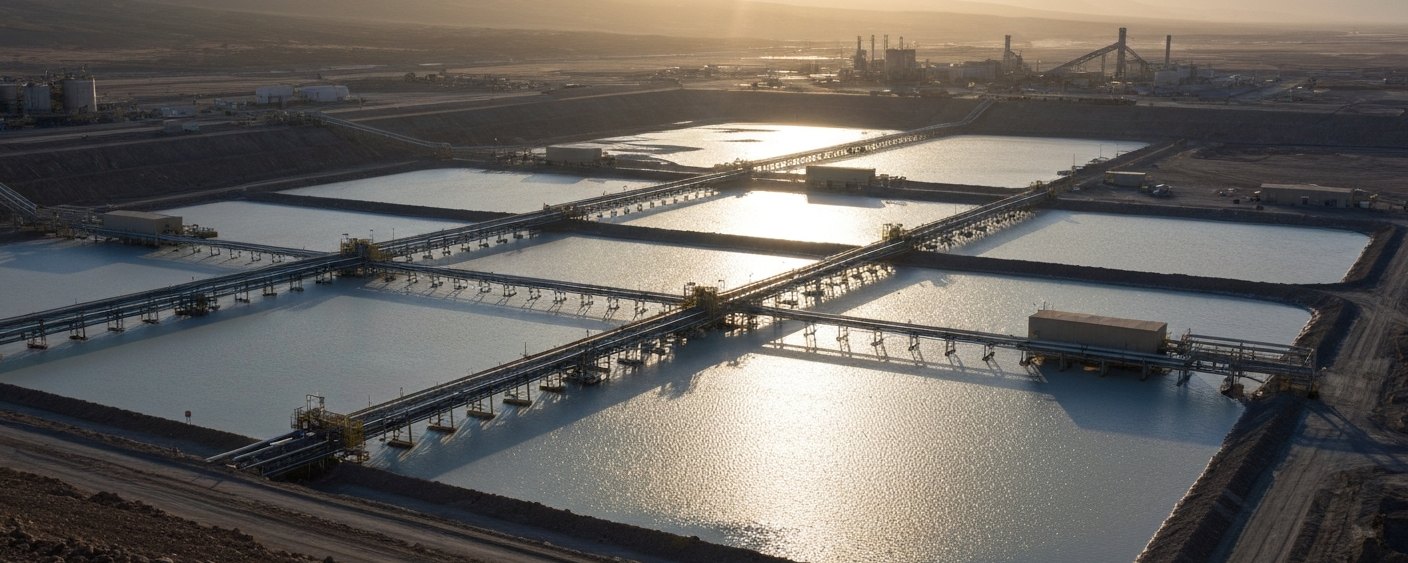
A small mining company with a single lithium project in Canada joins a government-backed consortium designed to secure critical supply chains. No merger, no acquisition. This kind of development has drawn attention in recent months and shows how the operating environment for junior miners is shifting.
The reason is geopolitical. Lithium has moved beyond being raw material for electric vehicles. It matters for military battery systems, portable power sources, and communications technology. For small-cap investors in this sector, that opens a valuation angle previously left to institutional analysts.
Critical minerals and national security
Since around 2020, Western governments—the United States, Canada, and Australia in particular—have begun treating raw materials supply as a security issue. The logic is straightforward: a large share of critical mineral processing happens in countries that Western planners regard as geopolitically unreliable.
Lithium sits at the center of this concern. More than 60 percent of global lithium refining runs through Chinese facilities. For the United States, this represents a structural dependency that military planners find unacceptable. The response involves government-sponsored consortia that integrate private companies, including small explorers, directly into the supply chain.
The Defense Industrial Base Consortium (DIBC) is one such instrument. It brings together companies and government agencies to accelerate and secure development of critical raw materials. Membership provides access to information, networks, and potentially government offtake guarantees and funding.
How consortium membership affects corporate financing
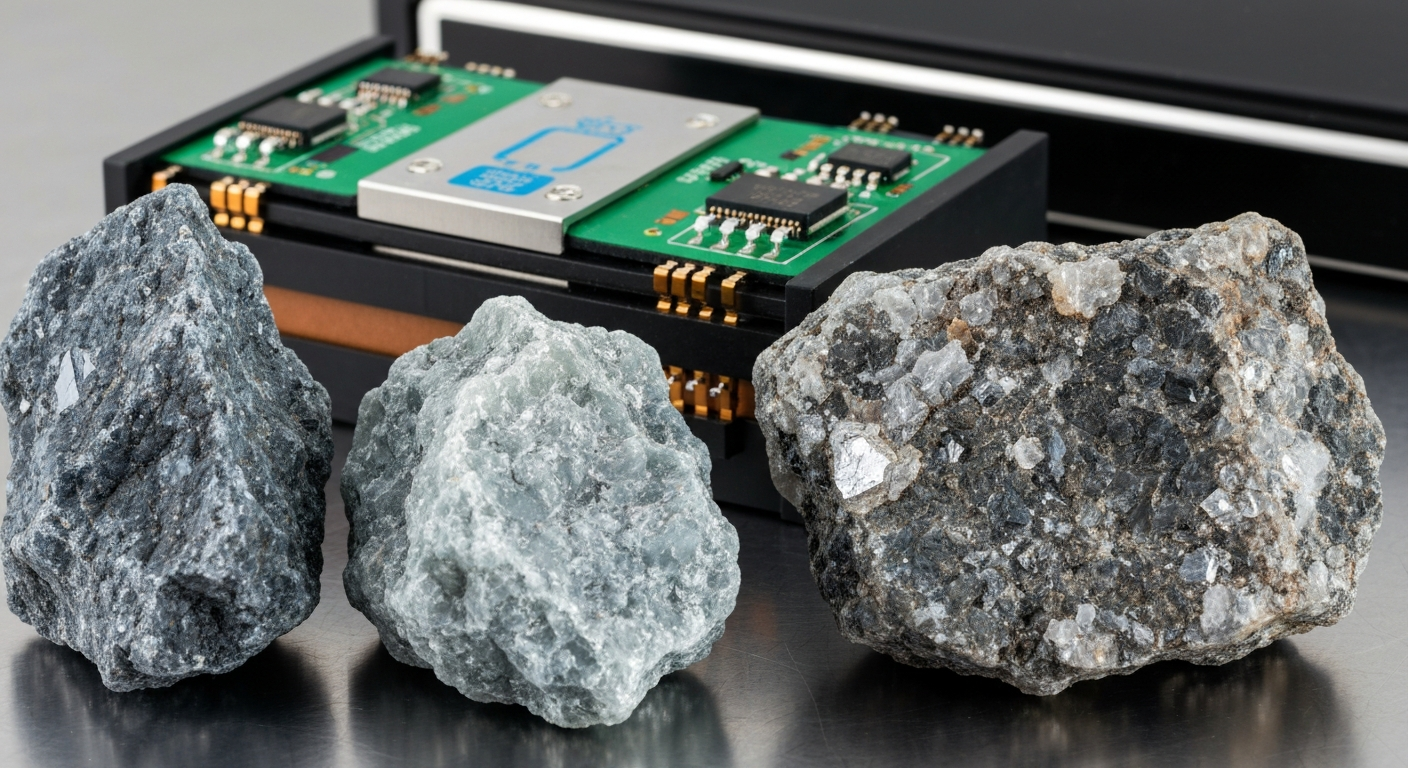
For a typical junior explorer on the TSX Venture Exchange, access to capital remains the constant challenge. Drilling programs are expensive, permits take years, and markets price exploration projects mainly around uncertainty and risk. When something reduces that risk, it moves the share price.
Consortium membership like DIBC’s can do this in several ways:
- Signaling to investors: When a government agency designates a company as strategically relevant, it lowers the perceived failure risk. Institutional investors who would normally avoid junior miners may suddenly view them as investable.
- Offtake agreements: Defense programs can facilitate offtake arrangements—advance contracts binding a buyer to purchase future production at set terms. Banks use these contracts as the basis for project financing.
- Lower cost of capital: A lower risk assessment generally brings better financing terms. A junior miner with government backing needs to accept less equity dilution than one operating entirely in the open market.
A similar pattern emerged in uranium enrichment. After Russia’s invasion of Ukraine, Western governments classified civilian nuclear technology as strategically important. Valuations of small uranium explorers jumped, even though the projects themselves had not changed—only the political framework repriced the risk.
| Factor | Without consortium membership | With consortium membership |
|---|---|---|
| Cost of capital | High (exploration risk) | Potentially lower (government signal) |
| Access to offtake agreements | Market-driven, uncertain | Government-supported, more structured |
| Investor base | Predominantly retail and specialist funds | Potentially institutional buyers |
| Valuation logic | Exploration risk dominates | Strategic value factored in |
What this means for investors
The key takeaway is this: a mining company’s value depends not only on geology and metal prices, but increasingly on political and strategic positioning.
When evaluating a junior miner, ask whether the commodity appears on any national critical minerals list. If yes, government support programs become more likely. Location matters too—projects in politically stable, Western-aligned countries have better prospects for defense partnerships than those in regions facing regulatory uncertainty. Project maturity is equally important. Consortium membership alone changes nothing if a lithium deposit sits in early-stage exploration. Offtake agreements only become realistic from the pre-feasibility or feasibility study stage onward.
Government programs also create dependencies. A junior miner heavily oriented toward U.S. defense funding faces exposure to political cycles. Changes in administration, budget cuts, or shifting priorities can reverse the funding rationale quickly. Diversification of financing sources remains a structural quality indicator.
Key terms
- Defense Industrial Base Consortium (DIBC)
- A collaborative program of the U.S. Department of Defense that brings together companies and government agencies to secure and accelerate supply of critical materials.
- Critical minerals
- Raw materials considered essential for the economy and national defense whose supply is deemed at risk. The U.S. list includes more than 50 materials, among them lithium, cobalt, and rare earths.
- Offtake agreement
- A forward contract in which a buyer commits to purchasing future production at agreed terms. Such agreements are essential for project financing because they secure the revenue stream.
- TSX Venture Exchange (TSX-V)
- The Canadian stock exchange for smaller growth companies, particularly in the commodities sector. Many junior explorers use it as their primary source of capital.
- Feasibility study (FS)
- A detailed technical and economic analysis examining whether a mining project can be operated profitably. It is a prerequisite for bank loans and government offtake guarantees.
- Strategic supply chain
- A supply chain classified as systemically important for national security or economic stability and therefore subject to special government protection or support.
- Risk premium
- The additional return that investors demand for taking on uncertain investments. Government involvement can lower the risk premium of a junior miner, thereby increasing its valuation.
⚠️ Important notice: This article is for informational and educational purposes only. It does not constitute investment advice, a recommendation, or a solicitation to buy or sell any security. Investments in small-cap exploration and mining companies carry a high risk, including the potential total loss of capital. Before making any investment decision, consult a registered financial advisor and conduct your own analysis. Boersen Post Team is not responsible for decisions taken based on the content published here.