Unit Structures: How Uranium Juniors Bundle Capital Smartly
June 8, 2026
Reproducible Drill Results: What Consistency Means in Rare Earths
June 8, 2026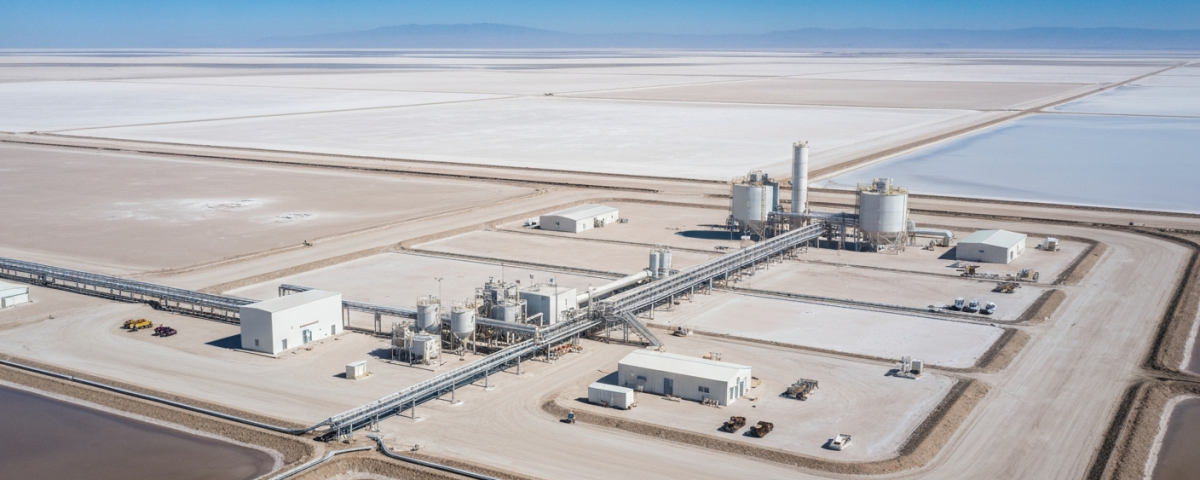
The invisible hurdle between resource and production
In commodity exploration, a critical transition point often receives less attention than it deserves: moving from a proven resource to actual production. For lithium junior miners, small publicly listed exploration companies, this step determines success or failure. Having ore in the ground differs fundamentally from processing it at an economic and technical level that banks and institutional investors will fund. The second challenge is harder than the first.
A current example from Canada shows how a small exploration company on the TSX Venture Exchange approaches this bottleneck. The company’s strategy is direct: partner with a global process technology specialist from oil and gas. The principle merits attention from investors new to this sector.
DLE: promising, but technologically complex
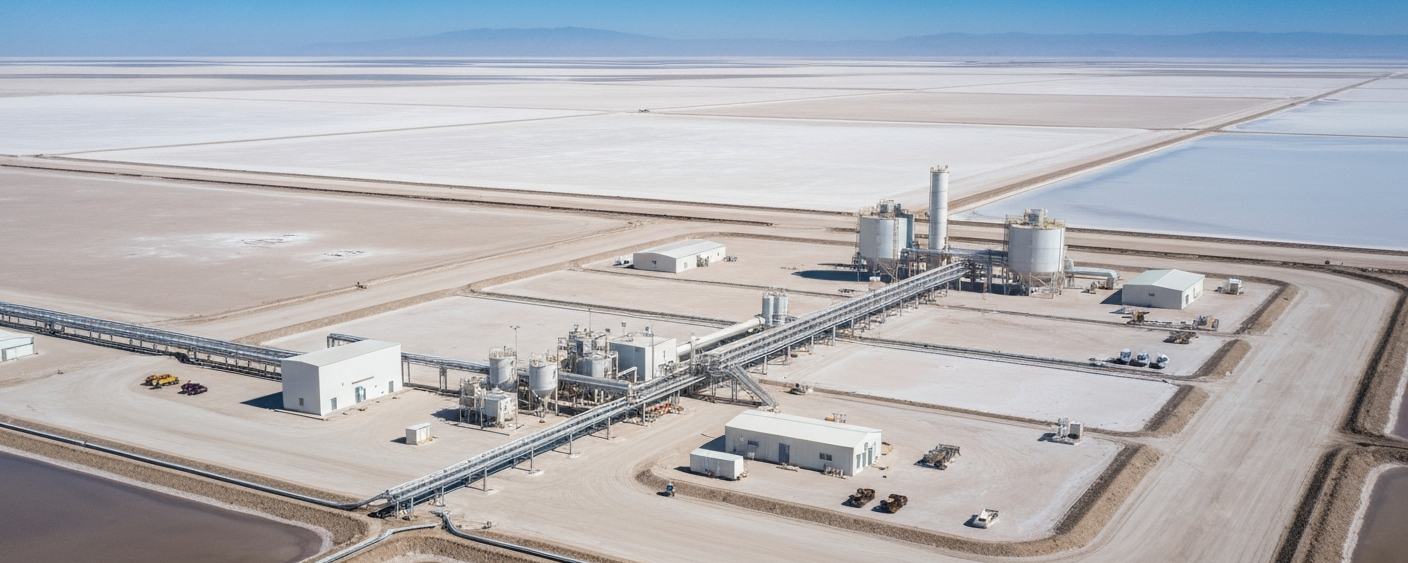
Direct Lithium Extraction (DLE) refers to processes that filter lithium directly from brine, salt-rich groundwater solutions, without the conventional evaporation method that relies on large ponds. Evaporation remains standard in Chile and Argentina, but it takes up to 18 months and depends entirely on climate.
DLE promises faster cycles, lower water consumption, and higher yields. This matters for battery supply chains for electric vehicles. Yet DLE is still early in commercial development. Companies and research institutions pursue different approaches: ion exchange, adsorption, electrodialytic processes, and membrane filtration. None has reached the standardization level of, say, copper flotation or conventional gold leaching.
Here lies the core problem for junior explorers. They hold the resource and geological knowledge but lack the engineering capacity to independently develop, test, and scale a DLE process to commercial volumes. That requires specialized expertise, costly pilot plants, and sustained research investment.

Why technology partners matter
SLB, formerly Schlumberger, is one of the world’s largest providers of technologies for the energy and commodities industry. The company brings what lithium juniors lack: decades of experience treating brine solutions at scale, global engineering networks, and proven infrastructure for process scale-up. In oil, SLB developed and operates complex downhole solutions. Those competencies transfer partly to lithium brine work.
What does such a partnership mean for a junior company? A few dimensions stand out.
Technological validation. When a globally recognized engineering firm collaborates with a junior, it signals that the process has withstood external review. This resembles an audit opinion on financial statements. It offers no guarantee but increases confidence.
Bankability. Banks that finance mining projects require mature technical proof of concept. A junior working with an established technology partner can demonstrate this more credibly than a company deploying a proprietary process without industrial reference.
Timeline compression. In-house process development takes years. An established partner shortens that path, reducing time to production and interim capital needs.
The model in practice
Small development companies leveraging large industrial corporations’ process infrastructure is not new. Biotech startups regularly partner with contract manufacturing organizations to run clinical trials without building their own lines. Fabless chip designers license designs to specialized foundries. Each party focuses on core competencies and reaches market readiness faster.
For lithium juniors in DLE, the logic is the same. The junior holds the mineral concession, geological knowledge, and classified resource under NI 43-101 rules. The technology partner handles process engineering. This division of labor could become standard in DLE projects.
| Characteristic | Junior without technology partner | Junior with established technology partner |
|---|---|---|
| Process validation | Internal, unverified | External, industrially proven |
| Bankability | Harder to achieve | More credibly demonstrable |
| Development timeline | Longer (in-house work) | Potentially shorter |
| Capital requirement (R&D) | Higher (own pilot plant) | Partially outsourced |
| Risk profile | Higher (technology risk) | Tends toward reduction |
What investors should consider
For investors entering small-cap commodity exploration, this partnership model offers a practical lens. The question “Who stands behind the process technology?” matters as much as resource size. A project with a large Inferred Resource and no demonstrated process sits further from production than a smaller project with an Indicated Resource and a verified industrial process.
When analyzing lithium juniors, consider: Is a named technology partner in place? Has the DLE process been tested in a pilot plant, or is it still laboratory-stage? Which independent technical reports document the resource status and classification?
No single factor guarantees success. Technology partnerships reduce certain risks but create others—licensing fees, process dependencies, or loss of autonomy. As with any small-cap investment, geology, capital structure, management, jurisdiction, and technical maturity all matter.
Key terms around DLE and project maturity
- Direct Lithium Extraction (DLE)
- An umbrella term for processes that extract lithium directly from brine without conventional long-duration evaporation ponds. Encompasses ion exchange, adsorption, and membrane-based methods. Not yet standardized for full commercial deployment.
- Bankability
- A project property that matures sufficiently in technical, economic, and legal respects for lending institutions to provide project financing. A prerequisite for many large-scale mining projects.
- Scale-up
- The process of expanding a method tested in a laboratory or pilot plant to industrial production volumes. Regarded as a critical phase with distinct technical risks.
- Inferred resource
- The lowest confidence category of geological resource estimates under NI 43-101. Based on limited data and cannot be used directly in feasibility studies. Not to be confused with a reserve.
- Indicated resource
- The intermediate confidence category. Sufficiently substantiated by drilling and analysis to be incorporated into economic studies such as a Preliminary Feasibility Study. Considerably better supported than an Inferred Resource.
- NI 43-101
- The Canadian regulatory standard for public disclosure of mineral resources and reserves. Requires independent qualified persons and defines classification categories with binding force.
- TSXV (TSX Venture Exchange)
- Canada’s growth stock exchange for smaller companies, particularly exploration firms. Lower listing requirements than the main TSX exchange and the most important global capital market for junior miners.
⚠️ Important notice: This article is for informational and educational purposes only. It does not constitute investment advice, a recommendation, or a solicitation to buy or sell any security. Investments in small-cap exploration and mining companies carry a high risk, including the potential total loss of capital. Before making any investment decision, consult a registered financial advisor and conduct your own analysis. Boersen Post Team is not responsible for decisions taken based on the content published here.