Claim Consolidation in Mining Districts: Opportunities and Risks
June 8, 2026
ASX Small Caps: When AI Niches Complement a Commodities Focus
June 8, 2026
A press release and a 40 percent jump
A junior explorer announces: “Potentially several million ounces of gold-silver identified.” Within hours, the stock price jumps 40, 60, sometimes 100 percent. An investor reading the headline that morning has to ask: Is this the next major discovery? Or will the numbers fade within weeks?
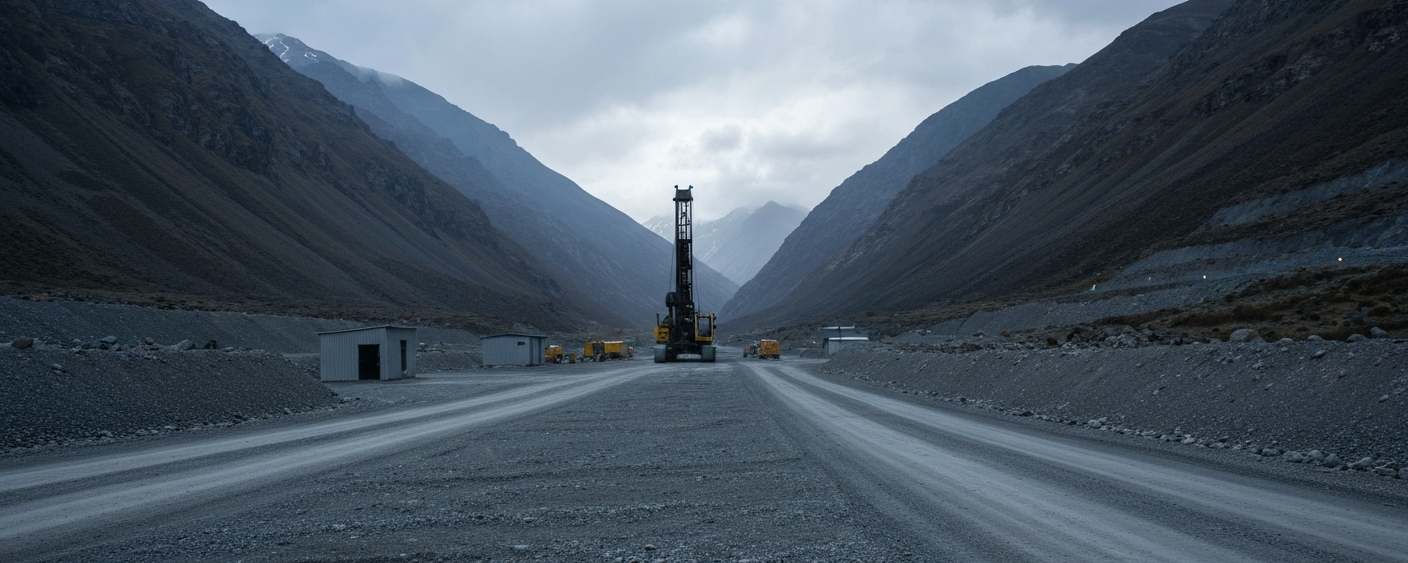
Argentina’s Cordillera, especially in Salta, Jujuy, and Santa Cruz provinces, contains epithermal gold-silver systems similar to world-class deposits found elsewhere. Junior explorers are drawn here by the geology and the ability to acquire large concessions with modest capital. But the gap between an exciting announcement and a reliable resource base is long and expensive. Companies often underestimate what lies ahead.
Where the numbers come from
Argentina has a functional mining regulatory framework at the provincial level, though rules vary significantly between provinces. For investors following companies on the TSX Venture Exchange or the ASX, understanding the source of early-stage claims matters: many Argentine projects rest on historical exploration data.
This data often dates to the 1980s and 1990s, when state-owned or private companies ran initial surveys and sampling. It does not meet the current NI 43-101 standard (the Canadian requirement for mineral resource reporting) or the Australian JORC Code. That means it has no legal standing as an official resource and cannot support financing decisions at regulated exchanges unless an independent Qualified Person reviews and validates it.
Epithermal gold-silver systems form through hydrothermal activity at shallow depths, typically under 1,500 meters. They can contain small “bonanza zones” of extreme grade that make early drill results look extraordinary yet are not representative of the broader system. A common pattern: the first hole hits a rich vein and delivers impressive numbers. The next drill holes show the vein is narrow. Total volume ends up far smaller than the initial figures suggested.

Why markets react so sharply
When an announcement lands, investors extrapolate linearly. A drill hole showing 10 grams of gold per tonne over 20 meters, combined with a large concession area, sparks quick arithmetic about total potential. This speculative leap is built into the junior mining sector and is its biggest danger for newcomers.
Consider a tech startup that releases a prototype working in a lab setting. The press covers it, money flows in, and months later it becomes clear how far commercialization still is. Mining follows the same sequence, except “commercialization” requires ten to fifteen years and hundreds of millions of dollars. A bankable feasibility study is years away.
For small-cap investors, the price surge after a discovery announcement reflects expectations, not confirmed resources. The move is neither illegal nor unusual. It does mean the gains are volatile. When follow-up reports fail to confirm early claims, the stock can fall just as fast as it rose.
| Estimate Stage | Reliability | Regulatory Status |
|---|---|---|
| Historical Data / Target | Very low | Not NI 43-101 compliant |
| Inferred Resource | Low to moderate | NI 43-101 recognized, limited confidence |
| Indicated Resource | Moderate | NI 43-101 recognized, higher confidence |
| Measured Resource | High | NI 43-101 recognized, sufficient for PEA/PFS |
| Probable / Proven Reserve | Very high | Bankable, basis for project financing |
What to look for in the details
Watching the share price and inferring importance from the move is misleading. A big jump only shows the announcement caught attention, not that it has substance. An investor wanting to assess the claim clearly should ask a few direct questions:
- Is an NI 43-101 technical report available? Without one, the figure is early-stage and unregulated.
- Who is the Qualified Person? The QP’s identity and independence from the company matter. This person is legally responsible for the numbers.
- Which resource category applies? Inferred Resources carry much lower confidence than Measured or Indicated Resources, and even less relevance to bankable Reserves.
- How many drill holes support the estimate? A handful of holes across a vast concession is rarely sufficient to define a solid resource.
For Argentine projects specifically, political and infrastructure risk also counts. Currency swings, export restrictions, and local regulatory changes can delay or inflate costs even for well-defined projects.
The long path from announcement to mine
When a junior explorer announces a major discovery, the announcement is the start of a lengthy validation process, not its finish. The stock price may jump on day one, but the actual work of moving from target to recognized resource to mineable reserve takes years. The gap is almost always longer and more expensive than the original press release suggests.
For investors new to the small-cap space, the skill that matters is not catching the “hot announcement” first. It is knowing where a project sits in its lifecycle and which concrete steps still lie ahead. That path is rarely straight.
Key Terms for Newcomers
- NI 43-101
- The Canadian regulatory standard for public disclosure of mineral resources. Technical reports must be signed by an independent Qualified Person and represent the minimum requirement for Canadian exchange listings.
- Inferred Resource
- The lowest recognized resource category under NI 43-101. Based on limited geological data with the lowest confidence level. Cannot be used directly for economic studies.
- Indicated Resource
- A mid-level resource category supported by sufficient drill data for a more reliable estimate. Can be the basis for preliminary economic assessments but does not constitute a reserve.
- Qualified Person (QP)
- An independent engineer or geoscientist with at least five years of relevant professional experience who is legally responsible for the accuracy of a technical report.
- Epithermal Deposit
- A type of gold deposit formed by hydrothermal processes at shallow depths. Typically high-grade but spatially limited. Characteristic of the Andean region.
- Reserve (Proven/Probable)
- The portion of a resource for which economic extractability has been demonstrated. Only Reserves, not Resources, are bankable and can underpin project financing.
- Historical Data
- Exploration results from earlier work that have not been classified under current standards like NI 43-101 or JORC. They serve as a starting point for new work but are not directly eligible for recognition as a resource.
⚠️ Important notice: This article is for informational and educational purposes only. It does not constitute investment advice, a recommendation, or a solicitation to buy or sell any security. Investments in small-cap exploration and mining companies carry a high risk, including the potential total loss of capital. Before making any investment decision, consult a registered financial advisor and conduct your own analysis. Boersen Post Team is not responsible for decisions taken based on the content published here.